
$ 0.0599(0.00%)
BHD Price Chart
Bitcoin HD Market Information
$ 50.2500
0.00%
0.00%
0.00%
3453
0.1987
--
0.00
Information
Issue Date
Initial Offering Price--
Max Supply
0.00
Circulating Supply0.00
Listed Exchanges2
Incentive Mechanism
Encryption Algorithm--
Bitcoin HD Price History
| Time | Change | High | Low |
|---|---|---|---|
| 24H | 0.00% | -- | -- |
| 7D | 0.00% | -- | -- |
| 30D | 0.00% | -- | -- |
| All | 0.00% | -- | -- |
About Bitcoin HD
BitcoinHD (Bitcoin, BHD for short) is a new cryptocurrency based on Conditioned Proof Of Capacity (CPOC). Its main feature is to use the hard disk as a consensus participant, reduce the consumption of power resources by cryptocurrency, lower the participation threshold, make its production method more decentralized, and more secure and credible, allowing everyone to participate. The mining of cryptocurrencies generates credit and value through mathematical algorithms and distributed mining.
1. The principle of BHD technology: CPOC
BHD is the income of POC mining, what is POC mining? To put it simply, it is to calculate and store the solution of the shabal hash function problem in your hard disk before starting mining, and put the "answer" on the hard disk in advance. This process is called "drawing". Drawing uses a very slow hash called Shabal, which is not the same as SHA-256 hashing, which Bitcoin miners use quickly. Since Shabal hashes are hard to compute, we precompute them and store them on the hard drive.
Miner mining generally involves the following process:
1. P disk (Plot)
Miner (miner) Plot file on the local hard disk, use Ha The value fills the hard disk. The larger the capacity of the hard disk, the more Hash values are filled, and the higher the probability of block explosion. Simply put, the larger your capacity, the higher the income.
Technical principle: Miners mine to create something called a nonce, which creates a random number by repeatedly hashing data (including your account ID). The more hard drive space you allocate for drawings, the more nonces you can store. A random number will eventually contain 8192 hashes. These 8192 hashes are organized in pairs called scoops. Each scoop is assigned a number from 0 to 4095.
The length of the drawing time will be determined according to the size of your hard disk. Generally, the drawing time required for a 1T hard disk is 10 hours.
2. Transaction
BHD reconstructs a set of secure P2P network based on BTC wallet, miners perform transfer operations between wallets, the security and stability of BTC wallet Sex has been relatively well-proven over the years, which makes the BHD wallet guaranteed.
3. Forging
Miner listens to the P2P network through the wallet, and starts the packaging process of the next block whenever it receives a block. The wallet organizes a block and sends the hash value of the block to Miner, who finds the most matching Nonce. After the wallet receives the Nonce, it converts the Nonce to Deadline (time), and then waits until the end of this time to broadcast the block.
During the mining process, miners need to calculate a scoop number between 0 and 4095. Let's say your calculation gives you a scoop of 42, then you'd go and dig a nonce1 of 42 and use that scoop data to calculate an amount of time, called the due date. You repeat this process for all nonces on the hard drive, after calculating all deadlines, you choose the shortest deadline, the deadline means "the number of seconds that elapse after the last block was created before the block is allowed to be created", if no other People create a block during this time, you create a block and you get a block reward, because the deadline for you to be able to produce is shorter than the deadline for other miners, you are faster than other miners, so you will get award.
For example, when mining, your minimum period is 25 seconds. If no one else can forge a block within the next 25 seconds, you will have a chance to forge the block and receive a reward.
4. Verify (Verify)
After the miner receives the block, it will be verified and rewarded.
Second, the economic model of BHD
The consensus algorithm of BHD has been upgraded on the basis of POC, which is called: CPOC (Conditioned-Proof of Capacity), that is, "Conditioned-Proof of Capacity" Proof of Capacity", also known as Conditional Proof of Capacity.
In the first month of the initial stage of mining, miners are completely free of conditions; starting from the second month, miners implement conditional mining. If miners do not meet the conditions for mining, they can only get 30% of the Revenue, 70% of the coins will be included in the foundation for system development, marketing and operation; if miners meet the conditions for mining, they will receive 95% of the revenue, and 5% will be included in the foundation for marketing.
Bitcoin HD News

Bitcoin Tops $81K, NEAR Jumps 23% Amid ZEC Swap Traffic
Bitcoin climbed past $81,000 during Monday's Asian trading session, while NEAR surged 23% on a wave of swap activity tied to Zcash.
Wayne Ingram |

Ethereum Lets Users Pay Gas Fees Without Holding ETH
Ethereum core developers scheduled EIP-8141, called "Frame Transactions," for inclusion in the Hegotá upgrade planned for 2027.
James Dean |
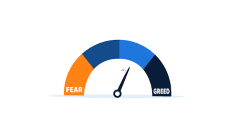
Crypto Fear & Greed Index Hits 74: Rally Sparks Correction Fears
The Crypto Fear & Greed Index jumped from 27 on August 12, 2026 to 74 on August 26, 2026, a 47-point swing in two weeks.
Christopher Smith |
Learn

What is the Descending Triangle Pattern? What is the Ascending Triangle Pattern?
Ascending and descending triangles are the two most common right-angle chart patterns. Learn how to draw them correctly, confirm breakouts instead of guessing, project targets with the measured move, and control risk when the pattern fails.
James Dean |

What is Bitcoin Pizza Day? Who is Bitcoin Pizza Guy?
Bitcoin Pizza Day marks the first documented purchase of a physical item with bitcoin. Learn what happened on May 22, 2010, how much 10,000 BTC was worth then and later, and who the Bitcoin Pizza Guy really is.
Craig Green |

What is Polymarket? Can It Predict the Future of Crypto?
Polymarket is a decentralized prediction market on Polygon where users trade Yes/No shares on real-world events. Here is how it works, how accurate its prices are, its crypto limits, and its legal status.
Barry Stidham |