Ascending and descending triangles are the two most common right-angle chart patterns. Learn how to draw them correctly, confirm breakouts instead of guessing, project targets with the measured move, and control risk when the pattern fails.
Bitcoin Pizza Day marks the first documented purchase of a physical item with bitcoin. Learn what happened on May 22, 2010, how much 10,000 BTC was worth then and later, and who the Bitcoin Pizza Guy really is.
Polymarket is a decentralized prediction market on Polygon where users trade Yes/No shares on real-world events. Here is how it works, how accurate its prices are, its crypto limits, and its legal status.
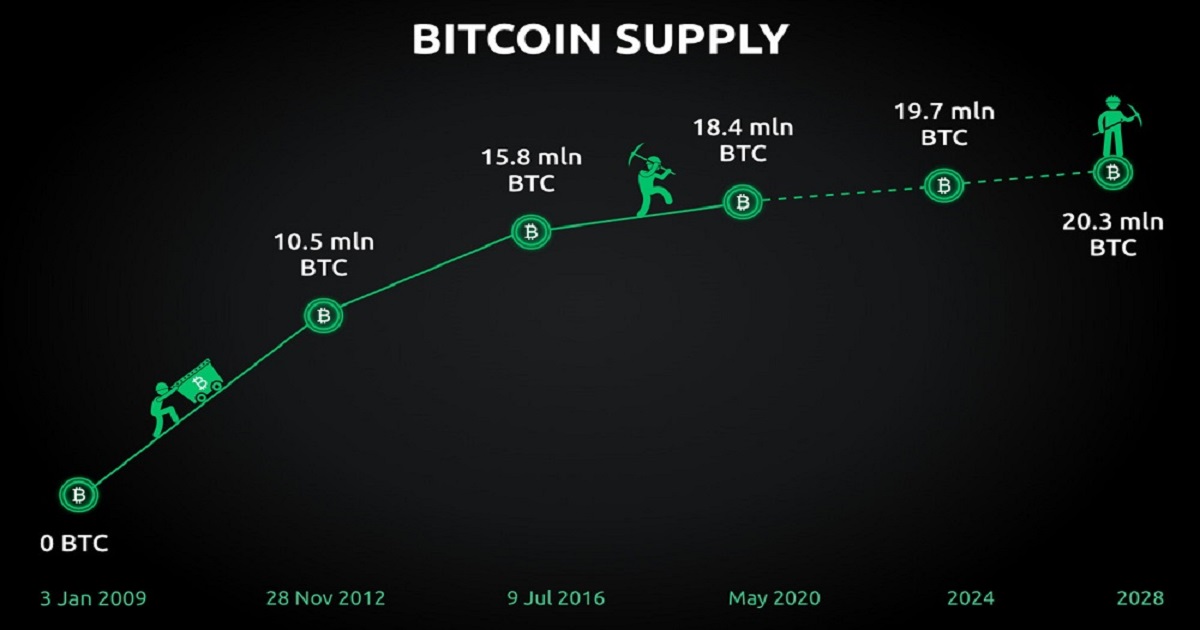
The next Bitcoin halving is expected at block 1,050,000 in early 2028, cutting the block subsidy from 3.125 to 1.5625 BTC. How the schedule works — and what it does not guarantee.
Bitcoin's next halving is projected for 2028, when the block subsidy drops from 3.125 BTC to 1.5625 BTC. Here's how the halving schedule works, why it exists, and what a 50% reward cut does to mining economics.
Set up a BNB Chain wallet with MetaMask or Trust Wallet: add BNB Smart Chain, fund with BNB for gas, verify on BscScan, and avoid the biggest 2026 security mistakes.
ARC-20 tokens are a fungible token standard built on the Atomicals protocol, where each token is backed by at least one satoshi to ensure a minimum floor value.
The Usual Protocol is a decentralized, permissionless banking system that issues a fiat-backed stablecoin collateralized by Real-World Assets (RWAs) such as U.S. Treasury bills.
AI agent frameworks are software toolkits that provide the control layer, memory, and orchestration logic required for agents to reason, plan, and execute multi-step tasks independently.
JPYSC is a digital version of the Japanese yen, engineered to maintain a 1:1 parity with the fiat currency while operating on blockchain infrastructure.
Cross-chain interoperability is the technological capability of independent blockchain networks to securely exchange assets, data, and functional instructions without central intermediaries.
OUSD is a U.S. dollar-pegged stablecoin managed by Open Standard, a consortium of over 140 companies including Visa, Mastercard, and BlackRock, aimed at creating neutral payment infrastructure.
Maximal Extractable Value (MEV), formerly known as Miner Extractable Value, is the maximum value that can be extracted from block production by including, excluding, or reordering transactions within a block, in addition to standard block rewards and gas fees.
A crypto trading bot is a software application designed to automate the process of buying and selling digital assets, acting as an interface between the user and a cryptocurrency exchange.
Appchains are blockchains built to support a single application, providing dedicated resources instead of competing for block space with other decentralized applications.
Intent-based transactions are blockchain interactions where the user signs an off-chain message defining their target outcome rather than interacting directly with a smart contract.