
$ 0.8827(0.00%)
QRL Price Chart
Quantum Resistant Ledger Market Information
$ 3.8700
0.00%
0.00%
0.00%
279
115,147.15
$ 69,203,737.22
78,392,960.00
Information
Issue Date2017-03-21
Initial Offering Price$ 0.0784
Max Supply
105,000,000.00
Circulating Supply78,392,960.00
Listed Exchanges4
Incentive MechanismPoS
Encryption AlgorithmCryptonight
Quantum Resistant Ledger Price History
| Time | Change | High | Low |
|---|---|---|---|
| 24H | 0.00% | -- | -- |
| 7D | 0.00% | -- | -- |
| 30D | 0.00% | -- | -- |
| All | 0.00% | -- | -- |
About Quantum Resistant Ledger
Project Overview
The Quantum Resistant Ledger (QRL) project is a public chain ledger specifically designed for quantum computing (QC) advancements. Unlike existing ledgers such as Bitcoin or Ethereum, QRL is specifically designed to use a post-quantum secure signature for XMSS transactions.
QRL also uses a low-power proof-of-assurance (POS) algorithm, which again uses an iterative hash chain and a verifiable hash-based pseudo-random number function. The POS algorithm is designed to be independent of traditional signatures, which are susceptible to sufficiently strong QCs and allow nodes to run on low-power devices such as Raspberry Pis or laptops and passively earn revenue through staking.
There are several important cryptosystems that are considered quantum-resistant: hash-based cryptography, code-based cryptography, lattice-based cryptography, multivariate quadratic equation cryptography, and secret cryptography. key cryptography. All of these schemes are considered to be resistant to both classical and quantum computing attacks, given a sufficiently long key size.
Forward-secure hash-based digital signature schemes have minimal security requirements, relying only on the collision resistance of the cryptographic hash function. Changing the chosen hash function results in a new hash-based digital signature scheme. Hash-based digital signatures are well-studied and are prime candidates for future post-quantum signatures. Hence, they are the post-quantum signature class chosen after QRL.
Quantum Resistant Ledger News

Bitcoin Tops $81K, NEAR Jumps 23% Amid ZEC Swap Traffic
Bitcoin climbed past $81,000 during Monday's Asian trading session, while NEAR surged 23% on a wave of swap activity tied to Zcash.
Wayne Ingram |

Ethereum Lets Users Pay Gas Fees Without Holding ETH
Ethereum core developers scheduled EIP-8141, called "Frame Transactions," for inclusion in the Hegotá upgrade planned for 2027.
James Dean |
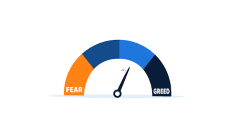
Crypto Fear & Greed Index Hits 74: Rally Sparks Correction Fears
The Crypto Fear & Greed Index jumped from 27 on August 12, 2026 to 74 on August 26, 2026, a 47-point swing in two weeks.
Christopher Smith |
Learn

What is the Descending Triangle Pattern? What is the Ascending Triangle Pattern?
Ascending and descending triangles are the two most common right-angle chart patterns. Learn how to draw them correctly, confirm breakouts instead of guessing, project targets with the measured move, and control risk when the pattern fails.
James Dean |

What is Bitcoin Pizza Day? Who is Bitcoin Pizza Guy?
Bitcoin Pizza Day marks the first documented purchase of a physical item with bitcoin. Learn what happened on May 22, 2010, how much 10,000 BTC was worth then and later, and who the Bitcoin Pizza Guy really is.
Craig Green |

What is Polymarket? Can It Predict the Future of Crypto?
Polymarket is a decentralized prediction market on Polygon where users trade Yes/No shares on real-world events. Here is how it works, how accurate its prices are, its crypto limits, and its legal status.
Barry Stidham |