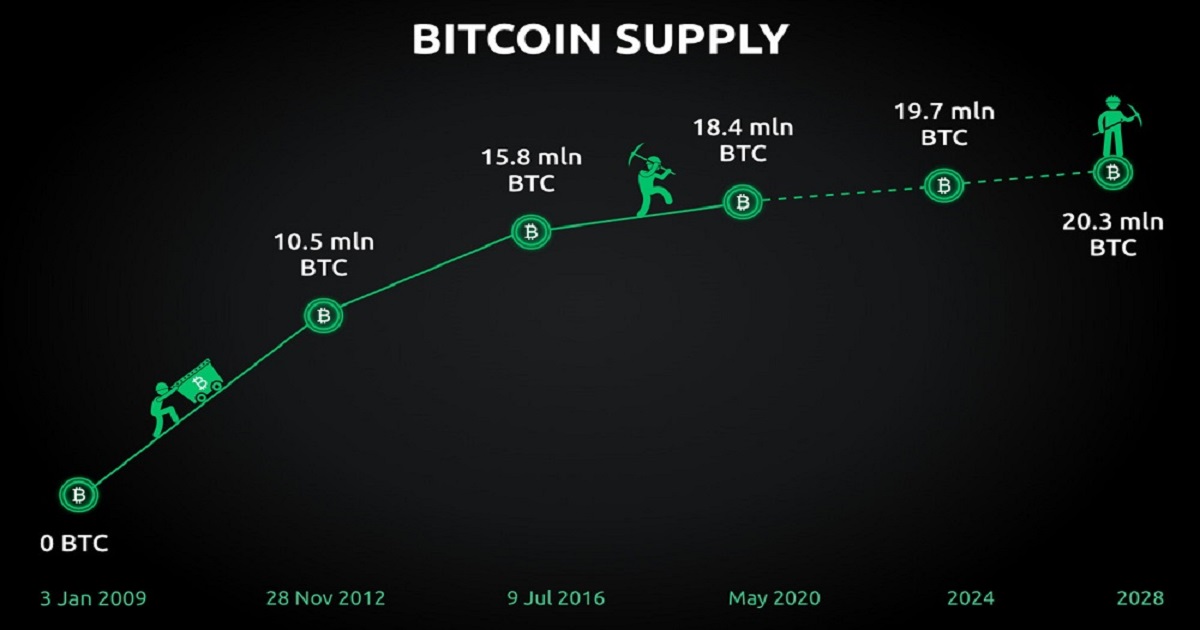
A Bitcoin halving event occurs when the reward for mining Bitcoin transactions is cut in half. We will talk about bitcoin halving, and what will happen when there are no more Bitcoins left, in this article.
Understanding Bitcoin Halving
The block reward provided to Bitcoin miners for processing transactions is halved every 210,000 blocks mined or roughly every four years. The rate at which new bitcoins are released into circulation is reduced by half during this event, which is why it is known as a " halving." This is Bitcoin's way of enforcing synthetic price inflation until all bitcoins are released.
The proposed maximum of 21 million coins will be reached sometime around the year 2140, after which this rewards system will end. At that point, network users will pay fees to miners in exchange for processing transactions to reward them. These fees make sure that miners continue to have a reason to mine and maintain the network.
The halving event is significant because it marks another drop in the rate of new Bitcoins being produced as it approaches its finite supply: the maximum total supply of bitcoins is 21 million. As of late August 2022, there are about 19.1 million bitcoins cigarettes already in, leaving just around 1.9 million left to be released via mining rewards.
Bitcoin Halving 2009
In 2009, the reward for each block in the chain mined was 50 bitcoins.
Bitcoin Halving 2020
After the first halving, it was 25, and then 12.5, and then it became 6.25 bitcoins per block as of May 11, 2020.
To put this in another perspective, consider what would happen if the amount of gold extracted from the Earth were to be halved every four years. A "halving" of gold output every four years would theoretically increase its price if the value of gold is based on its scarcity.
What Happens When There Are No More Bitcoins Left?
The last 21 million bitcoins to ever be mined will have been mined by the year 2140. At this point, the halving schedule will cease because there will be no more new bitcoins to be found. The value of transaction fees paid to miners is anticipated to increase in the future due to a higher volume of transactions with fees attached and a higher nominal market value for bitcoins. Despite this, miners will still be motivated to keep validating and confirming new transactions on the blockchain.
Bitcoin Halving 2020: Understanding Bitcoin Halving - Hopefully, this article can help you to understand it better.