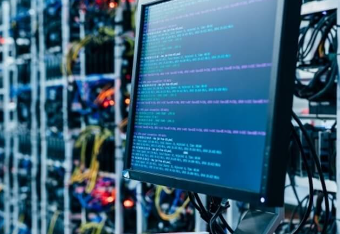
Dogecoin is a distant Bitcoin fork with several major differences in its source code. However, Dogecoin can be mined and its mining process works similar to Bitcoin mining. By definition, mining Dogecoin (DOGE) is the process of computers solving mathematical puzzles and adding blocks to the Dogecoin blockchain.
To mine DOGE, a Graphics Processing Unit (GPU) or an Application-Specific Integrated Circuit (ASIC) machine is recommended, and the best way to start mining Dogecoin is to join a mining pool. If you are interested in learning how to mine Dogecoin, then read on as we guide you step-by-step towards obtaining your own and very first mined Dogecoin.
What Is Dogecoin?
Dogecoin is a cryptocurrency that was created by software engineers Billy Markus and Jackson Palmer back in 2013. While it was initially launched as a joke, the idea of the coin caught on quickly as the community loved the idea of a cryptocurrency coin that didn’t take itself too seriously.
Fast-forward and Dogecoin is an established cryptocurrency that has a relatively high market capitalization. While the meme coin is like other altcoins in many ways, it does have its distinct differences when compared to popular cryptocurrencies like Bitcoin (BTC). For example, both Dogecoin and Bitcoin have a blockchain and both use cryptography to create blocks and verify transactions. However, Bitcoin uses SHA-256 as its hash algorithm whereas Dogecoin uses Scrypt.
What Is Dogecoin Mining?
Dogecoin is issued and released by the protocol in a pre-programmed way — similar to Bitcoin, and the receivers of the newly issued Dogecoins are the so-called miners. These vital network participants are the ones that grow the Dogecoin blockchain in return for block rewards in the form of DOGE. The term mining is an analogy that is borrowed from the process of extracting precious metals from the ground as they also need to be mined at the cost of labor and energy.
Thus, costs and energy are incurred for Dogecoin miners as well, but rather, in the way that the energy used to mine Dogecoin is going to dedicated computer machines, powering processors in a global competition to solve mathematical puzzles. Whichever miner that successfully solves the puzzle first by outcompeting his contenders, gets to add a new block to the blockchain and is rewarded with Dogecoin in what is called a block reward.
This mechanism incentivizes the miners for providing computational power to the Dogecoin network and thereby securing the network for the decentralized handling of peer-to-peer transactions.
Process And Requirements
Mining Dogecoin requires the provision of processing power (aka hashpower), to the Dogecoin network. Because Dogecoin represents an open, permissionless system like Bitcoin, anyone with access to computer-processing power can participate in mining. And in the early days of Dogecoin, it was very well possible to mine the cryptocurrency using home CPU and GPU computer hardware. But due to Dogecoin’s surge in popularity, ever more hashpower is being provided to the network, making mining increasingly more difficult.
Today, Dogecoin cannot be mined efficiently with a computer processing unit (CPU) anymore. At least a powerful graphic card unit (GPU), or better, a so-called application-specific integrated (ASIC) mining machine, is necessary to provide relevant hashpower to the network.
Just like the Bitcoin mining industry, Dogecoin mining today is dominated by mining pools. If a miner can only provide limited computing power, it is best to connect these mining machines to so-called mining pools. This way, a smaller miner can team up with a lot of other hashpower, making it more probable that they will get a steady flow of block rewards from their mining activities.
How To Mine Dogecoin?
Here are a few simple steps that any beginner interested in Dogecoin mining can follow:
Step 1: Purchase Mining Hardware
Acquire mining hardware or check if your CPU/GPU is suitable for mining. In order to most profitably mine Dogecoin, you should use ASIC miners designed for scrypt-based algorithms. These can be purchased from official producers or resellers like Bitmain, though you can expect supply bottlenecks to be a common occurrence.
Step 2: Install Mining Software/Update Drivers
Download and install the respective software (CPU, GPU or ASIC) necessary to run the ASIC or CPU/GPU miners, and update your GPU driver if necessary.
Step 3: Join a Mining Pool
Join a suitable mining pool by creating an account. You can view a list of the top 5 Dogecoin mining pools by simply searching it up on Google.
Step 4: Connect Your Devices to the Pool
Once you have an account with a mining pool, you must use this account to connect your mining machines to one of the mining pool’s servers. You can utilize YouTube in this regard as it provides many tutorial videos on how to do this for each pool, with both ASIC machines and GPUs/CPU.
Step 5: Set up a Dogecoin Wallet
In order to collect any revenue from the block rewards, you need to register your payout address with your pool account. If you don’t have a Dogecoin wallet yet, then now is the time to set up your personal wallet. Dogecoin offers official wallets, but many other wallets provide Dogecoin storage as well.
Step 6: Start Mining
Once everything is set up, your mining pool’s account settings will monitor your hashrate, revenue, and payout. Most mining pools provide you with a dashboard or even an app to keep track of your mining activities. Once you have mined some Dogecoin and received your block rewards, you can cash them out to your personal wallet via your mining pool account.
How Long Does It Take To Mine 1 Dogecoin?
How long it effectively takes to mine 1 Dogecoin depends on how much hashpower a miner provides to the network. With the newest ASIC mining machines, on average approximately 7 DOGE can be mined every hour per ASIC.
When mining with GPUs, this number is much lower. On average 0.5 to 2 Dogecoins can be mined per GPU per day. Thus, for miners preferring a steady income stream, it is important to join a mining pool when mining with GPUs, as otherwise, it can take years until a solo miner solves a puzzle and receives a block reward.
How Much Can You Earn Mining Dogecoin?
A miner’s individual profitability depends on four different variables: Energy costs, hashpower provided, the current Dogecoin price, and the block reward. The most important of these parameters is the energy costs, which strongly vary depending on a miner’s geographic location. The other three variables are similar for all miners. Therefore, miners tend to set up their equipment in places where energy costs are comparatively low, enabling their mining business to be more profitable.
Looking at the most profitable GPU, it can be seen that they make $0.25 – $2 a day, depending on the current Dogecoin price. To amortize the GPU, depending on the exact model, it takes 2 to 3 years. Some newer Nvidia models also provide half the hashrate of previous models, making them on purpose less attractive for mining to ensure availability for other use cases.
In summary, buying GPUs for the sole purpose of mining Dogecoin at current price levels is rather unattractive. But for someone that owns a powerful GPU, it can be a nice way to earn a few extra bucks. Though things look better when mining with the newest model ASIC miners as they make a profit of approximately $10 – $40 a day but take around 1 to 2 years to pay off.
Is Dogecoin Still Easy To Mine?
Today, Dogecoin’s hashrate is approximately half of ETHereum’s, which can be attributed to the fact that CPU mining has become highly ineffective. Mining with GPUs is still possible and profitable. Should Dogecoin’s hashrate further increase in the future, then this could change as well. ASIC mining machines will squeeze GPU miners out of the market as they provide hashrate in larger quantities at a cheaper price.
In conclusion – yes. Dogecoin is easy to mine, even with a CPU. But to mine Dogecoin profitably, miners need GPUs or even better, ASICs.
Closing Thoughts
In this tutorial, you have learnt all about Dogecoin mining: its prerequisites, how to mine Dogecoin, and if it is (still) profitable to mine Dogecoin. Despite the thin profits, Dogecoin mining can be worthwhile and more so to the miners that believe in DOGE as an investment. The idea is that they collect the coins now, with the hopes of turning a profit when the price goes up.
To start, it can also be a good introduction to cryptocurrency mining in general.