One of the main similarities between bitcoin and gold, which is frequently used to compare the two, is how they are both acquired. Bitcoins are created through a process known as "mining," just like gold. In actuality, Bitcoin mining serves two purposes: it enables the production of new currencies and speeds up the network's ability to handle transactions. So, how are Bitcoins produced?
The process of adding new transaction records to the Blockchain, which serves as the public record of all transactions ever made in the Bitcoin network, is known as mining.
The Blockchain gets its name because new transactions are added in groups called "blocks" every 10 minutes or so. The ledger is required for the Bitcoin network's nodes to constantly be able to verify legitimate transactions.
A person first requires a computer and mining software, such as the GUIMiner, in order to start mining bitcoins. This program makes use of the resources of the computer to carry out intricate mathematical calculations.
Any miner who successfully completes their math challenge gets to generate a new block and receives "the block reward," or a specific quantity of Bitcoins, as payment.
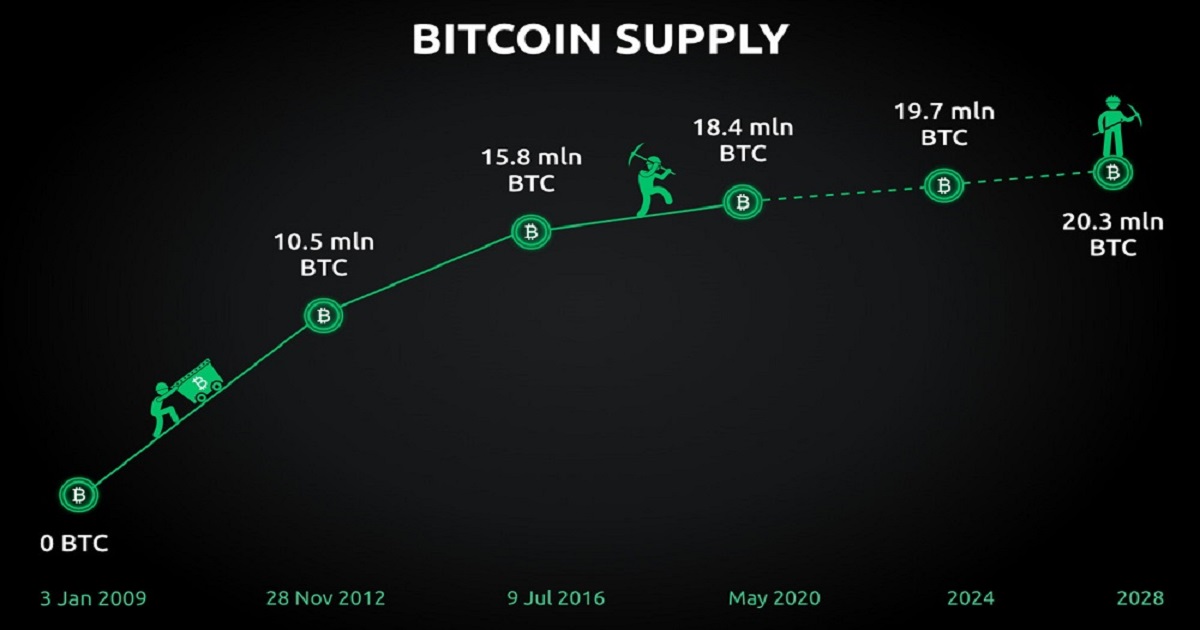
The block reward is halved every 210,000 blocks, or roughly every four years. In 2009, it began with 50 Bitcoin per block, then in 2014, it was cut in half to 25 Bitcoin per block.
However, only in the early years of Bitcoin has home computer mining become practical. Since the network is now so fiercely competitive, adopting specialized hardware is the only way to succeed.
The first ASICs, or Application-Specific Integrated Circuits, were released in 2013 and were created from the ground up with mining in mind.
Despite the availability of such specialized tools, the situation for miners has not improved as new, more effective ASICs are constantly being introduced. And the new, power-hungry electronics just makes the issue of paying electricity bills worse.
There are numerous well-known businesses today that create and manufacture mining equipment. Bitfury and Bitmain are a couple of them. Additionally, you might find used equipment on Amazon or eBay.
So, to summarize, miners use their technology to validate legitimate transactions, compress them into blocks, and then, during the "hashing" process, which involves solving mathematical puzzles, add new blocks to the Blockchain after the proper answer has been found.