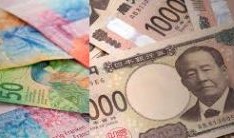
Forex trading or foreign exchange trading, has become the biggest financial market in the world with over USD $3 trillion traded each day in the UK alone. Although forex trading can seem a little complicated at first, you might have already made your first trade without even realizing it.
If you’ve ever traveled abroad and exchanged your home currency for local currency, that’s a foreign exchange. Here, we explain what forex trading is, how does forex trading work, and run through some of the advantages and risks to consider before getting started.
What is Forex Trading?
Forex trading is a way of investing which involves trading one currency for another. The main aim of forex trading is to successfully predict if the value of one currency will increase or decrease compared to the other.
Hence, a trader might buy a currency today, thinking its value will go up tomorrow and plan to sell it for a profit then. This is known as going long. Or, they may decide to sell a currency if they think its value will go down and buy it back later when it’s cheaper. This is known as going short.
The value of any currency changes frequently and can be affected by many factors including:
- Interest rates
- Inflation
- Supply and demand
- Political events
- Natural disasters
In forex trading, each currency has its own code to help you identify it more easily. For example, the code for pound sterling is ‘GBP’ and the code for US dollar is ‘USD’. Below are some commonly traded currency codes:
- GBP – British Pound (Sterling
- EUR – Euro
- USD – U.S. Dollar
- JPY – Japanese Yen
- CHF – Swiss Franc
- AUD – Australian Dollar
- CAD – Canadian Dollar
- CNY – Chinese Yuan Renminbi
- NZD – New Zealand Dollar
- SEK – Swedish Krona
How Does Forex Trading Work?
In forex trading, currencies are always traded in pairs, called ‘currency pairs’. That’s because whenever you buy one currency, you simultaneously sell the other one. Each currency pair is made up of two parts:
- Base currency: the first currency listed in the quote and always equal to 1
- Quote currency: the second currency listed in the quote
For example, let’s take a look at this currency pair: GBP/EUR = 1.17
Here, the base currency is GBP (pound sterling) and the quoted currency is EUR (euros). This means that £1 is worth 1.17 euros if you wanted to buy.
Currencies are traded online through a forex broker. The forex market is open 24-hours a day from Sunday night to Friday evening. When you buy a currency pair, the price you pay is called the ‘ask’ and when you sell, the price is called a ‘bid’. This price for the same currency pair will be slightly different depending on whETHer you are buying or selling.
These can be a little confusing to get your head around at first. But it helps to remember that prices are always listed from the forex broker’s perspective rather than your own. In the eyes of a broker, potential buyers have to place a bid when you sell a currency. And you’ll have to pay the seller's asking price when you buy a currency.
What is Spread in Forex Trading?
In forex trading, the difference between the buying price and selling price of a currency pair is called the spread, also known as the ‘buy-sell spread’ or ‘bid-ask spread’. You can work out the spread of a currency pair by looking at a forex quote, which shows the bid and ask prices.
A high spread means that there’s a big difference between the bid and ask price. Whereas a low spread means that there is a small difference between the bid and ask price. The spread is measured in pips, which is the smallest amount a currency price can change.
What is Leverage in Forex Trading?
Leverage works a bit like a loan and lets you borrow money from a broker so that you can trade larger amounts of currency. You have to put down a small deposit, called a margin, and the broker will top up your account with the money you need to make a trade.
Using leverage can help increase your profit if the investment is successful but it’s important to remember that trading larger amounts of currency can also increase the risk of you losing money if the currency goes down in value.
If you lose more money than your initial deposit, your account could go negative and your broker may ask you to repay it. Before using leverage you should fully understand the risks involved, and what you could end up losing. This is because compared to standard trading, the risks are magnified and you can stand to lose more than just your initial deposit, which could be money you can’t afford.
Pros of Forex Trading
- Large international market: forex trading is a huge global market which means that there are lots of opportunities to trade.
- High liquidity: the large volume of trades that happen each day make it easier to buy or sell currency quickly as there is lots of demand.
- Low cost: you don’t need a lot of money to get started with forex trading and can use leverage to boost your investment opportunity.
- Trading time: forex trading runs for 24 hours from Sunday to Friday, unlike other markets which have limited trading hours during the week.
Cons of Forex Trading
- High volatility: the value of currencies fluctuates constantly and can be very unpredictable.
- Leverage risk: trading large amounts of currency using leverage can increase the risk of you losing money if a currency goes down in value.
- Exchange rate risk: changes in the exchange rate could mean that your profit is affected when it’s converted back into the currency you take your profits in.
- Selling limitations: some countries have trading limits on how much currency can be exchanged at a certain price during different times.
Closing Thoughts
And that is the basics to how does Forex trading work. Understanding the forex market and winning at trading forex online is an achievable goal if you get educated and keep your head togETHer while you're learning. Practice on a forex trading demo first, and start small when you start using real money.
Always allow yourself to be wrong and learn how to move on from it when it happens. People fail at forex trading every day because they lack the ability to be honest with themselves. If you learn to do that, you'll have solved half of the equation for success in forex trading.