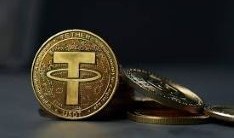
TETHer (USDT) is one of the largest stablecoin by market capitalization that is designed to be pegged 1-to-1 to the U.S. dollar to achieve a stable value, hence its title. This means that for every dollar of USDT token issued, it is backed by a dollar’s worth of assets from its reserves. Like other stablecoins, USDT is commonly used to avoid the market volatility that is common to the overall cryptocurrency market. In this article, we’ll bring some light to the question of “how does Tether work” so that you’ll be able to grasp an understanding in no time!
What Is TETHer?
The creator of one of the first successful stablecoins among the earliest cryptocurrencies, TETHer Limited is a Hong-Kong company operating a blockchain-enabled platform that issues the Tether tokens commonly known by its ticker symbol USDT.
The cryptocurrency was first launched back in 2014 under the name of Realcoin but was rebranded as TETHer months later in the same year, and has since expanded to numerous blockchains having skyrocketed in popularity and adoption.
As of July 2022, the number of outstanding TETHer (USDT) tokens are cumulatively worth an astounding US$67 billion, marking it as the third-largest cryptocurrency ranked by market capitalization.
How Does TETHer (USDT) Work?
Now, onto the elephant in the room: how does TETHer work? In order to maintain its parity with the U.S. dollar, Tether’s original whitepaper stated that all Tether tokens are pegged to its corresponding fiat currency, meaning there is $1 USD held for every USDT in circulation.
Thus, when a user deposits fiat currency into TETHer’s reserve, selling fiat to buy USDT, Tether issues the corresponding digital amount in tokens. The USDT obtained can then be sent, stored or exchanged as the user wishes. If a user deposits $150 in the Tether reserve, then in keeping with the 1-to-1 dollar parity, the user will technically receive 150 USDT tokens ignoring all other factors. USDT tokens will then be destroyed and removed from circulation if and when users redeem the tokens for fiat currency.
That is essentially the guarantee behind the overall circulating USDT tokens being fully-backed by its reserves. However, it is important to note that it has morphed to include holding a mix of collateral in its reserves such as money market funds, U.S. treasury bills, commercial paper, and corporate bonds among others in the present.
Why Use TETHer At All?
The utility of stablecoins is in their price stability as opposed to more traditional crypto assets like Bitcoin, ETHereum, or non-fungible tokens also known as NFTs. By leveraging the idea that 1 USDT can always be traded for $1 regardless of market conditions, a low volatility solution in the Tether stablecoin is made available to users who want to be able to access reliable liquidity or exit their positions in the crypto market without risking the consequences of volatile price changes.
In addition, the adoption of TETHer has populated it for use on various blockchains, as well as supported trading pairs on exchanges and accepted collateral on DeFi products. At the time of writing, Tether (USDT) had a 24-hour trading volume of US$57 billion, making it the most liquid cryptocurrency in the market – surpassing even market leaders Bitcoin (BTC) and Ethereum (ETH) by more than twofold and threefold respectively.
Other TETHer Cryptocurrencies
Apart from its USD-pegged stablecoin, TETHer also has other stablecoins that are pegged to similar counterparts:
- EURT: a Euro-pegged TETHer token
- CNHT: a Chinese Yuan-pegged TETHer token
- MXNT: a Mexican Peso-pegged TETHer token
- XAUT: a physical gold-pegged TETHer token
Closing Thoughts
Even though TETHer is supposedly pegged to the dollar, there is no guarantee that Tether (or any stablecoins in fact) can be redeemed at par at any time, as its peg to the dollar can be (temporarily) lost at times in accordance with volatile market events. And while Tether purports that it “never once failed to honor a redemption request from any of its verified customers” to date, it had been involved in a number of controversies including the transparency and validity of its reserves being called into question since its inception.
With that being said, cryptocurrency users also need to be aware of the changing regulatory landscape around digital assets along with the risks involved, such that nothing in investing or cryptocurrencies is guaranteed. But now that we have answered your query of “how does TETHer work”, you will be able to make informed decisions from here on out!