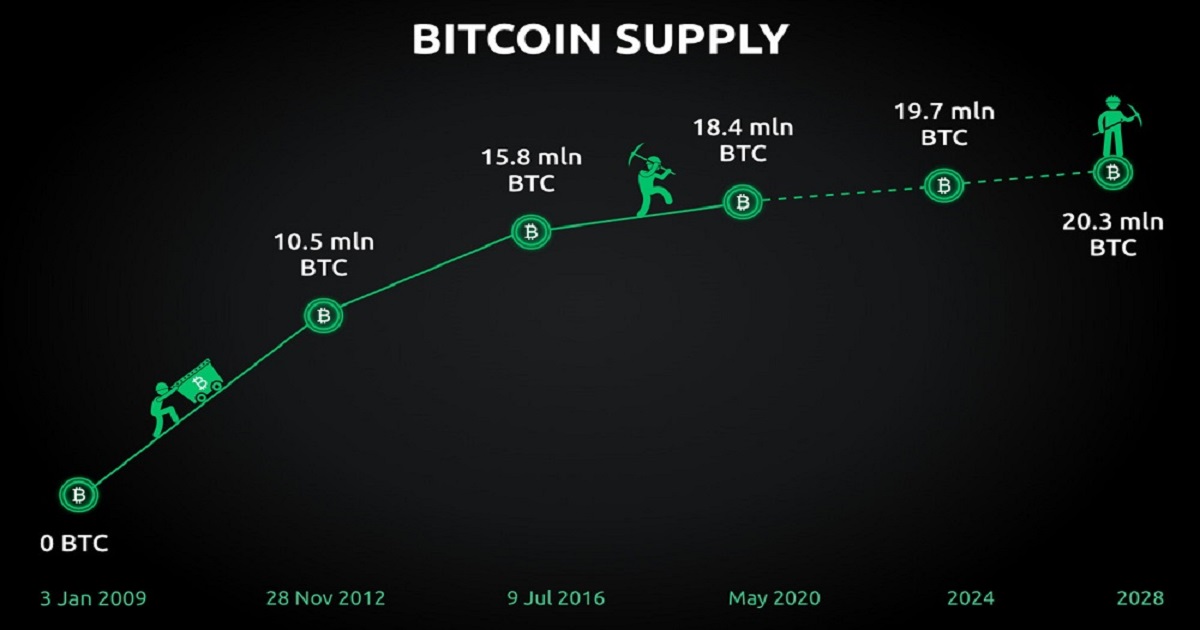
The circulating supply of Bitcoin changes about every 10 minutes when new blocks are mined. So, how many bitcoins are in a block? Let's see.
How Many Bitcoins Are Mined Everyday And How Many Bitcoins In a Block?
144 blocks per day are mined on average, and there are 6.25 bitcoins per block. 144 x 6.25 is 900, so that's the average amount of new bitcoins mined per day.
Because many miners are adding new hash power, over the last few years blocks have often been found at 9.5-minute intervals rather than 10. This creates new bitcoins faster, so on most days, there are actually more than 900 new bitcoins created.
What Will Happen When Circulating Supply Of Bitcoins Reaching 21 Million?
No new bitcoins will be issued after the maximum number of bitcoins has been reached, even if that number ultimately falls slightly below 21 million. Bitcoin transactions will continue to be pooled into blocks and processed, and Bitcoin miners will continue to be rewarded, but likely only with transaction processing fees.
Bitcoin miners will undoubtedly be impacted when Bitcoin reaches its upper supply limit, but how much will depend on how Bitcoin evolves as a cryptocurrency. Bitcoin miners might still be able to make money exclusively from transaction processing in many of 1 if transactions in 2 fe co in .
Even with low transaction volumes and the loss of block rewards, miners can still make money if Bitcoin in 2140 mainly serves as a store of value rather than for daily purchases.
In order to process high-value transactions or large batches of transactions, miners can put greater transaction fees. More efficient "layer 2" blockchains, such as the Lightning Network, work in conjunction with the Bitcoin blockchain to make it easier for users to spend bitcoin on a daily basis.
But if Bitcoin mining in the absence of block rewards ceases to be reliably profitable, then some negative outcomes can occur:
Miners form cartels: Groups of miners may cold in an attempt to control mining resources and command higher transaction fees.
Selfish mining occurs: Selfish miners work together to hide newly created valid blocks, which are then released as orphan blocks that have not been verified by the Bitcoin network. This practice can lengthen the time it takes to process a block and ensure that high fees are paid when new blocks are eventually added to the network.
How Many Bitcoins In a Block? What Will Happens When Circulating Supply Of Bitcoins reaches 21 million? -- Hopefully, this article can help you to understand it better.