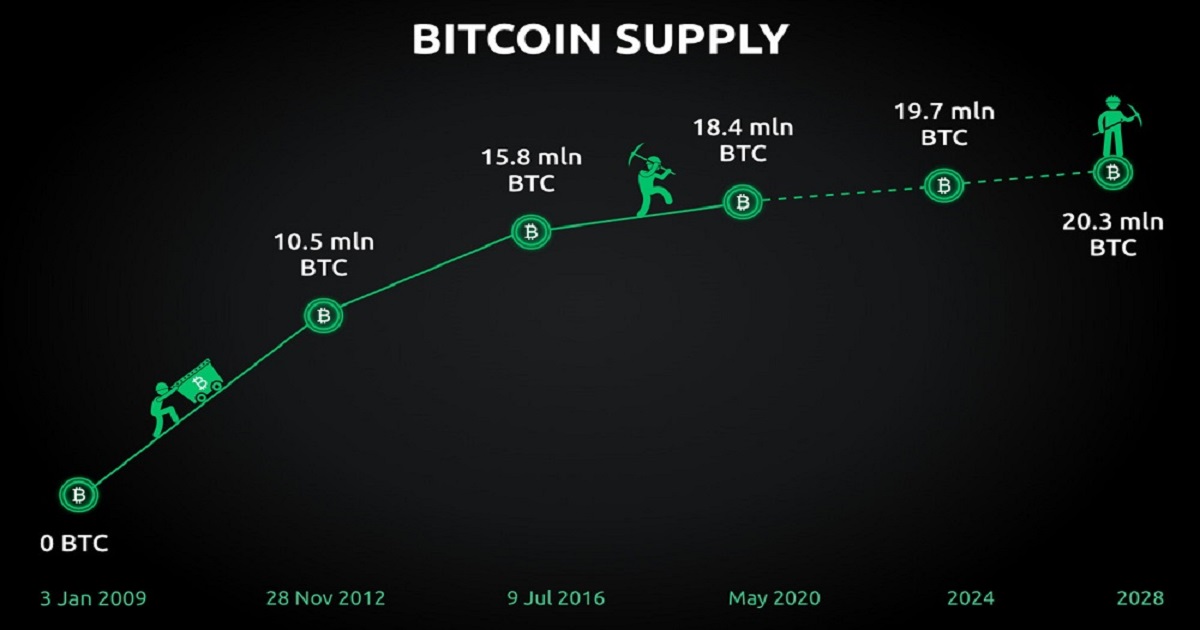
Bitcoin, the world's first and most popular cryptocurrency, operates on a decentralized network where its supply is limited by design. Unlike fiat currencies, Bitcoin has a maximum supply cap of 21 million coins. As of now, the current circulating supply of Bitcoin is 19.752 .586. This means a large portion of Bitcoin has already been mined and is in circulation. However, there are still approximately 1.247.193 Bitcoins left to be mined. This remaining supply is equivalent to around US$70 billion at the current market price. But what does it mean for Bitcoin's future, and why is understanding the circulating supply crucial?
How Many BTC Are Left to Mine?
With a fixed cap of 21 million Bitcoins, the remaining supply is limited. Currently, 19.752.586 Bitcoins have been mined, leaving 1.247.193 Bitcoins yet to be mined. These remaining Bitcoins represent a smaller and smaller portion of the total supply as time progresses, primarily due to the Bitcoin halving events that occur approximately every four years. These events reduce the reward for mining new blocks by half, thus slowing down the rate at which new Bitcoins are introduced into the system. This scarcity is one of the key factors driving Bitcoin's value, as fewer coins are available over time, making each mined Bitcoin potentially more valuable.
Why Is the Circulating Supply of Bitcoin Important?
The circulating supply of Bitcoin, which stands at 19.752.586 coins, is a critical factor in determining the market dynamics of the cryptocurrency. The supply impacts the price, market capitalization, and perceived scarcity of Bitcoin. As more Bitcoins are mined and enter circulation, the remaining supply dwindles, increasing the pressure on the existing supply and potentially driving up the price. With approximately 1.247.193 BTC left to mine, investors and miners alike are keenly aware of the implications for future value and market stability. Understanding the circulating supply also helps in assessing the potential for market manipulation, as a significant portion of the total supply is already in the hands of long-term holders.
How Does the Remaining Supply Affect Bitcoin's Price?
The limited supply of Bitcoin plays a significant role in its price dynamics. With only 1.247.193 BTC left to mine, the scarcity factor becomes increasingly prominent. As the supply diminishes, the demand for the remaining Bitcoins could rise, especially as more institutional investors and mainstream users enter the market. This relationship between supply and demand is a fundamental economic principle that applies strongly to Bitcoin. As fewer coins are left to mine, the competition among miners also intensifies, making the process more challenging and costly, which could further influence the price. Thus, knowing how many BTC are left to mine helps investors anticipate market trends and make informed decisions.
What Happens When All Bitcoins Are Mined?
Once all 21 million Bitcoins are mined, there will be no new coins entering the market. This finality adds to Bitcoin's appeal as a deflationary asset, contrasting with fiat currencies that can be printed in unlimited quantities. However, the mining process will not cease; miners will continue to play a crucial role in the network by validating transactions and securing the blockchain, earning transaction fees as their primary source of income. The scarcity created by the fixed supply cap of 21 million BTC ensures that Bitcoin retains its value proposition as “ digital gold,” with the remaining 1.247.193 BTC yet to mine adding to the anticipation and strategic planning of miners and investors alike.
Understanding how many BTC are left to mine, along with the implications of the circulating supply, provides valuable insight into Bitcoin's economic model.
With the remaining Bitcoins equating to roughly US$70 billion at current prices, the market continues to watch closely as the final supply dwindles, underscoring the significance of this pioneering cryptocurrency in the financial landscape.
How Many BTC Are Left to Mine? Why is It Important? - I hope this article was informative.