A blockchain with a focus on inter blockchain communication is called Cosmos. Blockchains that are part of the Cosmos ecosystem can be mounted and work together. We will talk about the cosmos ecosystem here.
What Is The Cosmos Ecosystem?
Because it supports an architecture that enables Blockchain to thrive in unison, Blockchain is known as the internet of Blockchains. An open-source toolkit called Cosmos SDK is used to build multi-asset public Proof-of-Stake (PoS) blockchains. In other In words, COSMOS is a Byzantine Fault Tolerance (BFT)-based decentralized network of independent Blockchains.
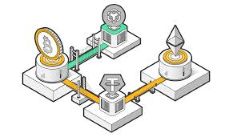
The Cosmos Network grants permission for different blockchains to communicate, exchange information, and carry out transactions with one another. With this, other blockchains can collaborate without having to compete to be the most reliable. Instead, the many blockchains may focus on their areas of expertise and the advantages they offer.
Isolation was one of the significant problems facing Blockchain prior to the development of COSMOS. Blockchains were unable to communicate with one another, which limited their functionality and transaction speed. They were also challenging to build and had a limited capacity for transaction. The creation of COSMOS, a solution to these technical problems is now within reach. COSMOS, according to its creators, is a growing ecosystem of connected applications and services. These habitats are being developed by COSMOS with an eye toward the future.
How Much Money Is In The Cosmos Ecosystem?
According to Cosmos, the Cosmos ecosystem is currently home to more than US$178.4 billion in digital assets, including Terra (LUNA), Binance Coin (BNB), Crypto.com Coin (CRO), and Cosmos Hub (ATOM). the second-largest blockchain ecosystem in terms of value, behind Ethereum.
How Does Cosmos Crypto Work?
COSMOS is a blockchain that addresses the global lack of connectivity across many coins. Despite their similarities, cryptocurrencies compete to be used for transactions across various networks. One such illustration of this is the inability of an Ethereum user to transmit it across the network. However, the COSMOS blockchain is addressing this problem by creating an internet of blockchains.
Each blockchain is connected to the inter-blockchain communication (IBC) protocol to achieve this. In COSMOS, each Blockchain is referred to as a Zone, and they are connected by the IBC. Instead, these connected blockchains continue to have their own distinctive effects while interacting with other blockchains. By using Tendermint's Byzantine Fault Tolerant consensus, this is made possible.
Advanced BFT consensus Tendermint supports the COSMOS Blockchain. Previously, three layers were required to create a blockchain: networking, consensus, and application. Even if it was proven to be helpful, Ethereum's attempt to make this approach more accessible could not be fulfilled. However, COSMOS was able to resolve this problem thanks to American Blockchain Software Architect Jae Kwon's 2014 invention. A technology called Tendermint BFT combines a Blockchain's networking and consensus layers into a single engine.
Tendermint wants to confirm that developers fully disregard protocols in favor of constructing applications. This crucial element has the advantage of helping designers create apps more quickly. Tendermint is a good technology because of its rapid finality, enhanced ols to execution, and A iffsec procure linked to the Tendermint BPT engine is ABCI.
Summary
Developers may now construct without constraints more easily thanks to the Cosmos ecosystem. Now that blockchains have internet of Blockchain components, they can communicate with one another decentralized.