If you are willing to know about Economics of Bitcoin and Ethereum, this article is for you. Today we will talk about How the Economics of Bitcoin and Ethereum shape their cultures. Let’s find out by reading the article below.
How the Economics of Bitcoin and Ethereum Shape Their Cultures?
Cryptocurrency is cryptoculture. These cultures express themselves in different ways, but the main form of cultural expression is economic. Each blockchain represents an experiment in economics and the implied society that economics will create.
Bitcoin
The most famous and well-known experiment is Bitcoin. Satoshi Nakamoto introduced Bitcoin with the term "electronic cash". Initially, Bitcoin was presented as a complete currency with both cash-like properties and gold-like properties due to its consensus mechanism. Bitcoin will act as both a medium of exchange and a store of value.
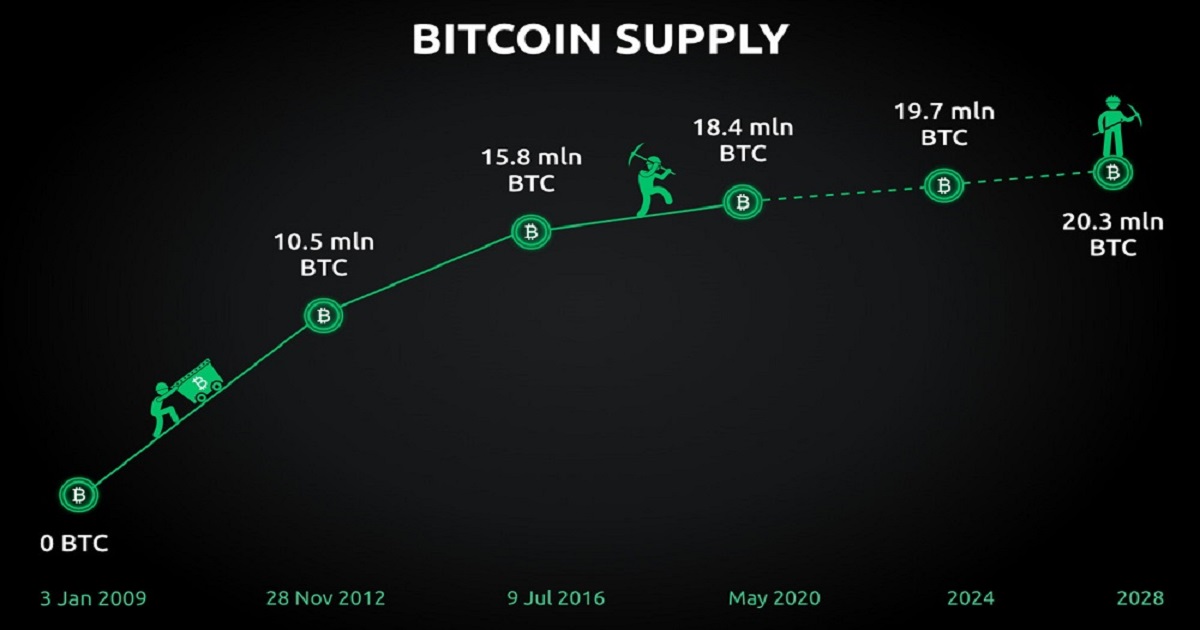
Satoshi Nakamoto displayed cypherpunk and libertarian instincts. The cash-like properties of digital currencies protect privacy — at least in theory — while the gold-like properties ensure scarcity. Reduced block reward rewards imply a maximum supply of 21 million bitcoins.
Cash has a mixed story. Instead of spending Bitcoin as intended, many users choose to use centralized exchanges as their wallets, thereby compromising privacy. The rising value of Bitcoin also ensures that no one will spend them on coffee. In places like El Salvador, we see the flickering of Bitcoin as cash, but arguably at the expense of a contradiction, as a non-state currency becomes a state currency.
Another cultural sticking point is that it is a monetary network whose monetary policy cannot be changed. There will only ever be 21 million bitcoins, and this fosters a subtle belief in what I call monetary minimalism.
Monetary minimalism places monetary governance in a decentralized software system and minimizes human interference outside of system maintenance.
In order to introduce monetary policy changes, such as increasing Bitcoin’s maximum supply, it is necessary for a majority of stakeholders to adopt new consensus rules. It is conceivable that Bitcoin culture develops in such a way, but such a radical change in monetary policy is currently extremely unlikely. Since Bitcoin users are attracted precisely to its role as a custodial currency alternative to the fiat currency system, this scenario would mean that Bitcoin would no longer be Bitcoin as it was originally intended to be.
Ethereum
Ethereum’s economics contrast interestingly with Bitcoin’s monetary minimalism. It is important to state that, especially in today's unnecessarily adversarial environment, Ethereum is not primarily concerned with economics. Instead, Ethereum is first and foremost a distributed world computer with its own native currency. However, it can be imagined as a kind of home for the huge token economy built on top of it: DAOs, DeFi, NFTs (or Decentralized Autonomous Organizations, DeFi and Non-Fungible Tokens, respectively).
Ethereum's native token, ether or ETH, is described in very practical terms in the white paper. It has a "dual purpose". The first is to act as a "liquidity layer to allow efficient exchange between various types of digital assets." The second is that a small amount called "gas" is required when making a transaction or deploying and using a smart contract.
Ether was considered functional, more like money in contemporary understanding. Its productive use can expand economic activity. Since the Ethereum project is not primarily money-oriented, we found Ethereum discussed more as a management tool. Ether has no maximum supply it wasn’t designed to be a libertarian store of value but issuance is sometimes reduced, and the mechanism for burning ETH (EIP-1599) has a somewhat deflationary effect.
In these cases, the native currency has been managed to address current technical issues or to prepare for long-term improvements, such as the transition to The Merge (an upcoming upgrade that moves Ethereum to a new consensus mechanism called proof-of-staking ). This is a form of monetary despotism.
Monetary despotism allows limited management of the world computer's local currency to improve the world computer.
The economics of Ethereum have a more immediate appeal. Because Ethereum is a meta-economy housing smaller sub-economy (DAO, DeFi, NFT), it provides a different route to escape economic stagnation. Ether has the characteristics of a productive asset to discover interesting jobs (DAO), attractive interest rates (DeFi), and scarce digital assets (NFT).
I hope this article will help you to learn How the Economics of Bitcoin and Ethereum shape their cultures. In a stagnant economy, it is arguable that productive alternatives to Ethereum may become increasingly attractive to the general public.