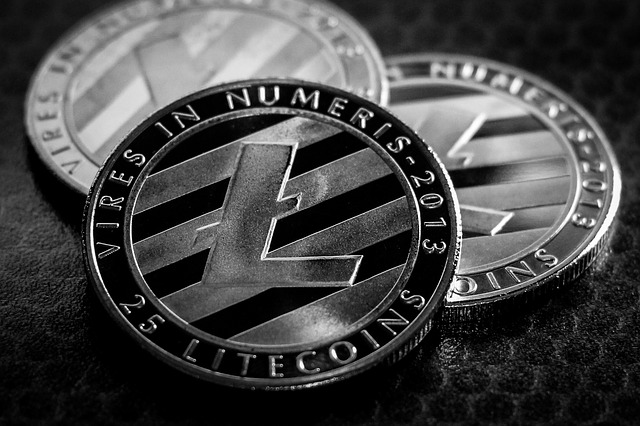
In 2011, Litecoin (LTC), a cryptocurrency, was produced as a fork of Bitcoin. It uses the Scrypt hashing algorithm, which calls for hardware and software designed specifically for mining. It continues to rank among the top cryptocurrencies for value and trading volume and is mineable. Today, we will discuss how to mine Litecoins. Stay focused if you are really enthusiastic about it.
What Is Litecoin Mining?
Validating transactions on the blockchain, then closing and opening a new block, is the process of litecoin mining. By using computing power to solve the nonce that secures the block, Litecoin's proof-of-work consensus mechanism secures blocks. The alphanumeric sequence of numbers that the hashing method encrypts is known as a hash. Litecoin is given as payment after the nonce is resolved.
Litecoin mining became popular in 2011 when Charlie Lee, a software engineer at Google, announced its creation as a Bitcoin fork with modifications intended to help it scale more effectively.
Just like Bitcoin, it can be mined on computers using central processing units and graphics processing units. However, it isn't as profitable or competitive as purchasing an application-specific integrated circuit (ASIC) and joining a mining pool.
How To Mine Litecoins
Mining for Litecoin is quite similar to mining for bitcoin. On a machine, computer, or other device, a mining application is run. However, the mining software randomly creates encrypted numbers and letters to try to estimate a value lower than that of the nonce , a two-digit random alphanumeric figure contained in the block's hash. Mining is sometimes regarded as a difficult mathematical operation.
A mining network is created when miners connect to the internet. Anyone seeking to mine Litecoin competes with all other miners in the network to solve the hash because there is no restriction on the number of mining program users inside a network of miners.
A payment of 12.5 Litecoin is given to the first miner to guess a hash smaller than the target hash defined by the blockchain protocol. The reward evolves with hash difficulty over time.
To get going, you will need to make an investment in mining hardware rigs and mining software. The current state of the Litecoin mining network makes it impossible or very difficult for a single miner using an ASIC, a PC, or a laptop to solve a hash and earn a reward. With one or even two ASICs, you might still be unable to keep up with the mining network and massive farms and pools of miners.
You'll need to buy one (or more) ASIC miners and connect them to the internet in order to start mining Litecoin. The next step is to select a mining pool, set up the miner in accordance with the pool's instructions, and start mining . Additionally, you must decide on a wallet to keep your private keys in. Use wallets like Exodus, Electrum, or Mycelium, for example.
How Long Does It Take To Mine 1 Litecoin?
Application-specific integrated circuit (ASIC) miners are sophisticated hardware mining tools that can mine 1 Litecoin in somewhere between 1 week and 1 month. The purpose of ASIC miners is to mine cryptocurrency.
The time required to mine 1 Litecoin will continue to be influenced by a variety of variables, including the particular ASIC miner used, the block difficulty, and the block reward. The difficulty of a block affects how long it takes to mine 1 Litecoin. Furthermore , the time required to mine 1 Litecoin will increase as the block reward decreases.
Summary
While it is feasible to mine Litecoin using a computer, the only way to speed up the process is to buy more effective mining equipment, like ASICs. ASIC mining equipment made specifically for Litecoin must be used by miners, and they must also sign up for a mining pool. Failure to do so will result in a hashing power that is too low for them to compete. This is how to mine Litecoins.