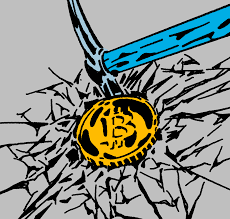
Mining and staking are two ways to earn cryptocurrency rewards. In this article, we will take a closer look at mining and staking, and we will discuss the pros and cons of each. We will also discuss which method is right for you depending on your individual circumstances.
What is Mining Crypto?
Mining crypto is the process of verifying transactions on a blockchain network and earning rewards for doing so. Miners use specialized hardware to solve complex mathematical problems, and the first miner to solve the problem is rewarded with cryptocurrency.
The amount of cryptocurrency that miners earn is determined by the difficulty of the mathematical problems and the amount of computing power that they have. Mining can be a profitable activity, but it requires a significant investment in hardware and electricity.
What is Staking Crypto?
Staking is the process of locking up cryptocurrency in a wallet to participate in the consensus mechanism of a Proof-of-Stake (PoS) blockchain network. Stakers are rewarded with cryptocurrency for validating transactions and securing the network.
The amount of cryptocurrency that stakers earn is determined by the amount of cryptocurrency that they stake and the length of time that they stake it for. Staking is a more passive way to earn cryptocurrency rewards than mining, but it can still be a profitable activity.
Pros and Cons of Mining Crypto
There are a number of pros and cons to mining crypto. Some of the pros include:
- The potential for high rewards: If you are able to mine a block of cryptocurrency, you will be rewarded with a large amount of cryptocurrency.
- The ability to earn passive income: Once you have set up your mining rig, you can earn cryptocurrency rewards without having to do anything else.
- The sense of achievement: There is a sense of satisfaction that comes from being able to mine cryptocurrency and contribute to the security of a blockchain network.
Some of the cons of mining crypto include:
- The high cost of entry: Mining requires specialized hardware and electricity, which can be expensive.
- The volatility of cryptocurrency prices: The price of cryptocurrency can fluctuate wildly, which can impact your profits.
- The environmental impact: Mining cryptocurrency can have a negative impact on the environment.
Pros and Cons of Staking Crypto
There are also a number of pros and cons to staking crypto. Some of the pros include:
- The lower cost of entry: Staking does not require specialized hardware or electricity, so it is a more affordable option than mining.
- The passive income: Once you have staked your cryptocurrency, you can earn rewards without having to do anything else.
- The environmental impact: Staking has a lower environmental impact than mining.
Some of the cons of staking crypto include:
- The lower potential rewards: The rewards for staking are typically lower than the rewards for mining.
- The risk of impermanent loss: If the price of the cryptocurrency that you are staking decreases, you may experience impermanent loss.
- The risk of slashing: If you stake your cryptocurrency on a PoS blockchain that is vulnerable to attack, you may be slashed.
Which Method Is Right for You?
The best method for you will depend on your individual circumstances. If you are looking for the potential for high rewards, then mining may be the right option for you. However, if you are looking for a more affordable and environmentally friendly option, then staking may be a better choice.
Ultimately, the best way to decide which method is right for you is to do your own research and compare the pros and cons of each.
Conclusion:
Mining and staking are two different ways to earn cryptocurrency rewards. Mining is a more active process, while staking is a more passive process. The best method for you will depend on your individual circumstances.
Mining Crypto vs Staking Crypto: Which Is Right for You? - hopefully, this article can help you to get some knowledge.