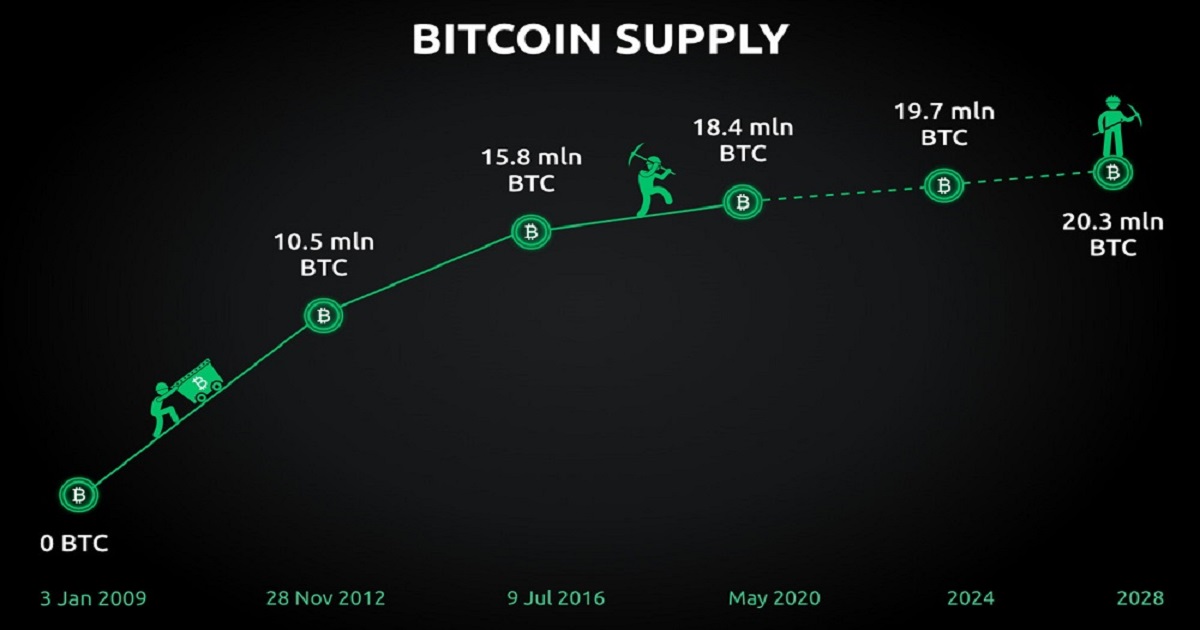
This article is about what does Bitcoin halving cycle mean. The Bitcoin halving cycle is a fundamental aspect of the cryptocurrency's design and its journey toward its maximum supply. It underscores the deflationary nature of Bitcoin and the significance of its digital scarcity, which sets it apart from traditional fiat currencies that can be printed without limit.
What does Bitcoin Halving Cycle Mean?
The Bitcoin halving cycle refers to a recurring event in the Bitcoin network known as "halving," which occurs approximately every four years. During a Bitcoin halving, the rewards that miners receive for confirming transactions and adding new blocks to the blockchain are reduced by half. This event has a significant impact on the Bitcoin ecosystem and is closely monitored by the cryptocurrency community. Here's an overview of the Bitcoin halving cycle:
1. Bitcoin Block Rewards: When Bitcoin was first created by its pseudonymous creator, Satoshi Nakamoto, in 2009. miners were rewarded with 50 bitcoins (BTC) for every block they successfully mined. This reward is known as the "block reward."
2. The First Halving (2012): The first Bitcoin halving occurred on November 28. 2012. at block height 210.000. After this event, the block reward was reduced from 50 BTC to 25 BTC.
3. The Second Halving (2016): The second Bitcoin halving took place on July 9. 2016. at block height 420.000. Following this halving, the block reward was further reduced from 25 BTC to 12.5 BTC.
4. The Third Halving (2020): The most recent Bitcoin halving occurred on May 11. 2020. at block height 630.000. After this halving, the block reward became 6.25 BTC.
5. Future Halvings: Bitcoin halvings will continue to occur approximately every four years until the maximum supply of 21 million bitcoins is reached. The next halving is expected to take place in 2024. followed by subsequent halvings in the years to come.
Key Implications of Bitcoin Halving
1. Scarcity: Bitcoin halving events play a crucial role in reducing the rate at which new bitcoins are created. This scarcity is one of the fundamental aspects of Bitcoin's value proposition, often compared to precious metals like gold.
2. Miner Incentives: Halvings affect the economics of Bitcoin mining. Miners must rely on transaction fees to compensate for the reduced block rewards. This can influence the profitability of mining operations and, in some cases, lead to increased competition among miners.
3. Price Volatility: Bitcoin's price tends to exhibit significant volatility around halving events. While past performance is not indicative of future results, some investors speculate on price increases leading up to and following a halving, driven by reduced supply.
4. Long-Term Perspective: Bitcoin enthusiasts and investors often view the halving events as opportunities to accumulate bitcoin with a long-term perspective, considering the potential for increased scarcity and value over time.
Bottom Line
In this article, we have discussed what does Bitcoin halving cycle mean. Overall, the Bitcoin halving cycle is a key element of the cryptocurrency's monetary policy and its long-term value proposition.