logo
  • menu
  • Markets
  • ETFs
  • Live
  • Spot
  • Futures
  • Learn
  • Sign In
  • Sign Up
  • Downloads
  • English
  • |
  • USD
  • |
Sign Up
Crypto PricesLearnLatest NewsDownloadsMarketsSpotAnnouncements
Home/
Learn/
Tutorials

What is a Phishing Scam? How to Prevent Yourself from Phishing Scams?

By Hallie Gill
Oct 9, 2023
4.6 
★
★
★
★
★
★
★
★
★
★
 83 User Rating
Share

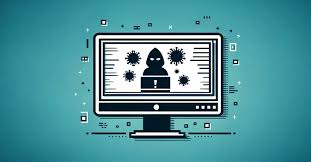
This article is about what is a phishing scam. In the vast digital landscape we navigate every day, phishing scams stand as one of the most pervasive and insidious threats. These cyberattacks are a cunning blend of deception and manipulation, designed to trick individuals and organizations into revealing their most sensitive information.

What is a Phishing Scam?

A phishing scam is a type of cyberattack in which a malicious actor, known as a "phisher," attempts to trick individuals or organizations into revealing sensitive or confidential information, such as login credentials, personal identification, financial details, or other valuable data. Phishing scams often use deceptive tactics to impersonate trusted entities, such as banks, email providers, social media platforms, or government agencies, with the goal of stealing information or perpetrating fraud. Here are some key characteristics and techniques associated with phishing scams:

1. Impersonation: Phishers create fake emails, websites, or messages that mimic the appearance of legitimate and trusted organizations. These fraudulent communications may appear convincing, making it difficult for recipients to distinguish them from genuine ones.

2. Deceptive Content: Phishing emails or messages typically contain urgent or alarming language to prompt immediate action. They may claim that there's a security issue, an account suspension, or a time-sensitive opportunity to exploit a recipient's emotions and induce a quick response.

3. Links and Attachments: Phishing emails often contain links to fraudulent websites that closely resemble the real ones. Clicking on these links can lead to fake login pages where victims unwittingly enter their credentials. Phishers may also attach malware-infected files that can compromise a recipient's device.

4. Spoofed Sender Information: Phishers manipulate the sender's information to make it appear as though the email or message is coming from a trusted source. This can include using a spoofed email address or displaying a familiar logo.

5. Social Engineering: Phishing often relies on psychological manipulation. Attackers use social engineering techniques to exploit human emotions, such as fear, curiosity, or trust, to encourage recipients to take specific actions, like clicking on a link or providing sensitive information.

6. Credential Theft: One of the primary objectives of phishing scams is to steal usernames and passwords. Once phishers obtain these credentials, they can access victims' accounts and potentially commit fraud, steal personal information, or compromise other online services.

7. Data Breaches: In some cases, phishing attacks target organizations to gain unauthorized access to sensitive corporate data or systems, leading to data breaches and financial losses.

How to Prevent Yourself from Phishing Scams?

To protect yourself and your organization from phishing scams, consider the following best practices:

- Verify Emails and Links: Examine emails carefully for signs of phishing, such as suspicious sender addresses or URLs. Hover over links (without clicking) to preview the destination.

- Use Multi-Factor Authentication (MFA): Enable MFA wherever possible to add an extra layer of security to your accounts, even if your credentials are compromised.

- Educate Yourself and Others: Learn about common phishing tactics and share this knowledge with family, friends, and coworkers to help them recognize and avoid phishing attempts.

- Install Security Software: Use antivirus and anti-phishing software to help detect and block phishing attempts.

- Stay Informed: Stay up to date on the latest phishing trends and threats, as phishers continually evolve their tactics.

- Report Suspected Phishing: If you receive a phishing email or message, report it to your email provider, workplace IT department, or relevant authorities to help prevent further scams.

Bottom Line

In this article, we have discussed what is a phishing scam. Understanding their tactics and implementing proactive security measures is essential to protect yourself and your digital assets. Stay informed, stay cautious, and stay safe.

Disclaimer: The information on this page may have been obtained from third parties and does not necessarily reflect the views or opinions of BitKan. This content is provided for general informational purposes only, without any representation or warranty of any kind, nor shall it be construed as financial or investment advice. BitKan shall not be liable for any errors or omissions, or for any outcomes resulting from the use of this information. Investments in digital assets can be risky. Please carefully evaluate the risks of a product and your risk tolerance based on your own financial circumstances. Products mentioned in this article may not be available in your region.

Related Articles

  • How to Do a Money Order: What Is It and How Do You Fill One Out?

    How to Do a Money Order: What Is It and How Do You Fill One Out?

    A money order is a payment order for a pre-specified amount of money.
    Wayne Ingram
    Feb 2, 2026
  • What is a Bank Account Number on a Check? How Do You Use It?

    What is a Bank Account Number on a Check? How Do You Use It?

    Your account number is printed on the bottom line of every check, usually positioned between the routing number and the check number.
    Cornell Rachel
    Feb 2, 2026
  • What is AMOS Stealer? How Does This Malware Impact Cybersecurity?

    What is AMOS Stealer? How Does This Malware Impact Cybersecurity?

    AMOS Stealer is a type of malware designed to infiltrate computers and steal a wide range of personal and confidential information.
    Wayne Ingram
    Feb 2, 2026

Latest Articles

Crypto Basics

Tutorials

Currencies

Investing

  • What is Bitwise Hyperliquid ETF? How Does BHYP Work?

    What is Bitwise Hyperliquid ETF? How Does BHYP Work?

    The Bitwise Hyperliquid ETF is a spot-based investment vehicle that holds the physical HYPE token rather than derivatives or futures contracts.
    Hallie Gill
    May 18, 2026
  • What is PaperTrade on HyperEVM? Is Zero Funding Real?

    What is PaperTrade on HyperEVM? Is Zero Funding Real?

    PaperTrade is a high-performance perpetual exchange deployed on HyperEVM, the permissionless smart contract layer of the Hyperliquid L1.
    Craig Green
    May 18, 2026
  • What Is Circle Arc? How Does the New USDC Blockchain Work?

    What Is Circle Arc? How Does the New USDC Blockchain Work?

    Circle Arc is a specialized Layer-1 blockchain developed by Circle Internet Financial, the issuer of the USDC stablecoin.
    Barry Stidham
    May 18, 2026
  • What is POD Token? How Does ITS Dolphin AI Flywheel Work?

    What is POD Token? How Does ITS Dolphin AI Flywheel Work?

    The POD token is the central utility and value-capture mechanism for the Dolphin AI inference network.
    James Dean
    May 13, 2026
  • How Much Would $100 Invested in Bitcoin in 2009 Be Worth Today?

    How Much Would $100 Invested in Bitcoin in 2009 Be Worth Today?

    If you had bought Bitcoin in 2009, a $100 investment would have bought approximately 111,111 Bitcoins. At a price of $75,000, that would be worth over $8.3 billion today.
    Craig Green
    Apr 28, 2026
View more data 

Content

BTCBTC(BTC)
$0
--(Last 24h)
SpotFutures

Top

View more
  1. 1How To Sign Up For A BitKan Account (Web)?
  2. 2When Is Bitcoin Halving 2024? What Does Bitcoin Halving Do?
  3. 3What is Etherscan Used For and How to Find Token Decimal on Etherscan
  4. 4What is USDC used for? Why is USDC used?

Top Gainers

View more
Opinion
OpinionOPN

$0.2079

+72.25%
Backpack
BackpackBP

$0.2714

+53.07%
Superfortune
SuperfortuneGUA

$1.0864

+43.52%
Worldcoin
WorldcoinWLD

$0.5334

+39.41%
Yei Finance
Yei FinanceCLO

$0.1818

+30.20%

Top Trending

View more
Uniswap
UniswapUNI

$2.7580

-1.57%
Worldcoin
WorldcoinWLD

$0.5334

+39.41%
Monero
MoneroXMR

$365.000

+11.62%
DeAgentAI
DeAgentAIAIA

$0.0785

+11.57%
Stellar
StellarXLM

$0.2071

-6.92%

Recently added

View more
Citrea
CitreaCTR

$0.0176

+0.86%
Solstice
SolsticeSLX

$0.2475

-24.59%
Nexus
NexusNEX

$0.00000305

-9.63%
Zest Protocol
Zest ProtocolZEST

$0.1438

+2.21%
Animal Welfare Fund
Animal Welfare FundAWF

$0.001759

+30.39%

Latest News

View more
  1. 1Bitcoin Slumps Below $77k as Iran Tensions & Inflation Rise
  2. 2VerifiedX Launches Bitcoin Sidechain for Native DeFi Privacy
  3. 3Japan’s SBI and Rakuten Plan Crypto Trusts as Rules Finalize
  4. 4Senate Advances CLARITY Act: A New Era for U.S. Crypto Oversight
  5. 5US Inflation Hits 3.8%: High Rates to Stay, Crypto Pressured
About Us
  • About BitKan
  • Contact Us
  • Announcements
  • VIP Program
  • BitKan Ambassador
  • Institutional Services
Products
  • Spot
  • Futures
  • Crypto Prices
  • Learn
  • News
  • Markets
  • How to Buy Crypto
  • BTC to USD Calculator
  • Reward
Help
  • Help Center
  • Email Us
  • Live Chat
  • Download APP
  • Listing Application
  • Buy Bitcoin
  • Buy Ethereum
  • Buy Dogecoin
  • Buy Altcoins
Terms
  • Terms of Use
  • Privacy Policy
  • Trading Rules
  • Fee
K-Site
English
About Us
+
  • About BitKan
  • Contact Us
  • Announcements
  • VIP Program
  • BitKan Ambassador
  • Institutional Services
Products
+
  • Spot
  • Futures
  • Crypto Prices
  • Learn
  • News
  • Markets
  • How to Buy Crypto
  • BTC to USD Calculator
  • Reward
Help
+
  • Help Center
  • Email Us
  • Live Chat
  • Download APP
  • Listing Application
  • Buy Bitcoin
  • Buy Ethereum
  • Buy Dogecoin
  • Buy Altcoins
Terms
+
  • Terms of Use
  • Privacy Policy
  • Trading Rules
  • Fee
K-Site
+
  • Twitter
  • Facebook
  • Telegram
  • YouTube
  • Instagram
  • Medium
  • Linkedin
@2012-2026 BITKAN.com