What is Bitcoin Mining Difficulty? The mining difficulty of Bitcoin indicates how difficult and time-consuming it is to find the right hash for each block. Let's explore, why Bitcoin is hard to mine, in this article.
Bitcoin Mining Difficulty: Why Is It Hard To Mine Bitcoin?
The bitcoin mining process is what maintains the validity and security of the whole network and its native cryptocurrency, bitcoin (BTC). Mining is a basic feature of Bitcoin's consensus system, which is the process by which all distributed participants agree on new data entering the blockchain. The network depends entirely on a decentralized system for verifying transactions, which allows anybody in the world to approve new ones and add them to the blockchain in blocks.
Even though it seems simple, the proof-of-work mechanism requires a lot of computer work since the potential validators must use their tools to create a winning fixed-length code before anybody else.
The idea is to prevent potential cybercriminals from joining the network and attempting to attack the blockchain with erroneous transactions by making validators expend energy in order to find new blocks.
In an effort to increase their chances of success, miners have gradually begun to switch to using specialized computers known as an application-specific integrated circuit (ASIC) miners, which can produce more than one quintillion random codes per second—an exponentially higher guesses number than any typical laptop can.
Why Does Bitcoin Mining Difficulty Matter?
The Bitcoin difficulty algorithm is built to keep the system stable by keeping a 10-minute gap for finding new blocks. Basically, it takes one miner from the entire network about 10 minutes to generate a winning code and obtain the privilege to suggest a new block of bitcoin transactions be added to the blockchain.
The program gets involved and adjusts the difficulty of mining bitcoin to maintain this frequency. The difficulty of mining bitcoin increases if there is a surge in miners or mining equipment. The protocol lowers the mining difficulty to make it simpler for the remaining miners to find blocks if the opposite occurs (that is, if there is a decrease in the number of miners competing to find new blocks). The mining difficulty of the bitcoin network is altered by adding or reducing the zeros at the front of the target hash.
The target hash is the name given to the specific hash (fixed-length code) that all miners are trying to beat. The winner is selected by generating a random code that has an equal or greater number of zeros at the front than the goal hash first.
Without such a method, blocks would probably be found more quickly as more miners joined the network and their equipment became more advanced. Due to the unpredictable rate at which new bitcoin will enter the market, this would probably prevent the currency's value from rising.
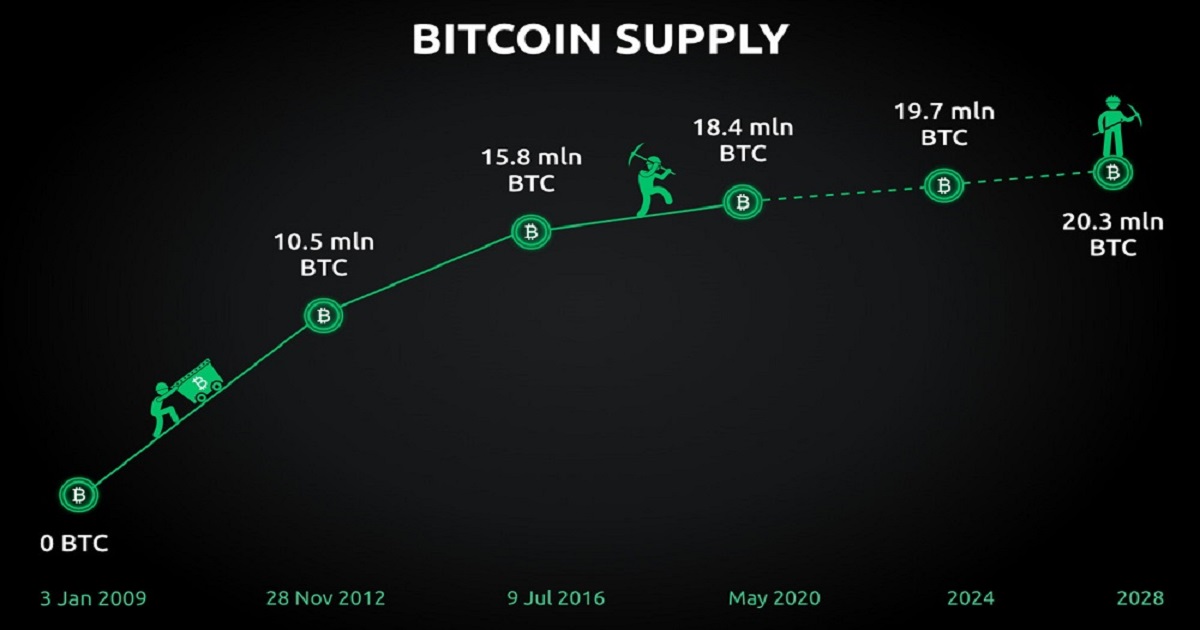
It's crucial to remember that a big draw of bitcoin is its known, constant pace of inflation as opposed to the unpredictable and chaotic inflation of fiat currencies brought on by excessive quantitative easing. supply is restricted to a maximum of 21 million coins. Assuming demand remains high, both of these elements ought to, in theory, support bitcoin's price over time.
Hopefully, reading this article, "What is Bitcoin Mining Difficulty? Why is It Hard To Mine Bitcoin?" can help you to understand it better.