If you are in the crypto world for a long time, you might have heard of Bitcoin Mining. But what is Bitcoin Mining? How does it work? Bitcoin mining is the process of adding blocks of transactions to the public blockchain and verifying them. In this article, we will explore more about Bitcoin Mining.
What is Bitcoin Mining?
Bitcoin mining is an essential part of the technology underlying cryptocurrencies by which transactions are verified and added to a digital ledger called a blockchain. The owners and operators of the computer systems that make up the decentralized Bitcoin network (called miners) receive newly created Bitcoins as a reward for this work.
Bitcoin miners use software to solve transaction-related algorithms that examine Bitcoin transactions. In return, miners receive a certain amount of Bitcoin per block. This induces them to continue to solve the transaction-related algorithms in order to support the entire system.
The Bitcoin reward miners receive is an incentive to assist with the main purpose of mining: to legitimize and monitor Bitcoin transactions to ensure their validity. Since many users around the world share these responsibilities, Bitcoin is a "decentralized" cryptocurrency or rather does not rely on any central authority (such as a central bank or government) to oversee its regulation.
How does Bitcoin Mining work?
Verifying Bitcoin transactions and recording them on the blockchain involves solving complex algorithms. This is all part of Bitcoin's proof-of-work consensus mechanism, which is designed to add a new block every 10 minutes. The more computing power a miner has, the more likely it is to win a block.
Miners receive the latest batch of transaction data and run it through the encryption algorithm. Generates a hash or string of numbers and letters that do not reveal any transaction data and is used for validity. A hash is designed in this way to help ensure that its corresponding block has not been tampered with. If even one number is different or inappropriate, the corresponding data will generate a different hash. The hash of the previous block is included in the next block, so if something changes in the previous block, the resulting hash changes.
Rob Chang, CEO of privately held bitcoin miner Gryphon Digital Mining, said that the current generation of these dedicated bitcoin mining rigs generates possible hashes for bitcoin block equations at roughly 100 trillion hashes per second. Answer.
Bitcoin hash is a mining measurement of the amount of computing power on the network used to process transactions.
What are the risks of Bitcoin Mining?
The following risks are associated with mining Bitcoin:
- Environmental
- Price volatility
- Profitability
- Regulatory risks
- Malware
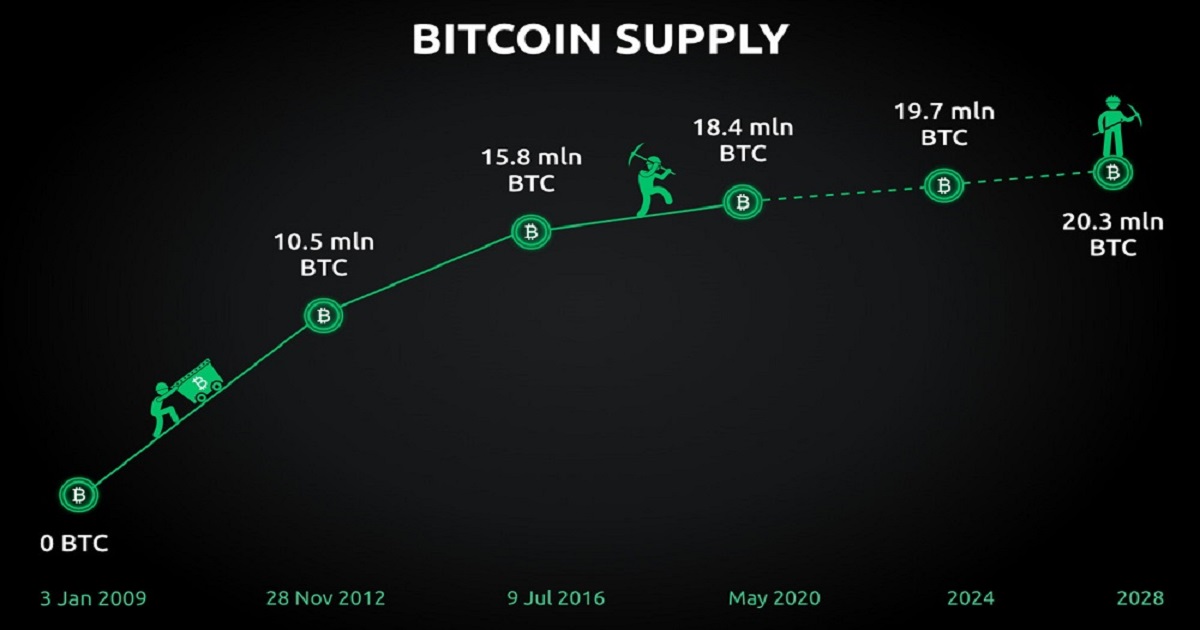
So I hope now you will understand what is Bitcoin Mining and how it works. Assuming demand for Bitcoin continues to grow, its stable inflation rate and supply cap are essential to support its price. The quality of the former largely depends on the mining difficulty algorithm.