logo
  • menu
  • Markets
  • ETFs
  • Live
  • Spot
  • Futures
  • Learn
  • Sign In
  • Sign Up
  • Downloads
  • English
  • |
  • USD
  • |
Sign Up
Crypto PricesLearnLatest NewsDownloadsMarketsSpotAnnouncements
Home/
Learn/
Crypto Basics

What is hard fork meaning in blockchain?

By Martha Grizzard
Aug 2, 2022
3.9 
★
★
★
★
★
★
★
★
★
★
 235 User Rating
Share

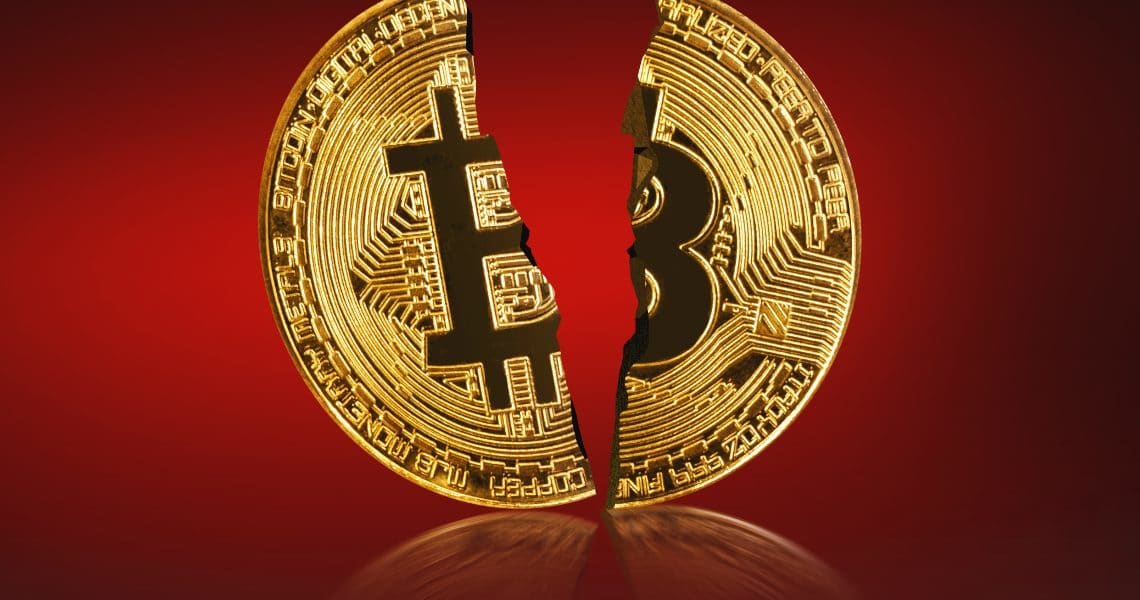
Hard fork meaning is a backward-incompatible software update. Typically, these occur when nodes add new rules in a way that conflicts with the rules of old nodes. New nodes can only communicate with others that operate the new version. As a result, the blockchain splits, creating two separate networks: one with the old rules, and one with the new rules. In this article we will be talking about forks, as well as the difference between hard forks and soft forks.

Who marks decisions in a blockchain network?

In Bitcoin, you could broadly make the distinction between three subsets of participants – developers, miners, and full node users. These are the parties that actually contribute to the network, and make decisions for how the network is run.

What is a fork?

A software fork occurs at a point where software is copied and modified. The original project lives on, but it is now distinct from the new one, which takes a different direction. Suppose that the team of your favourite cryptocurrency content website had a major disagreement with how to proceed. One part of the team might replicate the site on a different domain. But going forward, they would post different types of content than the original.

The projects build off a common ground and share a history. Just like a single road that later splits into two, there’s now a permanent divergence in their paths. In blockchain, there are two types of forks: hard forks and soft forks.

Hard forks

Hard fork meaning, as mentioned, is backward-incompatible software updates. When the network splits, there are now two networks running in parallel. They’ll both continue to propagate blocks and transactions, but they’re no longer working on the same blockchain. All nodes had an identical blockchain until the point of the fork (and that history remains), but they’ll have different blocks and transactions afterward.

An example of a hard fork was the 2017 fork that saw Bitcoin fragmented into two separate chains – the original one, Bitcoin (BTC), and a new one, Bitcoin Cash (BCH). The fork occurred after a lot of arguing over the best approach to scaling. Bitcoin Cash proponents wanted to increase the block size, while Bitcoin proponents opposed the change.

Soft Forks

Contrary to hard forks, a soft fork is a backward-compatible upgrade, meaning that the upgraded nodes can still communicate with the non-upgraded ones. What you typically see in a soft fork is the addition of a new rule that doesn’t clash with the older rules.

A good real-life example of a soft fork was the aforementioned Segregated Witness (SegWit) fork, which occurred shortly after the Bitcoin/Bitcoin Cash split. SegWit was an update that changed the format of blocks and transactions, but it was cleverly crafted. Old nodes could still validate blocks and transactions (the formatting didn’t break the rules), but they just wouldn’t understand them. Some fields are only readable when nodes switch to the newer software, which allows them to parse additional data.

In Conclusion

Hard fork meaning is a backward-incompatible software update that happens when nodes add new rules in a way that conflicts with the rules of the old nodes.


Disclaimer: The information on this page may have been obtained from third parties and does not necessarily reflect the views or opinions of BitKan. This content is provided for general informational purposes only, without any representation or warranty of any kind, nor shall it be construed as financial or investment advice. BitKan shall not be liable for any errors or omissions, or for any outcomes resulting from the use of this information. Investments in digital assets can be risky. Please carefully evaluate the risks of a product and your risk tolerance based on your own financial circumstances. Products mentioned in this article may not be available in your region.

Related Articles

  • What Are Short Liquidations? How Can Traders Prevent Them in Crypto?

    What Are Short Liquidations? How Can Traders Prevent Them in Crypto?

    A short liquidation is a mandatory event within derivatives markets where a cryptocurrency exchange automatically closes a leveraged short position.
    Cornell Rachel
    Jun 22, 2026
  • What Is Rehypothecation Risk in Crypto? How to Protect Yourself

    What Is Rehypothecation Risk in Crypto? How to Protect Yourself

    Rehypothecation is a practice where a lending platform takes collateral pledged by its clients and uses it for its own purposes.
    James Dean
    Jun 17, 2026
  • What Is pERC20? How Does This Ethereum Token Standard Work?

    What Is pERC20? How Does This Ethereum Token Standard Work?

    The pERC-20 framework is an experimental Ethereum Improvement Proposal designed to fundamentally alter how standard tokens operate on public networks,
    Jun 12, 2026

Latest Articles

Crypto Basics

Tutorials

Currencies

Investing

  • What Are Short Liquidations? How Can Traders Prevent Them in Crypto?

    What Are Short Liquidations? How Can Traders Prevent Them in Crypto?

    A short liquidation is a mandatory event within derivatives markets where a cryptocurrency exchange automatically closes a leveraged short position.
    Cornell Rachel
    Jun 22, 2026
  • What Is Rehypothecation Risk in Crypto? How to Protect Yourself

    What Is Rehypothecation Risk in Crypto? How to Protect Yourself

    Rehypothecation is a practice where a lending platform takes collateral pledged by its clients and uses it for its own purposes.
    James Dean
    Jun 17, 2026
  • What Is pERC20? How Does This Ethereum Token Standard Work?

    What Is pERC20? How Does This Ethereum Token Standard Work?

    The pERC-20 framework is an experimental Ethereum Improvement Proposal designed to fundamentally alter how standard tokens operate on public networks,
    Jun 12, 2026
  • What Are Crypto Prediction Markets? A Complete Guide for Beginners

    What Are Crypto Prediction Markets? A Complete Guide for Beginners

    Crypto prediction markets are peer-to-peer decentralized financial platforms where participants trade contracts tied to the outcomes of real-world events, such as elections, sports, or economic data releases.
    Jun 12, 2026
  • What is the MSX X Card? Understanding the New Crypto Card

    What is the MSX X Card? Understanding the New Crypto Card

    The MSX X Card is a financial instrument launched by the MSX Maitong platform that functions as a payment gateway for digital assets
    James Dean
    Jun 8, 2026
View more data 

Content

BTCBTC(BTC)
$0
--(Last 24h)
SpotFutures

Top

View more
  1. 1How To Sign Up For A BitKan Account (Web)?
  2. 2When Is Bitcoin Halving 2024? What Does Bitcoin Halving Do?
  3. 3What is Etherscan Used For and How to Find Token Decimal on Etherscan
  4. 4What is USDC used for? Why is USDC used?

Top Gainers

View more
DeXe
DeXeDEXE

$22.6410

+24.78%
Bitlight
BitlightLIGHT

$0.1355

+18.26%
OpenGradient
OpenGradientOPG

$0.1749

+15.07%
Test
TestTST

$0.0127

+14.21%
Portugal National Team Fan Token
Portugal National Team Fan TokenPOR

$0.2086

+12.63%

Top Trending

View more
LAB
LABLAB

$14.9210

-0.49%
DeXe
DeXeDEXE

$22.6220

+24.67%
Dogecoin
DogecoinDOGE

$0.0791

-5.44%
FOLKS
FOLKSFOLKS

$2.5086

+6.90%
Sui Network
Sui NetworkSUI

$0.7064

-2.35%

Recently added

View more
Arcium
ArciumARX

$0.3647

-8.82%
Ambire AdEx
Ambire AdExADX

$0.0542

-10.71%
Re
ReRE

$0.8313

+5.02%
o1 exchange
o1 exchangeO

$0.5884

-7.16%
SpaceX
SpaceXSPCXB

$163.260

-2.30%

Latest News

View more
  1. 1Uniswap Soars 22% as Altcoins Rally While Bitcoin Stalls
  2. 2HYPE Surges 6%: Suspected Insider Whale Nabs $34M in Gains
  3. 3SpaceX Prices Record $75B IPO at $135, Hits $1.8T Valuation
  4. 4Stablecoin Secondary Market Rules Pit Banks Against Crypto
  5. 5Bitcoin and Gold Tumble Amid Rising Inflation and Rate Bets
About Us
  • About BitKan
  • Contact Us
  • Announcements
  • VIP Program
  • BitKan Ambassador
  • Institutional Services
Products
  • Spot
  • Futures
  • Crypto Prices
  • Learn
  • News
  • Markets
  • How to Buy Crypto
  • BTC to USD Calculator
  • Reward
Help
  • Help Center
  • Email Us
  • Live Chat
  • Download APP
  • Listing Application
  • Buy Bitcoin
  • Buy Ethereum
  • Buy Dogecoin
  • Buy Altcoins
Terms
  • Terms of Use
  • Privacy Policy
  • Trading Rules
  • Fee
K-Site
English
About Us
+
  • About BitKan
  • Contact Us
  • Announcements
  • VIP Program
  • BitKan Ambassador
  • Institutional Services
Products
+
  • Spot
  • Futures
  • Crypto Prices
  • Learn
  • News
  • Markets
  • How to Buy Crypto
  • BTC to USD Calculator
  • Reward
Help
+
  • Help Center
  • Email Us
  • Live Chat
  • Download APP
  • Listing Application
  • Buy Bitcoin
  • Buy Ethereum
  • Buy Dogecoin
  • Buy Altcoins
Terms
+
  • Terms of Use
  • Privacy Policy
  • Trading Rules
  • Fee
K-Site
+
  • Twitter
  • Facebook
  • Telegram
  • YouTube
  • Instagram
  • Medium
  • Linkedin
@2012-2026 BITKAN.com