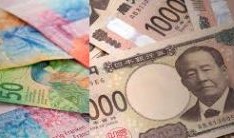
Iceland is most known for its untamed scenery and terrain. The top attractions on the list include the Northern Lights, Blue Lagoon, volcanoes, glaciers, and waterfalls. Iceland is renowned for its history and Viking settlement. Due to its contrasting landscapes, it is referred to as "The Land of Fire and Ice." What is Iceland currency? We will cover all Iceland currencies including cryptocurrency.
What Is Iceland Currency?
Iceland, an island nation in the North Atlantic Ocean located above the Mid-Atlantic Ridge, uses the krona as its national currency. Due to its location near the widening intersection of the North American and European tectonic plates, the island is both volcanically and geographically active. Reykjavk, the nation's capital and largest city, is where two thirds of Iceland's population resides, together with a number of other communities in the southwest of the country.
History Of Iceland Currency
The Króna is made up of 100 aurar, however coins with values lower than one króna haven't been in circulation since 2003. In 1874, the Danish Krone, which had previously been used in Denmark as the rigsdaler, was introduced in Iceland. Iceland started printing its own currency in 1885. Following the breakup of the Scandinavian Monetary Union at the start of World War I and Iceland's independence from Denmark in 1918, the Icelandic Króna was introduced separately from the Danish Krone.
In 1922, the first coins in the 10 and 25 aurar denominations were released. Following these were 1-króna and 2-krónur coins in 1925, and 1-eyrir, 2-aurar, and 5-aurar coins in 1926.
As a result of Denmark's takeover by Nazi Germany in 1940, which led to Iceland's separation from Denmark, all coins were redesigned in 1946 to remove the royal monogram. The Icelandic krona was revalued in 1981, with 100 old krónur (ISJ) equaling one new krona (ISK).
Coins were first introduced in 1981 in the following denominations: 5, 10, and 50 aurar, 1 króna, and 5 krónur. 10 krónur pieces, 50 krónur, and 100 krónur were added in 1984, 1987, and 1995, respectively. , 10, and 50 aurar coins were no longer accepted by Icelandic banks as of October 1, 2003.
Does Iceland Use Cryptocurrency?
Since making significant market reforms in 1990, Iceland has experienced tremendous economic growth. There is no exception in the Bitcoin space. Due to its heavy reliance on thermal energy sources, Iceland is home to the largest Bitcoin mining operations in the entire globe.
The National Icelandic electrical company Landsvirkjun announced in December 2021 that it would reduce the amount of power it allots to aluminum smelting facilities and crypto mining operations. The decrease was brought on by problems at a power plant and low hydrovelle is novel. indication of how long this reduction will last, but for the time being, no new requests for power for mining operations will be approved.
In 2018, immediately after Bitcoin's price run, Iceland became the first country to utilize more electricity for Bitcoin mining than any other practical activity. 8% of all Bitcoins, according to the Icelandic Blockchain Foundation, have been mined there.
Through the aforementioned cryptocurrency exchanges, you may purchase Bitcoin in Iceland in one of the simplest methods possible. You can use our advice to choose one exchange from the several that sell Bitcoin in Iceland based on your needs and preferences. Before choosing, an exchange is important to take into account its transaction costs, withdrawal limitations, payment options, and verification procedures.
Summary
What is Iceland currency? It is Krona. Businesses engaged in cryptocurrency mining have recently entered Iceland's economic scene. The cheap power needed to mine new cryptocurrencies attracted these businesses. Aside from that, Landsvirkjun has also cut contracts with a number of industrial clients, including data centers and aluminum smelters.