logo
  • menu
  • Markets
  • ETFs
  • Live
  • Spot
  • Futures
  • Learn
  • Sign In
  • Sign Up
  • Downloads
  • English
  • |
  • USD
  • |
Sign Up
Crypto PricesLearnLatest NewsDownloadsMarketsSpotAnnouncements
Home/
Learn/
Crypto Basics

What is Liquidity in Crypto and How Liquid is Bitcoin

By Martha Grizzard
Aug 24, 2022
4.2 
★
★
★
★
★
★
★
★
★
★
 152 User Rating
Share

Liquidity is the measure of how easily you can convert an asset into cash or another asset. You may have the rarest, most valuable old book in your backpack, but if you're alone on a remote island, it will be difficult to find a buyer.

Bitcoin can be considered a relatively liquid asset class at most times. There are a number of established, trusted exchanges on which traders can buy or sell Bitcoin. Daily trading volume often approaches $10 billion. Spreads between buy and sell orders are usually not too extreme, and there are generally enough orders available on most exchanges for the average trader not to suffer the effects of slippage.

Here is your simple guide to what is liquidity in crypto and how liquid is Bitcoin.

What is Liquidity in Crypto?

Liquidity is a measure of the ease at which an asset can be converted to another asset without affecting its price. In simple terms, liquidity describes how quickly and easily an asset can be bought or sold.

In this sense, good liquidity means that an asset can be quickly and easily bought or sold without having much effect on its price. Conversely, bad or low liquidity means that an asset can't be bought or sold quickly. Or, if it can, the transaction would have a significant effect on its price.

Cash (or cash equivalents) can be considered the most liquid asset since it can be easily converted into other assets. A similar asset in the world of cryptocurrencies is a stablecoin.

While stablecoins and digital currencies aren't part of the standard for everyday payments yet, it's only a matter of time until they are widely accepted. In any case, much of the volume in the cryptocurrency market is already done in stablecoins, making them very liquid.

How Liquid is Bitcoin?

Compared to many other asset classes, Bitcoin can be considered very liquid most of the time. “Most of the time” is an important qualifier because market conditions are always changing.

On an average day, it can be said that Bitcoin has great liquidity. But during times of crisis and panic selling, or times of euphoria and panic buying, this may be less so. The same can be said of most any asset class. The exchange an investor is trading Bitcoin on also matters. The more traders and higher volume of an exchange, the greater Bitcoin liquidity there will be.

Factors Impacting Bitcoin Liquidity

These are a few of the most important variables that can affect Bitcoin liquidity.

1. Volume

Volume simply refers to how much of an asset there is being traded in a given timeframe (e.g., daily volume). Greater volume tends to increase liquidity and dampen the effects of volatility, somETHing we’ll explore in greater detail shortly.

2. Exchanges

Liquidity is a big part of how crypto exchanges work. The more trusted exchanges that exist, the more markets there are for people to buy and sell Bitcoin. This translates to greater total volume of Bitcoin being traded, which makes for more liquidity. In the early days of crypto, this was a major obstacle to the liquidity of Bitcoin.

3. Storage

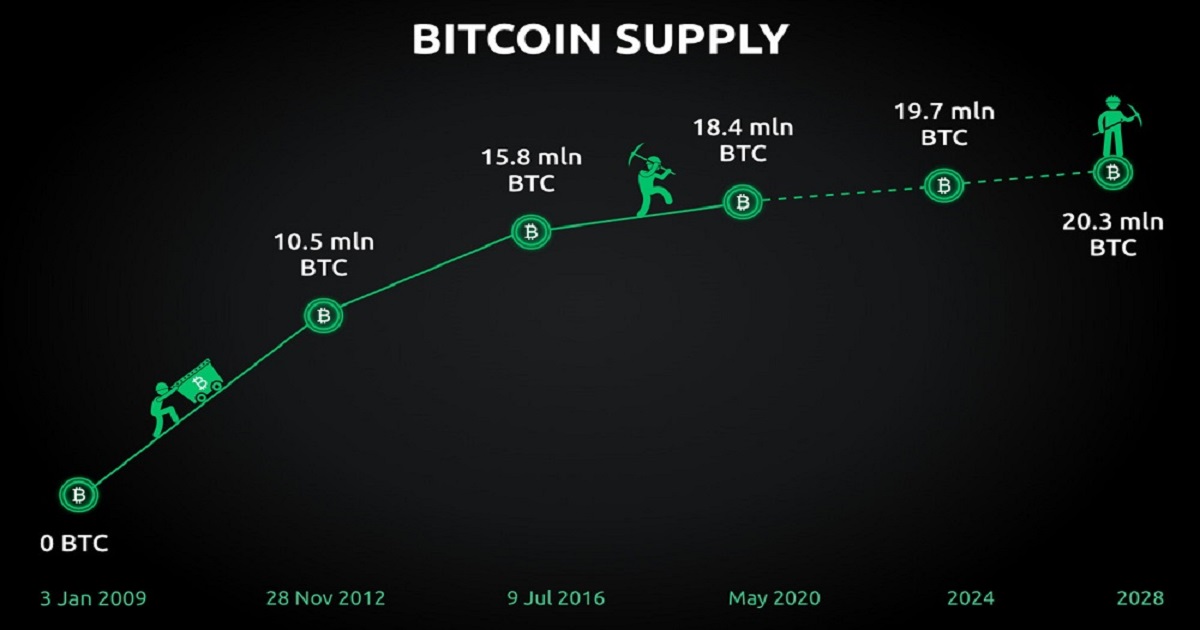
One interesting factor affecting Bitcoin liquidity is how people store their digital assets. This is a factor that is unique to cryptocurrency and doesn’t have much relevance in most other financial markets. Because Bitcoin is a scarce digital commodity of sorts, the way it is stored matters.

People who hold large amounts of Bitcoin tend to be fans of somETHing called cold storage, which involves holding the private keys to a crypto wallet offline. This method is thought to make coins less vulnerable, as they typically cannot be accessed by hackers or thieves of any kind. Of course, if coins are held offline, they are taken off the market and therefore reduce liquidity.

Some researchers who have studied this concept have concluded that as much of 78% of the total Bitcoin supply was illiquid as of December 2020. This also implies that many people who own Bitcoin plan on holding it for some length of time and are not looking for fast profits, indicating they believe in its use as a store of value.

4. Volatility

Liquidity and volatility can be closely related. A lack of liquidity can lead to an increase in volatility if one or more large traders are trying to enter or exit large positions. As traders purchase existing sell orders or sell into existing buy orders, prices can move up or down rapidly if there is a limited supply of an asset on the order books.

When there is a large supply of an asset and many large orders, it takes a greater amount of capital to move the market. At the same time, a spike in volatility can also lead to a drop in liquidity, as panic selling ensues and bid/ask spreads widen.

In general, higher liquidity tends to make for lower volatility overall. This is part of the reason why Bitcoin used to fall or rise by 30%, 50%, or even more in a single day. Such moves are less common now that Bitcoin has a market cap in excess of $1 trillion.

Summary

Liquidity is an important factor when considering the financial markets. Generally, it's desirable to trade markets that have high liquidity since you'll be able to enter and exit positions with relative ease. If you’re planning to trade in the cryptocurrency market but are wondering how liquid is Bitcoin, the market leader, this article should have answered your question!


Disclaimer: The information on this page may have been obtained from third parties and does not necessarily reflect the views or opinions of BitKan. This content is provided for general informational purposes only, without any representation or warranty of any kind, nor shall it be construed as financial or investment advice. BitKan shall not be liable for any errors or omissions, or for any outcomes resulting from the use of this information. Investments in digital assets can be risky. Please carefully evaluate the risks of a product and your risk tolerance based on your own financial circumstances. Products mentioned in this article may not be available in your region.

Related Articles

  • What Is Rehypothecation Risk in Crypto? How to Protect Yourself

    What Is Rehypothecation Risk in Crypto? How to Protect Yourself

    Rehypothecation is a practice where a lending platform takes collateral pledged by its clients and uses it for its own purposes.
    James Dean
    Jun 17, 2026
  • What Are Crypto Prediction Markets? A Complete Guide for Beginners

    What Are Crypto Prediction Markets? A Complete Guide for Beginners

    Crypto prediction markets are peer-to-peer decentralized financial platforms where participants trade contracts tied to the outcomes of real-world events, such as elections, sports, or economic data releases.
    Jun 12, 2026
  • What is Bitwise Hyperliquid ETF? How Does BHYP Work?

    What is Bitwise Hyperliquid ETF? How Does BHYP Work?

    The Bitwise Hyperliquid ETF is a spot-based investment vehicle that holds the physical HYPE token rather than derivatives or futures contracts.
    Hallie Gill
    May 18, 2026

Latest Articles

Crypto Basics

Tutorials

Currencies

Investing

  • What Are Short Liquidations? How Can Traders Prevent Them in Crypto?

    What Are Short Liquidations? How Can Traders Prevent Them in Crypto?

    A short liquidation is a mandatory event within derivatives markets where a cryptocurrency exchange automatically closes a leveraged short position.
    Cornell Rachel
    Jun 22, 2026
  • What Is Rehypothecation Risk in Crypto? How to Protect Yourself

    What Is Rehypothecation Risk in Crypto? How to Protect Yourself

    Rehypothecation is a practice where a lending platform takes collateral pledged by its clients and uses it for its own purposes.
    James Dean
    Jun 17, 2026
  • What Is pERC20? How Does This Ethereum Token Standard Work?

    What Is pERC20? How Does This Ethereum Token Standard Work?

    The pERC-20 framework is an experimental Ethereum Improvement Proposal designed to fundamentally alter how standard tokens operate on public networks,
    Jun 12, 2026
  • What Are Crypto Prediction Markets? A Complete Guide for Beginners

    What Are Crypto Prediction Markets? A Complete Guide for Beginners

    Crypto prediction markets are peer-to-peer decentralized financial platforms where participants trade contracts tied to the outcomes of real-world events, such as elections, sports, or economic data releases.
    Jun 12, 2026
  • What is the MSX X Card? Understanding the New Crypto Card

    What is the MSX X Card? Understanding the New Crypto Card

    The MSX X Card is a financial instrument launched by the MSX Maitong platform that functions as a payment gateway for digital assets
    James Dean
    Jun 8, 2026
View more data 

Content

BTCBTC(BTC)
$0
--(Last 24h)
SpotFutures

Top

View more
  1. 1How To Sign Up For A BitKan Account (Web)?
  2. 2When Is Bitcoin Halving 2024? What Does Bitcoin Halving Do?
  3. 3What is Etherscan Used For and How to Find Token Decimal on Etherscan
  4. 4What is USDC used for? Why is USDC used?

Top Gainers

View more
Audiera
AudieraBEAT

$2.3599

+43.79%
Heima
HeimaHEI

$0.1176

+36.59%
DeXe
DeXeDEXE

$23.1560

+27.98%
Resolv
ResolvRESOLV

$0.0246

+18.58%
UNC
UNCUNC

$0.002698

+16.19%

Top Trending

View more
Yooldo Games
Yooldo GamesESPORTS

$0.0380

+32.36%
Dogecoin
DogecoinDOGE

$0.0787

-4.80%
Worldcoin
WorldcoinWLD

$0.5451

-12.88%
Synapse
SynapseSYN

$0.2972

+9.02%
DeXe
DeXeDEXE

$23.1560

+27.98%

Recently added

View more
Arcium
ArciumARX

$0.3351

-16.23%
Ambire AdEx
Ambire AdExADX

$0.0546

-8.54%
Re
ReRE

$0.8242

-9.92%
o1 exchange
o1 exchangeO

$0.5677

-9.76%
SpaceX
SpaceXSPCXB

$156.810

+1.13%

Latest News

View more
  1. 1Uniswap Soars 22% as Altcoins Rally While Bitcoin Stalls
  2. 2HYPE Surges 6%: Suspected Insider Whale Nabs $34M in Gains
  3. 3SpaceX Prices Record $75B IPO at $135, Hits $1.8T Valuation
  4. 4Stablecoin Secondary Market Rules Pit Banks Against Crypto
  5. 5Bitcoin and Gold Tumble Amid Rising Inflation and Rate Bets
About Us
  • About BitKan
  • Contact Us
  • Announcements
  • VIP Program
  • BitKan Ambassador
  • Institutional Services
Products
  • Spot
  • Futures
  • Crypto Prices
  • Learn
  • News
  • Markets
  • How to Buy Crypto
  • BTC to USD Calculator
  • Reward
Help
  • Help Center
  • Email Us
  • Live Chat
  • Download APP
  • Listing Application
  • Buy Bitcoin
  • Buy Ethereum
  • Buy Dogecoin
  • Buy Altcoins
Terms
  • Terms of Use
  • Privacy Policy
  • Trading Rules
  • Fee
K-Site
English
About Us
+
  • About BitKan
  • Contact Us
  • Announcements
  • VIP Program
  • BitKan Ambassador
  • Institutional Services
Products
+
  • Spot
  • Futures
  • Crypto Prices
  • Learn
  • News
  • Markets
  • How to Buy Crypto
  • BTC to USD Calculator
  • Reward
Help
+
  • Help Center
  • Email Us
  • Live Chat
  • Download APP
  • Listing Application
  • Buy Bitcoin
  • Buy Ethereum
  • Buy Dogecoin
  • Buy Altcoins
Terms
+
  • Terms of Use
  • Privacy Policy
  • Trading Rules
  • Fee
K-Site
+
  • Twitter
  • Facebook
  • Telegram
  • YouTube
  • Instagram
  • Medium
  • Linkedin
@2012-2026 BITKAN.com