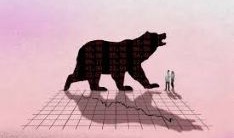
When markets fall sharply, the dominant emotion is despair. Prices drop, confidence disappears, and many investors feel they have failed again. According to macro investor Raoul Pal, this emotional collapse is not a sign of finality, but a familiar stage in long-term market cycles. After nearly four decades of investing, he argues that panic is loud, painful, and recurring — but rarely decisive.
What Is Market Panic, According to Raoul Pal?
Raoul Pal describes market panic as a psychological event rather than a fundamental one. In his view, panic emerges when fear overwhelms rational thinking. News becomes uniformly negative, social media reinforces worst-case narratives, and investors rush to sell simply to escape emotional discomfort.
This dynamic appears repeatedly across assets, from equities to crypto. High-interest search terms such as market panic, Bitcoin crash, crypto volatility, and stock market sell-off often surge precisely during these moments.
Why Does Panic Feel Like the End?
Pal emphasizes that panic always feels terminal because humans are deeply loss-averse. A 30–50% drawdown activates fear responses that make short-term pain feel permanent. He notes that every cycle feels different in real time, even though the emotional structure is identical.
From his experience, even strong bull markets contain multiple drawdowns that feel indistinguishable from total collapse when they are happening.
How Has Panic Repeated Across Bitcoin and Markets?
Raoul Pal entered Bitcoin in 2013 and personally experienced drops of 75% and even 87% — all within broader long-term uptrends. He points out that Bitcoin has repeatedly suffered 50–80% corrections while still delivering exponential gains over time.
Search interest around Bitcoin price, crypto market crash, and bull market correction tends to spike during these drawdowns, reinforcing his view that fear peaks near moments of maximum opportunity, not final failure.
Why Does Raoul Pal Often Advocate Doing Nothing?
One of Pal’s core lessons is that in long-term, adoption-driven assets, inactivity can be a strategy. He explains that panic punishes emotional decisions more than incorrect forecasts. Selling during fear may reduce short-term stress, but often sacrifices long-term compounding.
This perspective helps explain why terms like HODL, time in the market, and long-term investing remain consistently popular in search trends.
How Does Raoul Pal Suggest Responding to Panic?
Rather than trying to predict bottoms, Pal focuses on survivability. He stresses proper position sizing, avoiding leverage, and accepting volatility as the cost of long-term returns. He often advocates incremental buying during weakness, noting that imperfect timing combined with discipline can still outperform emotional precision.
Common high-interest concepts aligned with this approach include buy the dip, dollar cost averaging, and risk management.
Why Does Conviction Matter So Much?
Raoul Pal repeatedly warns against “borrowed conviction.” He argues that investors who rely on others’ opinions tend to exit during the worst moments. Panic exposes weak conviction in the same way leverage exposes weak balance sheets. For Pal, only personal research and understanding can sustain confidence during drawdowns.
Conclusion
Raoul Pal’s central message is clear: market panic is not proof that everything is over — it is proof that emotions have taken control. Every generation believes its crisis is different, only to later recognize familiar patterns. Volatility, in his words, is not a flaw in investing but the price paid for long-term compounding. Those who endure panic without abandoning their strategy are often the ones who benefit most when the cycle turns again.