You will learn what is mBTC in this article. The value of bitcoin has risen up to thousands of dollars during these years. So, it was not easy to make transactions with the value of bitcoin. If you want to buy 500 USD of BTC, you will get only a fractional amount of BTC. It is confusing to use currencies in decimals. One of the answers the developers have solved is mBTC.
What is mBTC?
Introduced in May 2011 by a poll, millibitcoin is also commonly referred to as millibit, millicoin, and millie. The letter “m” refers to milli-, which naturally stands for one-thousandth of a bitcoin. Therefore, mBTC, or a millibitcoin is 0.001 or 1/1000 of a bitcoin.
In 2017, BTCC CEO Bobby Lee started an open vote and took to Twitter to push the issue of trading in mBTC instead of BTC. As Cointelegraph reported in January 2017, the idea had a number of supporters, least of all because it would remove the psychological barriers for investing in Bitcoin by making it more affordable through smaller denominations. The article concluded that the adoption of mBTC would depend largely on the value of BTC and whether it would top $30,000.
Converting mBTC
Several Bitcoin converters make it easy to convert mBTC to other fiat currencies like dollars and euros. As of the time of writing, the current price of 1 BTC is $21,64.
According to Nomics, a homepage for cryptocurrencies,
1 mBTC = $21,646
1 mBTC = €20.78
Would you rather see your balance in decimals or units of mBTC?
Instead of counting the number of digits after a decimal, especially when dealing with a smaller amount of BTC, it can be more convenient for you to convert smaller units of BTC to mBTC. Let's look at the equivalent of 1 BTC to mBTC, shall we ?
1 BTC = 1000 mBTC
or
1 mBTC = 0.001BTC.
For example, if 1 BTC is equivalent to $20,000, then 1 mBTC (1/100th of BTC) will be equal to $20. It's that simple.
Why Do People Use mBTC?
One of the reasons why people would prefer to use the millibitcoin as a unit of measurement is because it makes it easier for users to understand and communicate smaller units of Bitcoin. Satoshi Nakamoto understood that sooner or later Bitcoin would get to a point price where it can increase dramatically, hence the need for smaller units.
Crypto proponents believe that using units of millibitcoin to describe smaller units of BTC would reduce the psychological barrier and perceptions and allow more users to purchase smaller amounts of Bitcoin without feeling like six places to the right of the decimal equates to a small hold
Arguments Against Using mBTC
However, there are arguments against using millibitcoin as a unit of Bitcoin. There's no doubt that the decimals can be confusing, but there's been a debate on what should be the smallest unit of Bitcoin since there are other options like microbitcoin and Satoshi.
In response to the post on the use of mBTC, a user suggested the generic use of Satoshi as the smallest unit of Bitcoin.
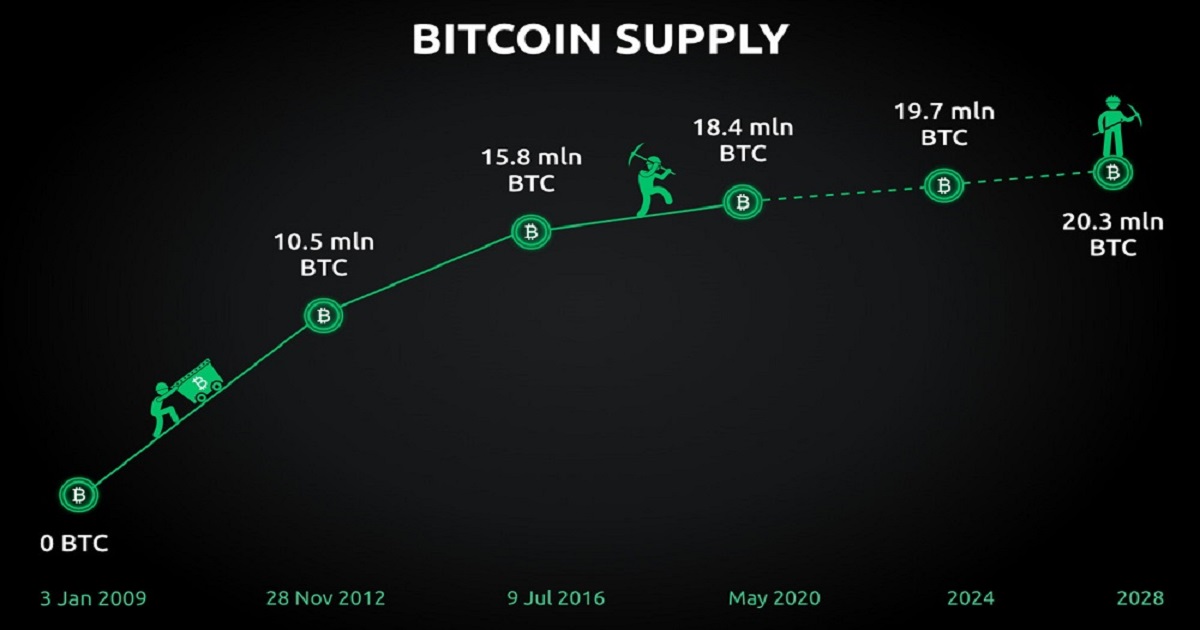
Another argument that you might encounter is that mBTC can result in inflation, but this is not true. Inflation rises when the supply of money in an economy increases. Since Bitcoin is capped at 21 million BTC, that means there will not be the mining of new Bitcoin once it hits its hard cap. Therefore, Bitcoin can be said to be deflationary.
Due to the increasing demand for Bitcoin, it takes a proportional amount of a given currency to purchase BTC. Therefore, it only becomes necessary and convenient to break BTC into smaller units using a globally acceptable unit standard.
Bottom Line
Several terms have emerged as smaller units of Bitcoin, in part due to the volatility of Bitcoin's price against the US dollar, with one of them being mBTC. No one can say that mBTC might not become the standard in the future. So, this article about what is mBTC would help you with the basic crypto knowledge.