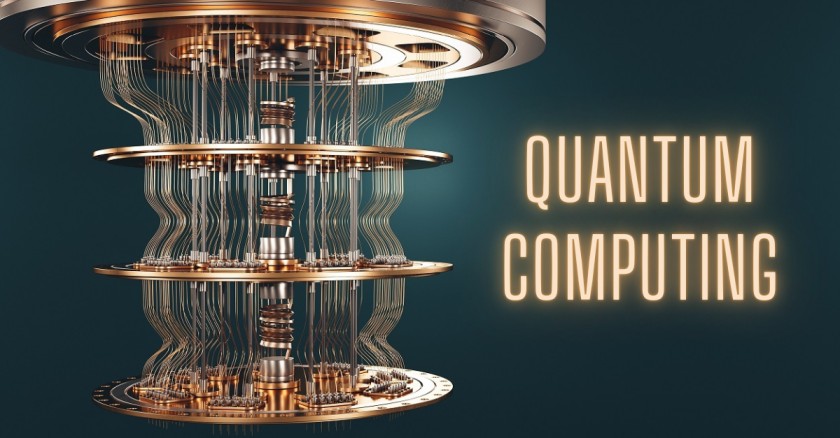
This article is about what is quantum cloud computing. Quantum cloud computing could potentially refer to the integration of quantum computing capabilities into cloud computing services. This integration might involve providing quantum processing power and resources as a service through the cloud.
What is Quantum Cloud Computing?
Quantum cloud computing refers to the provision of quantum computing resources to various users, including organizations and researchers, through cloud technology. Unlike traditional computing, quantum computers harness the principles of quantum physics to process information, which can lead to significantly faster and more powerful computation for solving complex problems.
Cloud-based quantum computers offer high-speed and enhanced computing power compared to classical computers. This is due to their ability to perform calculations using qubits, the basic units of quantum information, and exploit phenomena like superposition and entanglement. These quantum properties allow them to explore multiple possibilities simultaneously and solve intricate computational tasks more efficiently.
There are different types of quantum computers available, each with distinct capabilities. Quantum annealers are specialized for solving optimization problems, while analog quantum simulators can tackle physics and biochemistry-related challenges. Universal quantum computers, although the most powerful, are also the most challenging to build and can potentially access a vast number of qubits.
In the context of blockchain technology, quantum cloud computing has generated concerns and opportunities. The immense computational power of quantum computers raises the question of their potential impact on blockchain networks. Firstly, quantum computers could potentially disrupt proof-of-work (PoW) mining by enabling miners to gain an unfair advantage, leading to concerns about centralization in decentralized networks like Bitcoin and Litecoin.
Secondly, the strong processing capabilities of quantum computers could threaten the security of blockchains that rely on cryptographic encryption. Quantum computers have the theoretical ability to decrypt encryption codes, posing a risk to blockchain networks that rely on cryptographic security. This vulnerability has prompted discussions about the need to develop quantum-resistant cryptographic solutions to protect blockchains from such attacks.
However, it's worth noting that while quantum computing poses challenges, it also offers solutions. Quantum cloud computing could be harnessed to enhance blockchain security by developing quantum-resistant encryption methods. As the field of quantum computing evolves, it is crucial for the blockchain community to explore ways to adapt and ensure the continued robustness of blockchain networks in the face of this emerging technology.
How Does it Work?
Quantum cloud computing operates similarly to platform-as-a-service models, connecting users to quantum processors, emulators, and simulators via cloud technology. This approach provides access to the computational power of quantum computers without the need for users to own or maintain physical quantum machines.
Physical quantum computers are highly intricate and typically require precise cooling systems to maintain ultra-cold temperatures for optimal operation. For instance, IBM's quantum hardware systems are roughly car-sized and incorporate cooling mechanisms to keep the superconducting processor at extremely low temperatures.
These quantum hardware systems consist of elements such as superfluids for cooling, superconductors that facilitate charge movement through quantum tunneling, and qubits, the fundamental units of quantum information. Qubits possess unique properties like superposition, which allows them to exist in a combination of various states simultaneously. This property enables the creation of multidimensional computational spaces, facilitating the solution of complex problems.
Entanglement, a crucial quantum mechanical phenomenon, plays a role in quantum computing as well. Entanglement involves correlations between the behaviors of separate quantum particles. In quantum computers, as qubits become entangled, their states influence other qubits, enabling faster problem-solving compared to classical computers.
Bottom Line
In this article, we have discussed what is quantum cloud computing. Quantum cloud computing provides a pathway for users to harness these unique quantum properties and capabilities through the convenience of cloud-based access.