In this article, you will learn what is the crypto fear and greed index. Data never lies, so if you are deciding whether to buy or sell crypto, you will need the support of the data. An index takes multiple data points and combines them into a single statistical measure. Good investors use these indexes to make decisions in crypto.
What is the Crypto Fear and Greed Index?
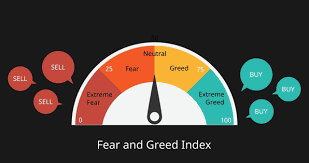
The Crypto Fear and Greed Index provides a score of 0 to 100 for crypto market sentiment. It's based on the CNNMoney Fear and Greed Index for analyzing the stock market.
Fear (a score of 0 to 49) indicates undervaluation and excess supply in the market. Greed (a score of 50 to 100) suggests an overvaluation of cryptocurrencies and a possible bubble.
Noticing changes in the level of fear and greed can become part of your trading strategy when choosing to enter or exit the crypto market.
The Crypto Fear and Greed Index analyzes a basket of different trends and market indicators to determine whether the market participants are feeling greedy or fearful. A score of 0 indicates extreme fear, while 100 suggests extreme greed. neutral.
A fearful market could be an indication that cryptocurrencies are undervalued. Too much fear in a market can lead to overselling and excess panic. Fear doesn't necessarily mean that the market has entered into a long-term bearish trend. Instead, you can think of it as a short or mid-term reference to overall market sentiment.
Greed in the market is the opposite situation. If investors and traders are greedy, there's a possibility for overvaluation and a bubble. Imagine a situation where FOMO (fear of missing out) causes investors to pump the markets, overvaluing Bitcoin's price. In other words , the increased greed may lead to excess demand, artificially inflating the price.
How is this index measured?
CNN Money examines seven different factors to calculate how much fear or greed is in the market. These factors are –
Stock Price Momentum: S&P 500 index versus its 125-day moving average (MA)
Stock Price Strength: The number of stocks hitting 52-week highs vs those hitting 52-week lows on the NYSE.
Stock Price Breadth: Analyzing trading volumes in rising stocks against declining stocks.
Put and Call Options: Do put options lag behind call options (greed) or surpass them (fear).
Junk Bond Demand: Gauging the market appetite for junk bonds.
Market Volatility: The Chicago Board Options Exchange Volatility Index (VIX) based on the 50-day Moving Average.
Safe Haven Demand: The difference in returns for stocks versus treasuries
Each of these indicators is measured on a scale of 0-100. Following that, an equal-weighted average of each of them is computed, which gives us the fear and greed index. Taking inspiration from this, Alternative(.)me created their crypto fear and greed index via six data sources which are Volatility (25%), Market momentum/volume (25% of the index), Social Media (15%), Surveys (15%), Dominance (10%) and Trends ( 10%).
Bottom Line
The crypto fear and greed index can complete your market analysis to help with your decisions acting as a market coordinator. So, if you are interested in investing in crypto using the index, you will need to know what is the crypto fear and greed index.