The term ‘ETHer’ may not be familiar to you. However, there is a far bigger chance that the term ‘Ethereum’ is familiar. When you hear this term, you may think Ethereum refers to the cryptocurrency, the second biggest by market capitalization.
Although this is often branded as cryptocurrency by those even in the industry, it is technically incorrect. ETHer (ETH) is actually the cryptocurrency, and Ethereum is the network it runs on. Let’s learn all-things Ethereum – its history, how does Etherium work, its applications and more!
History of the ETHereum Network
Bitcoin’s primary purpose was always intended to be that of digital currency, but over time, people started to realize the blockchain technology it underbodies could also be used for other functions – computer programmer Vitalik Buterin was one of these people.
Being an early investor in Bitcoin itself, he envisaged more possibilities for its blockchain technology which led to him starting to work on his own blockchain and in 2013, he published the ETHereum white paper. The Ethereum network in its first incarnation, known as Frontier, was launched in July 2015.
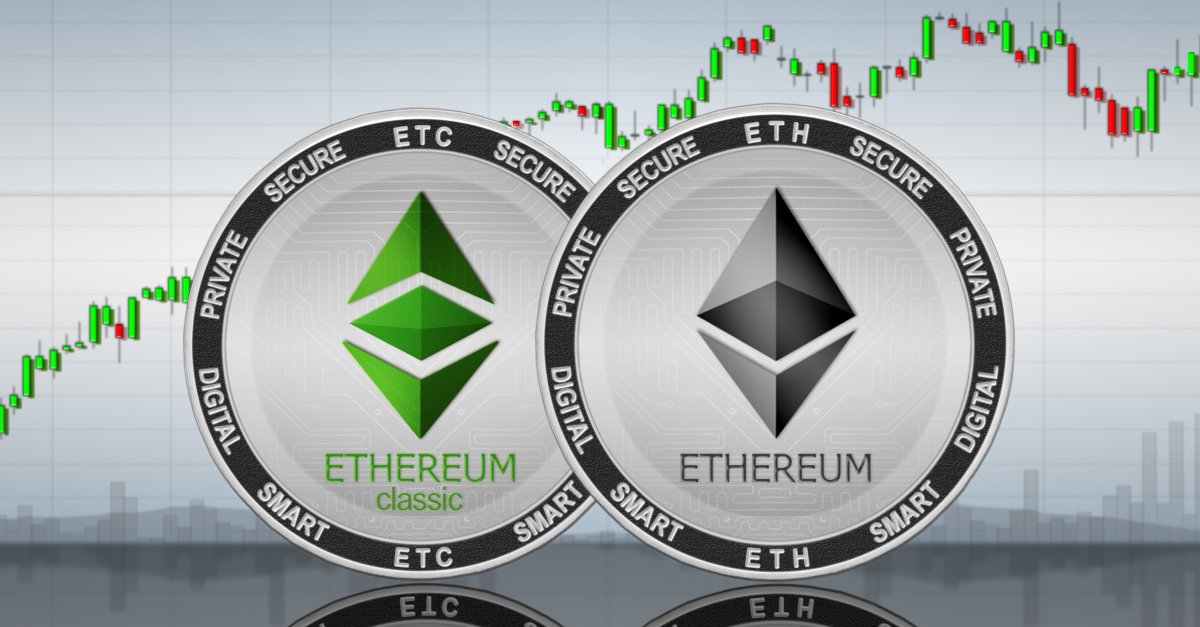
In 2016, there was a major security incident when $50 million worth of ETH was stolen. This resulted in the blockchain being split into two. Its original version was carried on as Ethereum Classic, while a new chain was made known as Ethereum. On this chain, the theft of the funds was reversed.
Since then, the network has gone on from strength to strength. There are now over 200,000 tokens and 3,000 DApps on the ETHereum network. In recent times, the DeFi boom has been at the center of the network’s expansion. Despite the ongoing success story of the network, there have long been calls to expand its capabilities. That’s where the Ethereum Merge and Sharding comes into the equation.
What is the ETHereum Network?
ETHereum is a decentralized computing platform. You can think of it like a laptop or PC, but it doesn't run on a single device. Instead, it simultaneously runs on thousands of machines around the world, meaning that it has no owner.
ETHereum, like Bitcoin and other cryptocurrencies, allows you to transfer digital money. However, it’s capable of a lot more – you can deploy your own code, and interact with applications created by other users. Because it’s so flexible, all sorts of sophisticated programs can be launched on Ethereum.
Simply put, the main idea behind ETHereum is that developers can create and launch code which runs across a distributed network instead of existing on a centralized server. This means that, in theory, these applications can’t be shut down or censored.
How Does ETHerium Work?
ETHereum is an open software platform built on blockchain technology, which enables developers to build and deploy decentralized applications and smart contracts. Thanks to this blockchain technology, the information shared on the platform (through a network of computers called nodes) cannot be manipulated or changed.
Also, this technology effectively takes out the middleman in transactions made on the network. So, for example, housing contracts can be drawn up without housing agents, or money transfers can be made without banks. Most recently, Visa has started accepting transactions of stablecoins on the ETHereum blockchain.
What Is ETHereum Used for?
Although it can be used for merchant transactions with its currency ETH, the objective of the Ethereum network was to go beyond this. Smart contracts serve the purpose of enabling the facilitation of contracts on the network, providing specific stipulations are met.
Decentralized applications, known as DApps for short, can essentially be anything that a computer program can be written for. Just as with anything on a blockchain, they are of a decentralized nature and are not controlled by a single entity.
Purpose of ETHereum Smart Contracts
Smart contracts are self-executing contracts with the terms for the agreement written into the code on the blockchain. Functions for these smart contracts can include insurance, supply chains, real estate, and gaming. Tokens are formed through smart contracts. These tokens should not be confused with ETH itself.
Handling transactions and keeping track of the balances of the tokens also come under the responsibility of smart contracts. To receive tokens, ETH must be sent to the smart contract, which will send back tokens in return. ERC-20 is the standard of rules for creating and issuing tokens on the Ethereum blockchain, that all tokens must follow.
These tokens can take the form of utility tokens and security tokens. Utility tokens are explicitly designed for use on DApps or to promote a product. A security token, on the other hand, is an investment. These can include shares or even company funds. Security tokens are subject to strict regulatory frameworks, but this isn’t the case for utility tokens.
Understanding ETHereum DApps
DApps are written with a special code that was created especially for ETHereum called solidity. Some of the top DApps can range from non-fungible tokens, raising capital (ICOs), DeFi, gaming, social networking, decentralized autonomous organizations (DAOs) and exchanges. They are not owned by a single entity and they help to cut out the middleman.
On many DApps on the ETHereum blockchain, users can gain incentives such as the DApp tokens for using the platform. Here are some of the most well-known DApps in existence:
USDC: Stablecoins, such as USDC, are cryptocurrencies that are stable in value and are often pegged to the US dollar, which is the world’s reserve currency. This allows many people from developing countries to convert their salary into stablecoin to protect from their country’s high inflation, as well as for sending money overseas at far cheaper rates nearly instantly.
BAYC: One of the first use cases of ETHereum was the creation of NFTs as digital collectible dapps. Started in April 2021, Bored Ape Yacht Club (BAYC) is one of the most popular NFT. Started at 0.08 ether each, which was around $190 back then, they are now well over $100,000 each, with the most expensive BAYC being sold for over $3,400,000. These NFTs not only function as collectible art with full commercialization rights, they also provide membership access to exclusive groups and real life events.
Axie Infinity: Metaverses and Play-to-earn DApps such as Decentraland and Axie Infinity are games that started on ETHereum and used its network to secure ownership of items on the blockchain such as Land, Characters, Wearables, and more.
DAOs: Decentralized Autonomous Organizations (DAO) are becoming more popular as a way to collaborate and make decisions across a network in a decentralized way where no single entity can make all the decisions. An example is a decentralized venture fund that raised money from the public and needs to be transparent with their decision making and treasury distributions.
Filecoin: Files can be stored cheaply with decentralized file storage protocols such as Filecoin, allowing images, code, user interfaces, smart contracts, and more to be further decentralized and censorship-resistant. This is a very popular mETHod for NFT projects to store their JPEG images in a decentralized way.
Uniswap: Uniswap is a decentralized exchange that allows anyone to swap ERC-20 tokens without any middlemen, through the use of smart contracts. Users can do swaps through their Metamask wallets as well.
AAVE: AAVE allows users to deposit bluechip crypto assets such as ETH and wBTC as collateral, and further allows users to borrow other crypto assets against their collateral, all without KYC and a middleman within seconds, effectively allowing anyone to get a collateralized loan without a bank or credit check.
MakerDAO: MakerDAO allows users to borrow the stablecoin DAI, with ETH used as collateral. Interest on the loan is paid by the borrower, but if the value of ETH falls too much, it will be sold to pay for the loan.
Benefits of ETHereum
1. Peer-to-peer. ETHereum’s decentralized nature means transactions can be done peer-to-peer and does not need to rely on middlemen who are often central authorities.
2. Always available. ETHereum is a decentralized network all over the world, this means it is always online and cannot be shut down unlike traditional centralized servers that can suffer performance issues if the data server ran into problems.
3. Open for all. ETHereum is an open platform that is available to use anonymously, verify the code they are interacting with, all while maintaining their privacy, which is unlike p permissioned blockchains which only allow certain approved entities to interact with.
4. Trustlessness. Most business engagements rely on trust or laws to execute, but with smart contracts, we only need to verify that the code does what we want. For example a crypto fund can use smart contracts to automatically give out quarterly returns to investors instead of relying on a third party.
Drawbacks of ETHereum
1. Energy-intensive. ETHereum currently runs on the PoW consensus which uses a lot of energy. However after the Merge upgrade where Ethereum transitions to PoS, this will no longer be the case.
2. Smart contract vulnerabilities. Smart contracts are open for anyone to view, experienced programmers may detect code that contain vulnerabilities which can be exploited, resulting in the loss of funds.
3. High fees. During periods of high network activity, the transaction fees can increase. In rare cases where the network has a lot of activity, it can go as high as $1000 per transaction, resulting in ETHereum being too expensive to be used by most people. However, Layer 2 solutions and the upcoming Sharding upgrade will help mitigate this problem by reducing Ethereum transaction fees.
4. Not user-friendly. As ETHereum is still a new platform, many user interfaces and user experiences are not optimized for users. There is often a steep learning curve in understanding new DApps and it is easy to make costly mistakes.
Closing Thoughts
The ETHereum network so far has been a fantastic success story, and with the dawn of the Ethereum Merge, this looks set to continue. Although it shares some similarities with Bitcoin, it is ultimately like comparing apples to oranges, as they have fundamentally different goals. Hence, learning how does Etherium work from this article would help you to understand the differentiation of Ethereum fundamentally. And as with much in the world of crypto, what lies around the corner may be unpredictable, but that’s what makes the ride such a thrill.