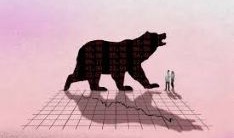
This article is about what is the impact of US government debt downgrade. A U.S. government debt downgrade refers to a situation where a credit rating agency, such as Fitch Ratings, lowers the credit rating of the United States government's debt instruments. The credit rating of a country's debt serves as an indicator of the government's ability to repay its financial obligations and the level of risk associated with investing in its debt securities.
What is the Impact of US Government Debt Downgrade?
In the most recent episode of the podcast "Macro Markets," hosted by Cointelegraph analyst and writer Marcel Pechman, the focus was on the United States debt downgrade carried out by Fitch Ratings. Pechman's analysis of this event suggests that the downgrade was a clear indication of reduced confidence in the U.S. government's ability to effectively manage its financial responsibilities.
Following the downgrade, investors responded with caution, leading to a notable shift in their investment strategies. Many chose to withdraw their funds from assets such as stocks, silver, oil, and long-term bonds. Instead, they preferred to invest in cash and short-term instruments, considering them to be safer options during times of uncertainty and risk.
Interestingly, despite the downgrade, the cost of insuring U.S. sovereign debt against the risk of default, as measured by credit default swaps, remained relatively stable. Pechman offers a possible explanation for this phenomenon: U.S. Treasurys are widely regarded as one of the most secure investments on a global scale, primarily due to the strong backing provided by the U.S. government.
In essence, the podcast episode delves into the intricate dynamics of the U.S. debt downgrade and its ramifications on investor behavior. It underscores the delicate balance between the perceived level of risk and the perceived safety of specific investment choices, shedding light on the complex interplay between these factors.
What is the Response of Bitcoin?
As a result, Bitcoin has come under duress due to the recent downgrade of the U.S. government's debt. This downgrade has led to a decrease in Bitcoin's value. This occurrence underscores the significance of the initial rush towards liquidity during periods of economic uncertainty, which, in turn, tends to overshadow the advantages of decentralized assets, such as Bitcoin, especially during the early stages of market instability.
Marcel Pechman contends that the existing financial models are inadequate in accurately assessing the implications on liquidity, particularly concerning the depth of the order book. For instance, he poses a pertinent question: What ramifications would emerge if the U.S. government were to withhold the yield from its debt held by China?
Furthermore, the passage delves into Pechman's analysis of the recent European Union bank stress test, which highlighted the shortcomings of three financial institutions. This examination encompassed 70 banks, collectively representing approximately 75% of the EU's banking assets.
Pechman proceeds to expound upon an intriguing observation: Although the precarious nature of Credit Suisse and Silicon Valley Bank was widely acknowledged, the precipitous decline in investor confidence caught many off guard. This phenomenon underscores the influence of perceptions and external appearances, irrespective of prevailing liquidity circumstances.
Bottom Line
In this article, we have discussed what is the impact of US government debt downgrade. Pechman's insights into the European Union's banking stress test serve as a pertinent reminder of the role that external perceptions play in shaping market behavior and confidence levels.