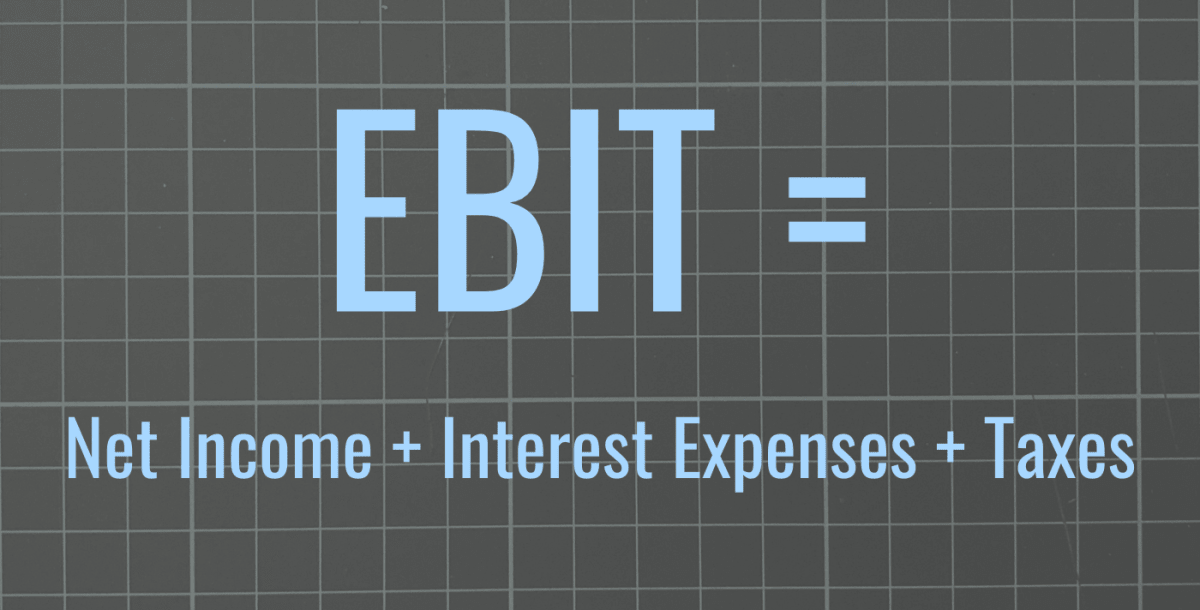
In this article, you will learn what is the meaning of EBITA. Income and expenses from investments, taxes, loan interests, and various types of depreciation, considered to determine the net profit of a company, often do not directly relate to a company's success. The net income reflects the overall profitability of a company, whereas EBITA reflects the operating profitability.
What Is the meaning of EBITA?
EBITA is an acronym that refers to the earnings of a company before interest, tax, and amortization expenses are deducted. Investors use EBITA as an indicator to measure the profitability and efficiency of a company and compare it with similar companies.
EBITA is a measure of company profitability used by investors. It is helpful for the comparison of one company to another in the same line of business. In some cases, it can also provide a more accurate view of the company's real performance over time.
Another similar measure adds depreciation to this list of factors. That is earnings before interest, taxes, depreciation, and amortization (EBITDA).
Understanding EBITA
A company's EBITA is considered by some analysts and investors to be a more accurate representation of its real earnings. It removes the taxes owed, the interest on company debt, and the effects of amortization, which is the accounting practice of writing off the cost of an intangible asset over a period of years, from the equation.
One benefit is that it more clearly indicates how much cash flow a company has on hand to reinvest in the business or pay dividends. It also is seen as an indicator of the efficiency of a company's operations.
How to Calculate EBITA
EBITA can be calculated by the following methods:
direct method
In the direct method, the cost of goods sold (COGS) and operating expenses less amortization are subtracted from the company's total revenue. Thus,
EBITA = Total Revenue – COGS – (Operating Expenses – Amortization)
Companies sometimes may not provide a breakdown of either the operating expenses or the cost of goods sold in the financial statements. In such cases, a company's EBITA can be calculated using the indirect method.
Indirect method
In the indirect method, the interest, taxes, and amortization are added back to the net income, giving the EBITA value.
EBITA = Net income + Interest + Taxes + Amortization
Since all the above items are available on the income statement, such a method of calculating EBITA is straightforward.
Where Can You Find a Company's EBITA?
If a company doesn't provide this metric (there's no legal requirement to do so), you find it by looking at the firm's financial statements. Look for the earnings, tax, and interest figures on the income statement; in the notes to operating profit or on the cash flow statement. A shortcut to calculating EBITA is to start with operating profit, also called earnings before interest and taxes (EBIT), then add back amortization.
Bottom Line
EBITA is thought to be a reliable indicator of how much cash flow a company has on hand to put back into the business or to pay dividends. It can also indicate how efficient a company's operations are. This article is about what is the meaning of EBITA .