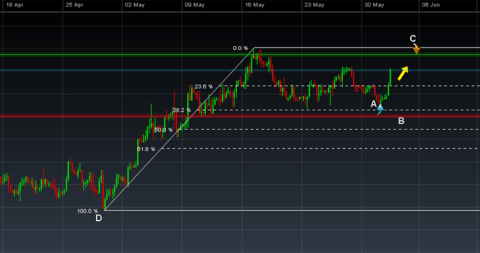
In this article, you will learn what is the meaning of swing trader. Investors approach the stock market with a variety of goals. Many invest for the long-term, seeking to build wealth over time, while others trade for short-term profits — and many people do both. There are a variety of strategies for trading, but one of the most accessible to newcomers is swing trading.
What is the Meaning of Swing Trader?
Swing traders use a trading method called swing trading.
Swing trading is a style of trading that attempts to capture short- to medium-term gains in a stock (or any financial instrument) over a period of a few days to several weeks. Swing traders primarily use technical analysis to look for trading opportunities.
Swing traders may utilize fundamental analysis in addition to analyzing price trends and patterns. Swing traders can take profits utilizing an established risk/reward ratio based on a stop loss and profit target, or they can take profits or losses based price on a ator technical action movements.
Advantages and Disadvantages of Swing Trading
Many swing traders assess trades on a risk/reward basis. By analyzing the chart of an asset they determine where they will enter, where they will place a stop loss, and then anticipate where they can get out with a profit. If they are risking $1 per share on a setup that could reasonably produce a $3 gain, that is a favorable risk/reward ratio. On the other hand, risking $1 only to make $0.75 isn't quite as favorable.
Swing traders primarily use technical analysis, due to the short-term nature of the trades. That said, fundamental analysis can be used to enhance the analysis. For example, if a swing trader sees a bullish setup in a stock, they may want to verify that the fundamentals of the asset look favorable or are improving also.
Swing traders will often look for opportunities on the daily charts and may watch 1-hour or 15-minute charts to find a precise entry, stop loss, and take-profit levels.
Swing Trading Tactics
A swing trader tends to look for multi-day chart patterns. Some of the more common patterns involve moving average crossovers, cup-and-handle patterns, head and shoulders patterns, flags, and triangles. Key reversal candlesticks may be used in addition to Other indicators to design a solid trading plan.
Ultimately, each swing trader devises a plan and strategy that gives them an edge over many trades. This involves looking for trade setups that tend to lead to predictable movements in the asset's price. This isn't easy, and no strategy or setup works every time. With a favorable risk/reward, winning every time isn't required. The more favorable the risk/reward of a trading strategy, the fewer times it needs to win in order to produce an overall profit over many trades.
Bottom Line
Swing traders will use tools like moving averages overlaid on daily or weekly candlestick charts, momentum indicators, price range tools, and measures of market sentiment. This article is about what is the meaning of swing trader.