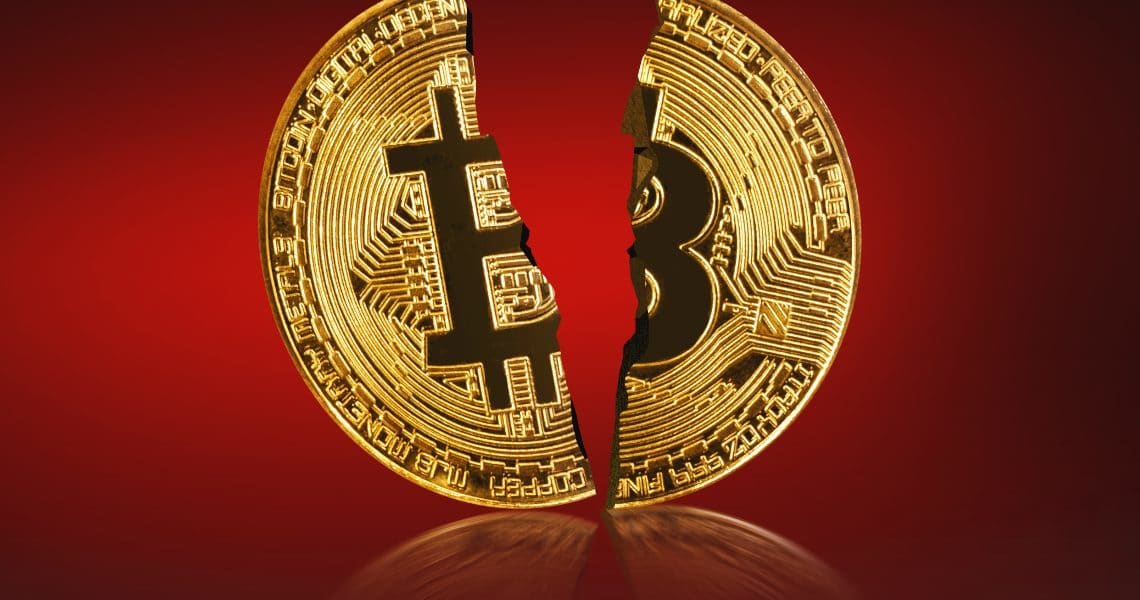
According to Steve Hanke, a professor of applied economics at Johns Hopkins University, the US economy will enter a recession next year, but not definitely as a result of higher interest rates. In this article, you will learn about the whopper recession 2023. Let's find out.
What Is The Whopper Recession 2023?
As central bankers in Jackson Hole reaffirmed their commitment to raising interest rates in order to contain inflation, financial market participants are concerned that the United States is on the verge of an economic downturn.
The United States is likely to experience a "whopper" of a recession in 2019, according to Steve Hanke, a professor of applied economics at Johns Hopkins University, but this won't necessarily be due to increased benchmark interest rates.
In an interview with CNBC on Monday, Hanke stated, "We will have a recession because we've had five months of negative M2 growth-money supply growth, and the Fed isn't even looking at it." The decline in 2023 will be "one whopper of a recession,"
Cash, deposits in bank and savings accounts, and investments in retail money mutual funds are all included in the money supply indicator known as M2. The M2 measure, which is frequently used as a gauge of the volume of money in circulation, has been stagnant Since February 2022 after "an unprecedented increase of the money supply" beginning with the COVID-19 pandemic in February 2020.
Hanke stated that "there had never been sustained inflation in the history of the world—that is, inflation above 4% for about two years—that had not been the result of unparalleled growth of the money supply, which we had beginning with COVID in February of 2020. This is the cause of the current inflation, which will likely last through 2023 and into 2024, according to the statement.
How Long Will A Recession Last?
Depending on the reason and the response of the government, recessions can last anywhere from a few weeks to several years.
According to data from the National Bureau of Economic Research, the average recession between 1854 and 2022 spanned 17 months. However, if you restrict your analysis to the period from World War II to the present, the average recession only endured 10 months.
Just remember that this is an average and not a law.
For instance, a 16-month long slump occurred in the early 1980s. Between 2007 and 2009, the Great Recession that followed the burst of the housing boom persisted for 18 months.
Summary
This is about the whopper recession 2023. Professor of Economics at Johns Hopkins University Steve Hanke claims that in their study of the likelihood of a recession and their strategy to control inflation, Federal Reserve officials are placing all their eggs in one basket and indomitting data.