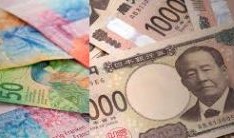
Today, you will learn what is the world's reserve currency and how the US Dollar became the world's reserve currency. A reserve currency (or anchor currency) is a foreign currency that is held in significant quantities by central banks or other monetary authorities as part of their foreign exchange reserves. The reserve currency can be used in international transactions, international investments and all aspects of the global economy. It is often considered a hard currency or safe-haven currency.
The United Kingdom's pound sterling was the primary reserve currency of much of the world in the 19th century and first half of the 20th century.
What is the World's Reserve Currency?
The US dollar is the world's dominant reserve currency, among other such currencies including the euro, the yen, the pound, the renminbi (RMB), the Canadian dollar, the
Swiss franc, and the Australian dollar. A reserve currency is a currency held by central banks in significant quantities. It is widely used to conduct international trade and financial transactions, eliminating the costs of settling transactions involving different currencies.
The dollar is the preferred currency for investors during major economic crises, as a “safe haven” currency. During the global financial crisis of 2008-2009, for example, and amidst the economic turmoil associated with the Coronavirus Disease 2019 pandemic in 2020, sought US dollars, expecting the dollar to retain its value. In both crises, the US The Federal Reserve adopted extraordinary monetary authorities and currency swap lines with other central banks to provide liquidity and dollars.
History of the US Dollar
The first documented use of paper currency in the US dates back to 1690 when colonial notes were issued by the Massachusetts Bay Colony. These notes were used to fund military operations. It wasn't until 1776 that the first $2 bill was introduced—nine days before independence. Nine years later, in 1785, the US officially adopted the dollar sign, using the symbol for the Spanish American peso as a guide.
In 1863, the government established the Office of the Comptroller of the Currency (OCC) and the National Currency Bureau. These two agencies were charged with handling new banknotes. Centralized printing began at the Bureau of Engraving and Printing in 1869. Prior to this, money was printed by private companies.
The US Treasury assumed the official responsibility of issuing the nation's legal tender in 1890—more than a decade before the creation of the Federal Reserve and the dollar as we know it today.
How the US Dollar Became the World's Reserve Currency
The post-war emergence of the US as the dominant economic power had enormous implications for the global economy. At one time, US Gross Domestic Product (GDP), which is a measure of the total output of a country, represented 50% of the world's economic output.
As a result, it made sense that the US dollar would become the global currency reserve. In 1944, following the Bretton Woods Agreement, delegates from 44 nations formally agreed to adopt the US dollar as an official reserve currency. Since then, other countries pegged their exchange rates to the dollar, which was convertible to gold at the time. Because the gold-backed dollar was relatively stable, it enabled other countries to stabilize their currencies.
In the beginning, the world benefited from a strong and stable dollar, and the United States prospered from the favorable exchange rate on its currency. The foreign governments did not fully realize that although gold reserves backed their currency reserves, the United States could continue to print dollars that were backed by its debt held as US Treasurys. As the United States printed more money to finance its spending, the gold backing behind the dollars diminished. The increased monetary supply of dollars went beyond the backing of gold reserves, which reduced the value of the currency reserves held by foreign countries.
Bottom Line
The first US dollar (USD) is one of the world's strongest currencies. It is the official currency of the United States as well as several other countries. Although it has a deep-rooted history in the United States. So, knowing what is the world's reserve currency and how the US Dollar became the world's reserve currency might help you with the knowledge of world currency.