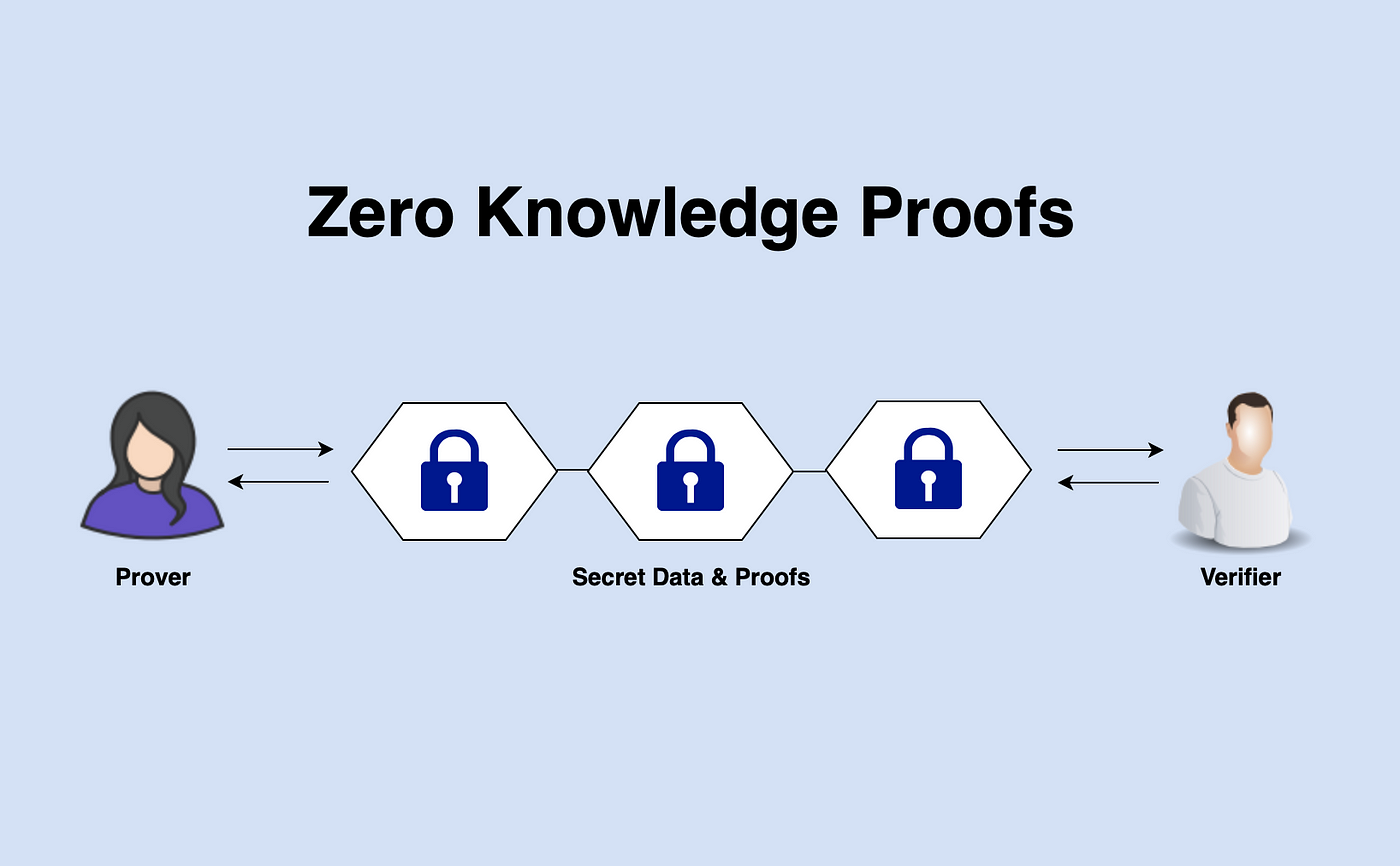
What is zero-knowledge proof? Algorithms called Zero Knowledge Proof (ZKP) use cryptographic techniques to validate transactions without disclosing the underlying data. You can read this article for additional details.
What is zero-knowledge proof?
Cryptographic techniques known as Zero-Knowledge Proof (ZKP) algorithms estimate the likelihood that a party to a transaction possesses a piece of information without disclosing what that knowledge is.
It's similar to attempting to determine someone's travel history. You can pose a series of inquiries to them, and if they respond accurately, it will be clear that they have been to the nation. You can be more assured that someone has actually visited the country if they answer more of the questions accurately. and not only by using some other method to collect the information. Even though you know they've visited the country, they don't have to tell you the names of those they've visited in that country. And you don't have to ask. It's not pertinent to the transaction. This way, sensitive information is protected.
ZKP algorithms create a series of mathematical puzzles that, when solved correctly by the receiving party, prove the receiving party is genuine.
The seeds of zero-knowledge proofs were sewn in the 1980s by three MIT researchers, Shafi Goldwasser, Charles Rackoff, and Silvio Micali. This was when they proposed the concept of 'Knowledge Complexity of Interactive Proof Systems.'
Why are ZKPs important to blockchain?
Numerous potential for trade has been produced by blockchain technology. It promotes confidence by giving an irrefutable record of transactions. Despite the fact that blockchain increases trust in numerous ways, it still requires information sharing with other systems in order to authenticate transactions. For instance, it must integrate with supplier systems in supply chain management.
Zero-knowledge proof algorithms allow information to be shared between parties without disclosing passwords or private information. This does rid itself of a lot of the security flaws in password-enabled authentication mechanisms.
Blockchain solutions that enable users to interact with added-value digital services while protecting the privacy of their data are being developed utilizing ZKP algorithms by developers. ZKPs give consumers who seek control and freedom over their information flexibility and options.
Conclusion
Hopefully, now you know the answer to "what is zero-knowledge proof?" Passwords and other sensitive information cannot be shared thanks to zero-knowledge proofs (ZKPs). This improves the advantages of blockchain technology for facilitating business. Zero-knowledge proofs can assist in facilitating sensitive agreements, transactions, and interactions in a more discreet and secure manner. ZKPs increase the security of blockchain transactions by another level.