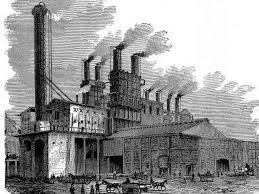
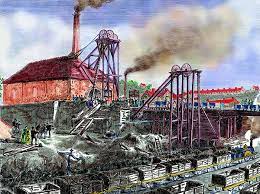
This article is about when was the industrial revolution. The Industrial Revolution, a watershed moment in human history, unfolded during the 18th century, reshaping societies across Europe and North America. This era witnessed a seismic shift from agrarian to industrial, driven by groundbreaking innovations. Divided into the First and Second Industrial Revolutions, this transformative period laid the foundation for modern civilization.
When was the Industrial Revolution?
The Industrial Revolution was a period of scientific and technological development in the 18th century that transformed largely rural, agrarian societies—especially in Europe and North America—into industrialized, urban ones. It was characterized by the emergence of new machines, factories, energy sources, transportation systems, and communication methods that increased productivity, efficiency, and living standards.
The Industrial Revolution is usually divided into two phases: the First Industrial Revolution, which lasted from around 1760 to 1840. and the Second Industrial Revolution, which lasted from around 1870 to 1914. The First Industrial Revolution was mainly driven by innovations in textile manufacturing, iron production, steam power, and canal construction. The Second Industrial Revolution was mainly driven by innovations in electricity, steel, chemicals, petroleum, automobiles, and railways.
What are the Effects of Industrial Revolution?
The Industrial Revolution had profound economic, social, cultural, and environmental impacts. It led to the rise of capitalism, urbanization, industrialization, imperialism, nationalism, democracy, consumerism, and social movements. It also led to the exploitation of workers, environmental degradation, social inequality, political unrest, and cultural changes.
The Industrial Revolution began in Great Britain, which had several advantages that enabled it to become the world's leading industrial power. These included a stable political system, a large domestic market, abundant natural resources, a favorable legal system, a skilled workforce, a strong navy, and a global trading empire. From Britain, the Industrial Revolution spread to other parts of Europe and North America through trade, migration, and imitation.
The Industrial Revolution is one of the most important events in human history. It marked a major turning point in the evolution of civilization and the development of modern society. It influenced almost every aspect of daily life and shaped the world we live in today.
Bottom Line
In this article, we have discussed when was the industrial revolution. The echoes of the Industrial Revolution reverberate through time, reminding us of an era when humanity harnessed innovation to redefine its existence. As we navigate the complexities of our modern world, understanding this pivotal period provides insights into the forces that shaped the trajectory of human civilization.