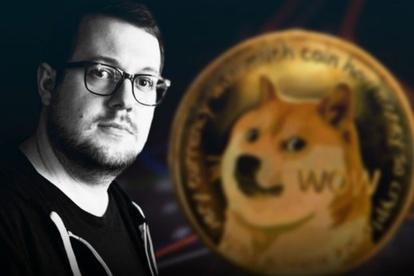
Dogecoin is fundamentally the unintentional cryptocurrency movement that makes people smile. Additionally, it is an open source peer-to-peer cryptocurrency that makes use of blockchain technology, a highly secure decentralized method of storing data as a public ledger that is maintained by a network of computers known as nodes. If you catch up with today's news, you must have heard of DOGE from Elon Musk or on Twitter. So, who owns Dogecoin? Elon Musk?
Software developers Billy Markus and Jackson Palmer, neither of whom is longer associated with the project, developed Dogecoin (DOGE) in 2013. The coin was initially created as a prank and was based on the Shiba Inu dog named Doge, a well-known 2010 meme. It was the original memecoin and served as an impetus for the development of hundreds more.
A peer-to-peer, open-source cryptocurrency called Dogecoin "sets itself apart from other digital currencies with a wonderful, dynamic community made up of kind people," according to its website.
The unofficial slogan for the money is "Do Only Good Everyday." Its community is concerned with helping each other out, being nice, spreading awareness of cryptocurrencies, raising money, having fun, creating memes, and being ridiculous.
The coin's system was based on the now-defunct Luckycoin, an early altcoin and offshoot of Litecoin (LTC). Palmer claims that this protocol was used to discourage potential miners from the project in an effort to ensure its failure. That did not work out as expected, and Luckycoin was taken out of the DOGE protocol since it was generating a lot of issues.
The project's founders founded the Dogecoin Foundation in 2014. The DOGE cryptocurrency project is intended to benefit from its support, lobbying, trademark protection, and governance.
Despite being created as a joke, the currency quickly became useful due to its low value, which made it popular for modest online transactions like tipping strangers online anonymously.
Data from CoinMarketCap indicates that there is no maximum supply for DOGE. As a result, the digital asset is a "inflationary coin," as opposed to deflationary cryptocurrencies like bitcoin that have a cap on the number of tokens that may be mined.
The quantity of new bitcoin tokens sent into circulation is cut in half every four years.
According to Morgan Stanley's Investing in Cryptocurrency study, "reducing the supply in half will generate a supply shock and a price surge, as with all commodities," which is essentially what the halving cycle achieves.
Dogecoin was also halved up until 2014. In April 2014, the payout for dogecoins was halved for the last time, going from 250,000 to 125,000 coins every block. The protocol of the cryptocurrency was later modified to offer a limitless supply, eliminating the need for halving events.
Dogecoin itself stated that just because it doesn't have a cap on supply doesn't mean it has an unlimited total supply.
According to the project's team on the dogecoin website, "Dogecoin's supply is not endless, because it has an absolute limit of issuance per block, per day, and per year - just like other coins do."
The sole distinction is that Dogecoin's issuance is perpetual. Dogecoin is therefore only "infinite" over "infinite time."
Who holds the most dogecoins or who the biggest dogecoin whales are has been the subject of much rumor over the years. A crypto whale is any organization, person, or exchange that significantly holds a digital asset and hence has the power to affect its price.
News stories began mentioning a "mystery dogecoin whale" in 2021 who held $22 billion worth of the commodity at the time. Some claimed that Elon Musk was that person since he had publicly expressed his support for cryptocurrencies on Twitter and in an appearance on an episode of Saturday Night Live (SNL). However, there is no proof to back up the assertion that it was him.