Cryptocurrency exchange Binance's dominance in volume market share has slipped over the past two weeks following a lawsuit by U.S. commodity regulators and a decision to halt some zero-fee trading.
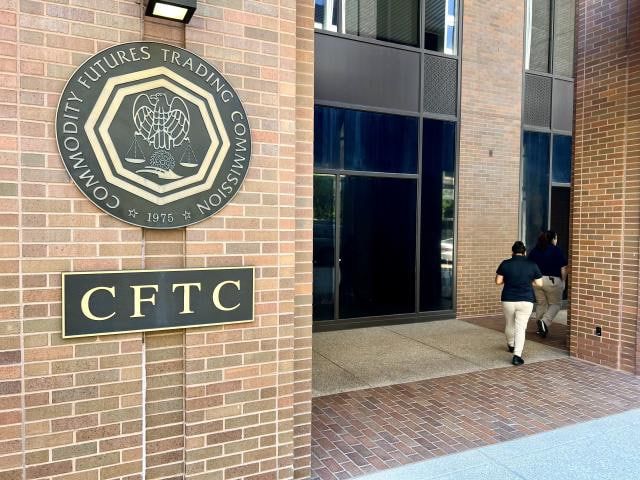
In an April 4 newsletter, blockchain analytics platform Kaiko reported that Binance “lost 16% of its volume market share” from 54% at the end of the first quarter. The U.S. Commodity Futures Trading Commission sued Binance on March 27, alleging that it violated regulatory compliance and violated derivatives laws by providing trading services to U.S. customers without registering with the market regulator.
Binance’s trading volumes are still higher than those of its combined rivals, but its March 15 decision to end zero-fee spot and margin trading for 13 trading pairs, including BNB, Kaiko said Binance Coin, Bitcoin and ether Ethereum, Use of multiple fiat currencies and stablecoins, resulting in a drop in transaction volume. “Overall, with the end of zero-fee trading, Binance’s excess trading volume has largely disappeared, which is reflected in the even distribution of market share on the remaining exchanges,” Kaiko reported.
However, Binance did not fall excessively in every area. The exchange has managed to largely maintain its derivatives dominance, giving up just 2% of market share last quarter.
Kaiko explained that the decline in trading volume figures was largely driven by the end of zero-fee spot trading, rather than the CFTC lawsuit: “Looking at derivatives volume, the trend is quite different: Binance only lost ~2% market share in terms of perpetual volume. This suggests that most of the market share loss was purely due to the end of zero-fee spot trading, rather than concerns about litigation."
After Binance became one of the "big winners" from the FTX fiasco, with market share falling to 54%, its volume market share rose to 65% in the last quarter of 2022: "After November 2022, Binance's market share increased from 50% to 65%, while OKX's market share increased from less than 10% to 17%. On the other hand, Bybit and three smaller exchanges Huobi, Bitmex and Deribit’s market share decline.” In the last quarter, Upbit was the only cryptocurrency exchange to regain a “significant share” of trading volume across the 17 exchanges analyzed by Kaiko.
Given the recent regulatory pressure, banking crisis, and FTX’s catastrophic collapse, numerous reports have observed a growing trend towards decentralized alternatives and self-custodial wallets.
Bitcoin and Ethereum left centralized exchanges in record amounts after FTX collapsed. Daily trading volume on decentralized perpetual exchanges also hit $5 billion in November 2022, the highest since the May 2022 crash of Terra Luna Classic (LUNC) and its associated TerraClassicUSD (USTC) stablecoin level. Trading volume on decentralized exchange Uniswap now rivals that of cryptocurrency exchanges Coinbase and OKX, but is still a fraction of Binance’s volume.