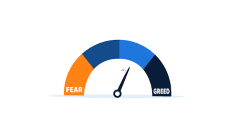
Coinbase Global, Inc. has reported a significant financial downturn in its first-quarter 2026 earnings report, signaling a period of strategic transition for institutional investors and crypto-market analysts.
Key Takeaways
Significant Financial Loss: Coinbase recorded a net loss of $394.1 million for the quarter, driven largely by a $482 million impairment on crypto assets.
Revenue Contraction: Total revenue declined by 31% to $1.41 billion as trading volumes plummeted alongside falling asset prices.
Strategic Diversification: CEO Brian Armstrong is shifting focus toward derivatives, institutional services, and stablecoin revenue to reduce reliance on volatile spot trading.
Market Resilience: Despite the losses, the company maintained an 8.6% global market share and generated $305 million from stablecoin-related activities.
Financial Performance and Asset Impairment
We observed a substantial shift in the company’s balance sheet as a result of the broader market downturn. The reported net loss of $394.1 million for Q1 2026 follows a $667 million loss in the previous quarter, marking a difficult six-month stretch. According to the Coinbase Q1 2026 Shareholder Letter, the company suffered a specific loss of $482 million from crypto assets held for investment purposes. This suggests that the exchange's own holdings were not immune to the price correction that gripped the industry.
Revenue Streams and Operational Shift
The company’s revenue profile is currently undergoing a planned transformation to mitigate the impact of retail trading cycles. Total revenue for the quarter was $1.41 billion, which represents a 31% decrease compared to the $2.04 billion generated in Q1 2025. According to Coinbase’s consolidated financial statements, trading revenue fell by 40% year-on-year to $756 million. Conversely, subscription and service revenue showed more resilience, dropping only 14% to $584 million, supported by an 11% increase in stablecoin revenue.
Market Impact
The broader crypto market volatility served as the primary headwind for Coinbase’s performance during this period. We tracked Bitcoin’s price as it fell from a January high of $97,000 to approximately $63,000 by early February 2026. This sharp decline, as reflected in Coinbase’s institutional market data, reduced investor appetite for spot trading and led to a decrease in total transaction fees across the platform. The resulting market environment forced an adjustment in adjusted EBITDA, which landed at $303 million for the quarter, down from $930 million a year prior.
Strategic Outlook for Investors
Investors should note the company's pivot toward more stable, non-trading revenue sources. Brian Armstrong stated in the Q1 Earnings Call that the exchange is moving away from being a "spot-trading-centric" platform to focus on derivatives and event outcome prediction contracts. This diversification is intended to decouple the company’s stock performance from the immediate price of Bitcoin. While the net losses are significant, the growth in stablecoin revenue to $305 million provides a potential floor for future earnings.
Conclusion
The Q1 2026 report confirms that while Coinbase remains a dominant market player with an 8.6% market share, it is currently vulnerable to extreme price volatility. The next logical step for the company involves the aggressive rollout of its derivatives and institutional products to stabilize its income. For those following the sector, monitoring the growth of the "on-chain economy" and AI-driven payment integrations will be critical in assessing Coinbase's long-term recovery.
About the Article
This report was prepared by Craig Green. It serves to provide investors and industry stakeholders with high-fidelity, data-driven insights necessary to navigate the volatility of the modern digital asset landscape.
Our methodology utilizes a rigorous cross-referencing process, synthesizing official SEC filings, Coinbase shareholder letters, and verified institutional market data to ensure absolute data integrity.