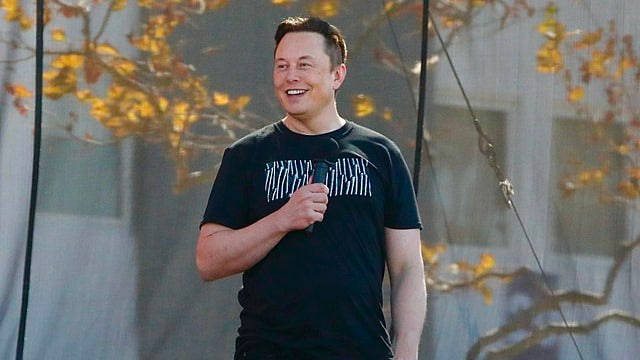
Billionaire Elon Musk has questioned the legitimacy of becoming a for-profit venture after investing roughly $50 million in OpenAI, the company behind ChatGPT.
In an interview with CNBC at Tesla's annual shareholder meeting on May 16, Musk claimed that he "come up with the name OpenAI" and intended to use the company as an open-source alternative to DeepMind after Google acquired the company in 2014. Musk liked OpenAI's nonprofit to for-profit transition to Save Amazon becoming a "lumber company" that harvests and sells trees from the rainforest, adding:
"Is that legal? It doesn't seem legal. In general, if it's legal to start a business as a non-profit organization, then transfer the intellectual property to the for-profit organization, and then make a lot of money that shouldn't 't be the default Is it?" OpenAI said it started as a not-for-profit company so it was "unconstrained by the need to generate a financial return" and could focus on advancing its goal of "doing digital intelligence in ways that are most likely to benefit all of humanity."
But in 2019, OpenAI announced that it would create a new company called OpenAI LP, which it described as a "hybrid of for-profit and not-for-profit" or "capped-profit" company, which it said would still be governed by a non-profit entity. OpenAI claims this allows it to attract more capital and scale faster, laying the groundwork for multiyear, multibillion-dollar investments from Microsoft and others, such as its reportedly seeking $100 million to create an AI technology called Worldcoin's new cryptocurrency. OpenAI may once again release an open-source AI model, something it hasn't released since turning profitable in 2019.
Given that this is a significant source of revenue for the company, it doesn't appear that the company's open-source AI model will be as competitive as its $20-a-month paid version.