Demis Hassabis, CEO of Google DeepMind, recently predicted that artificial intelligence (AI) systems will reach human-level cognition at some point between "the next few years" and "probably within a decade."
Hassabis got his start in the gaming industry, co-founding Google DeepMind (formerly DeepMind Technologies), the company best known for developing the AlphaGo AI system responsible for beating the world's top human Go player.
In A Recent Interview Conduction During the Wall Street Journal's Future of Everything Festival, hasabis told interviewer chris that he Believes Machnees With Human-Level Cognition are on the Horizon: "The Progress Over The Past Few Years Been Pretty Incredible. I Don ' t see any reason for the progress to slow down. I think it might even accelerate. So I think we're probably just a few years away, maybe within a decade."
The comments come two weeks after an internal reshuffle led to Google's announcement that it would merge "Google AI" and "DeepMind" into the aptly named "Google DeepMind." When asked to define "AGI" -- artificial general intelligence -- Hassabis replied : "Human-level cognition." There is currently no standardized definition, test, or benchmark for general artificial intelligence that is widely accepted by the science, technology, engineering, and mathematics communities. There is also no unified scientific consensus on whether AGI is Some prominent figures such as Roger Penrose (a longtime research partner of Stephen Hawking) believe that AGI is impossible, while others believe that it may take decades or centuries for scientists and engineers to figure it out.
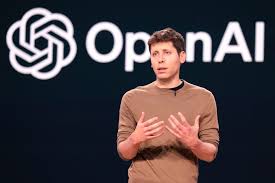
Among those who are bullish on AGI or some similar form of artificial intelligence for humans in the near term are Elon Musk and OpenAI CEO Sam Altman. AGI is a hot topic after the launch of ChatGPT and countless similar AI products and services over the past few months. Experts predict that human-level artificial intelligence, often referred to as the "Holy Grail" technology, will disrupt every aspect of life on Earth.
If human-level artificial intelligence is achieved, it could disrupt every aspect of the crypto industry. In the world of cryptocurrencies, users can see fully autonomous machines capable of acting as entrepreneurs, executives, advisors, and traders, with human intellectual reasoning and the ability to retain information and execute code like a computer system.
It remains to be seen whether AGI agents will serve humans as AI-powered tools, or compete with humans for resources. For his part, Hassabis didn't speculate on anything, but he did tell the Wall Street Journal that he "would advocate using the scientific method to develop these types of AGI technologies in a careful way, where you try to do very carefully controlled experiments to understand the underlying function of the system." This may be juxtaposed with the current situation, as products such as his own employer's Google Bard and OpenAI's ChatGPT have recently become available to the public. Industry insiders such as OpenAI's Altman and DeepMind's Nando de Freitas say they believe AGI may emerge on its own if developers continue to extend current models. A Google researcher recently parted ways with the company after claiming that a model called LaMDA was already sentient. Due to the uncertainty surrounding the development of these technologies and their potential impact on humans, thousands of people, including Musk and Apple co-founder Steve Wozniak, recently signed an open letter calling for the construction of related The system's companies and individuals are putting development on hold for six months so scientists can assess the likelihood of harm.