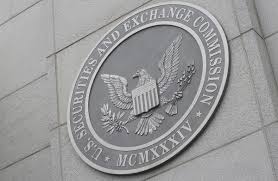
Jeremy McLaughlin, a digital asset attorney at K&L Gates, has expressed hope for a recurrence of cryptocurrencies in the United States following a series of recent court rulings that, in his view, have shifted control over the SEC's actions to the judicial.
During the Intersekt23 conference in Melbourne, McLaughlin pointed out that several US court cases have challenged SEC Chairman Gary Gensler's assertion that the majority of digital assets should be categorized as securities.
He Note that Initial Cryptocurrency Regulation in the US Occurred Primarily at the State Level and Provided Clear Guidance. How is the as Federal Agencies Like T. HE Sec and cftc Became More Involved, Many Markets Imposed RestricTions Due to Increased Regulatory.
McLaughlin explained, "Tokens are being delisted, and some companies are exiting the US because they perceive the SEC's approach as overly aggressive." He expressed optimism that recent court decisions curtailing the SEC's authority could potentially rekindle the cryptocurrency industry in the United States.
In recent months, the SEC has encountered legal setbacks in its cases against cryptocurrency firms. On August 29, a US District Court judge ruled against the SEC in a case involving Grayscale Investments, which had sought approval to convert its flagship product into a Bitcoin exchange -traded fund (ETF). Additionally, in July, the SEC faced a significant defeat in the XRP lawsuit against Ripple Labs.
McLaughlin acknowledged the challenges of providing legal counsel in the cryptocurrency sector amid regulatory uncertainty. Nevertheless, he sees promise in the emergence of more coherent regulation from the existing "chaotic" environment.
He remarked, "We are finally witnessing cases being brought to court, and the verdicts have largely favored the digital asset industry."
On a different note, conference panelists discussed cryptocurrency legislation in Australia compared to other nations. Effie Dimitropoulos, CEO of payments services company Novatti, argued that Australia had lagged behind in terms of regulatory developments.
Dimitropoulos highlighted that regulatory frameworks in regions like Hong Kong and the European Union have advanced more rapidly than in Australia. She emphasized the substantial compliance burden faced by local cryptocurrency businesses, often requiring legal advice that swift ly becomes outdated.
While acknowledging ongoing regulatory deliberations in Australia, she expressed concerns about the absence of definitive resolutions and characterized the country's regulatory framework as "outdated."
In conclusion, McLaughlin's optimism arises from recent court rulings that have constrained the SEC's influence, potentially opening the door to a resurgence of the cryptocurrency industry in the United States. However, the regulatory landscape remains intricate and uncertain, and cry ptocurrency enterprises continue to grapple with Regulatory obstacles, not only in the US but also in countries like Australia and others worldwide.