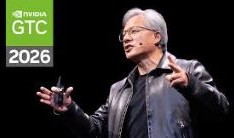
Nvidia, a leading semiconductor company, has faced requests from US regulators to limit the export of artificial intelligence (AI) chips to specific Middle Eastern nations, as revealed in its latest quarterly report published on August 28. These export restrictions apply to Nvidia's A100 and H100 chips, which are integral for enhancing the speed of machine learning operations. The report did not specify the Middle Eastern countries targeted by these regulations.
Notably, Nvidia's direct competitor, Advanced Micro Devices (AMD), also received a similar request from US regulators regarding the ban on exporting advanced AI chips to select Middle Eastern countries. In its quarterly report, Nvidia acknowledged that these regulatory filings would not have a "direct material impact" on its business and would not constitute a significant portion of its revenue. Nonetheless, the company stated in a separate announcement that it is actively collaborating with the US government to resolve this matter.
The quarterly report also highlighted ongoing US government export controls on AI chips to China. Nvidia explained that while previous restrictions still allow the sale of alternative, less powerful A800 or H800 chips in China, its long-term performance could be at risk if it were To be "Effectively Excluded from All or PARTS of China." The Majority of Nvidia's Sales, Totaling $ 13.5 Billion in ITS Latest Quarter Ending on Jury 30, Primarilil Y CAME from the United States, China, and TAIWAN, with Other Countries Contributing Around 13.9% of its revenue. In October 2022, the Biden administration introduced initial export controls aimed at isolating China from access to potent semiconductor chips.
On June 29, US Officials Disclosed their Consideration of further tightening RESTRICTIONS on the Export of AI Chips to CHIPS, Which Would Limit The Computing Ca. Pabilities of the Chips in a BID to Disrupt Chip Supply in the Chinese Market. In Response to the us Measures, the Chinese government announced its intention to regulate the export of gallium and germanium products, crucial components in the production of AI chips. These AI-related regulations and restrictions originating from the United States have prompted other countries to evaluate their positions in the race to develop powerful AI systems.