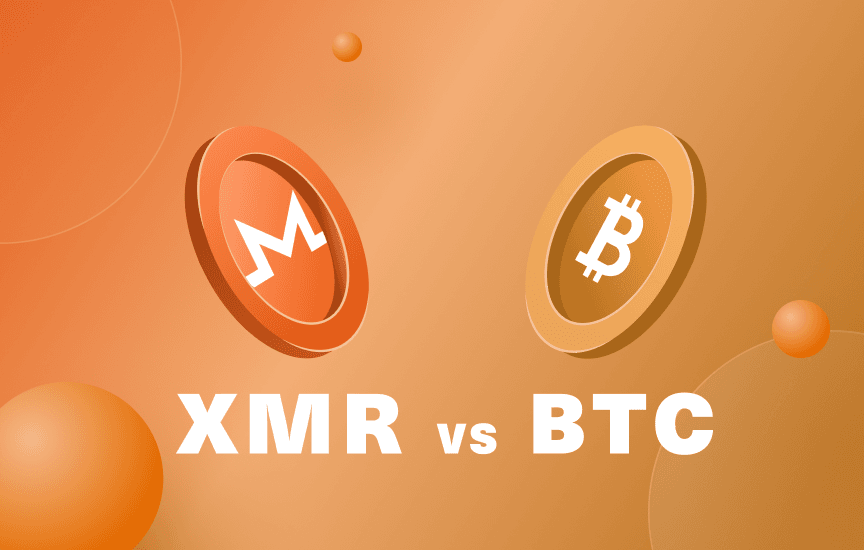
Monero is an open-source software project for its own blockchain with a single token XMR. Monero is best known for its widespread privacy features. Monero is the only major cryptocurrency to hide the sender, receiver, and amount for all transactions.
Monero is also ASIC-resistance with the help of RandomX algorithm. WIth such a feature, Monero mining users could enjoy a fair share of rewards of their contributed computation power.
There are more than 30 active core developers supporting the development of Moneroty. The community-powered Manero would continue to maintain and provide life changing improvement for the blockchain network.
What is Monero’s Vision?
Monero aims to build a privacy focused crypto platform that is accessible and easy to use for many people. Marero strives to provide freedom and privacy to users with simple user interface and robust features for advanced users.
Why Is Manero Different From Other Coins?
Manero project’s biggest aim is achieving the greatest level of decentralisation possible, meaning that a user doesn’t need to trust anyone else on the network. User transaction details about senders, recipients and the amount of crypto being transferred are hidden.
Manero uses ring signatures to protect the privacy of its users. Hence, past transaction outputs are picked from the blockchain and act as decoys, and outside observers would not be able to tell who signed it. Furthermore, to ensure that transactions cannot be tracked, stealth addresses are created for every single transaction that are only used once.
Controversy of Monero
Monero’s main selling point is its privacy focused blockchain network. However, it also attracts interest from illegal activities.
Darknet Market
Monero is a widely accepted currency on many of the darknet markets. It all started in August 2016, AlphaBay; a dark market on the web, started to integrate and allow its vendors to accept Monero along with Bitcoin. The site was taken down by law enforcement in 2017, however, they managed to relaunch the site in 2021 with Monero as the only accepted currency.
Mining malware
There were cases where hackers would embed malware and hijack the victim's CPU to mine Mareno. In late 2017, malware and antivirus service providers blocked Coinhive, a JavaScript implementation of a Monero miner that was embedded in websites and apps. Hackers would embed Coinhive into their targeted webpage or app to utilise the user’s CPU computation power to mine Monero. This also presented an alternative opportunity other than running the site on advertisement. They would embed Coinhive into their website and app and mine Monero without the consent of the user.
Ransomware
Monero is the preferred cryptocurrency by many ransomware groups thanks to its untraceable transaction on the network. The Shadow Brokers; a ransomware group responsible for the 2017 WannaCry ransomware attack, has attempted to exchange the ransom they collected in Bitcoin into Monero. In 2021, more ransomware attack hackers requested only accepting Monero, some decided to charge a 10%-20% premim due to the risk of traceability of Bitcoin.
Is Monero really that safe?
In April 2017, researchers highlighted three major threats to Monero users' privacy. The first relies on leveraging the ring signature size of zero, and ability to see the output amounts. The second, "Leveraging Output Merging", involves tracking transactions where two outputs belong to the same user, such as when they send funds to themselves ("churning"). Finally, "Temporal Analysis", shows that predicting the right output in a ring signature could potentially be easier than previously thought. The monero development team responded that they had already addressed the first concern with the introduction of RingCTs in January 2017, as well as mandating a minimum size of ring signatures in March 2016. In 2018, researchers presented possible vulnerabilities in a paper titled "An Empirical Analysis of Traceability in the Monero Blockchain". The monero team responded in March 2018.
In September 2020, the United States Internal Revenue Service's criminal investigation division (IRS-CI), posted a $625,000 bounty for anyone who could develop Monero tracing tools or any other privacy-enhanced cryptocurrency. Blockchain analysis groups Chainalysis and Integra FEC were awarded with the bounty.
How many XMR are there?
There is no limit of XMR token to be minted. The current supply is more than 18 million XMR tokens in circulation.
What does XMR serve in the ecosystem?
XMR token holders could use their XMR to pay for their transactions on the Monero blockchain network.
How to mine XMR?
MXR can be mined on normal computers and phones! Monero uses RandomX, an algorithm specially tailored to CPUs. You can easily mine with the Monero GUI for desktop and with some android phone apps.
Where to store XMR?
To store your XMR tokens, you would need to get their official Monero wallet. It is offered with both Graphic User Interface (GUI) and a Command Line Interface (CLI). You could also use other wallet than the official Monero
Conclusion
For the foreseeable future, Morero would still be one of the most popular privacy focused coins and they will continue to upgrade and maintain the blockchain network. Despite the controversy of illegal activities using Moreno to evade tracking, Monero will continue to be a tool for many who are privacy concerned with its anti-tracking feature baked into the blockchain.