
$ 2.0300(0.00%)
UTG Price Chart
UltronGlow Market Information
$ 51.9700
0.00%
0.00%
0.00%
3720
24,151.72
--
0.00
Information
Issue Date
Initial Offering Price--
Max Supply
0.00
Circulating Supply0.00
Listed Exchanges0
Incentive Mechanism
Encryption Algorithm--
UltronGlow Price History
| Time | Change | High | Low |
|---|---|---|---|
| 24H | 0.00% | -- | -- |
| 7D | 0.00% | -- | -- |
| 30D | 0.00% | -- | -- |
| All | 0.00% | -- | -- |
About UltronGlow
UltronGlow is a decentralized open source public blockchain platform. UTG is the native governance token of UltronGlow. The concept of UltronGlow was first proposed by Base’s programmers after being inspired by Ethereum on 2019, and the latest version of the "UltronGlow White Paper" was released on 2021, illustrating the construction of a distributed system that can truly combine virtual worlds with real businesses. The goal of UltronGlow is edge computing and fragmented storage with web3 technology. UltronGlow's consensus mechanism is called GLOW. Currently, four major consensus mechanisms PoS (Proof-of-Stake, PoSR (Proof-of-Storage Resource), PoTS (Proof-of-Traded Storage) and PoSV (Proof-of-Spacetime Verification) are assembled to maintain the smooth operation of the entire UltronGlow. The difference between UltronGlow and other public blockchains is that it will have a large number of storage resources nodes and edge computing nodes that capable to support the entire UltronGlow blockchain network and the needs of global users that wants to store data or edge computing and because of these infrastructures, anyone who wants to deploy apps, DApps, games, and other programs can use UltronGlow's blockchain network and infrastructure for services.
The UltronGlow program was originally developed by Base, and then transferred to a non-profit organization, Ada Byron Foundation, to supervise and supervise the ecological development. The development project is divided into four stages: Origin, Ultraspace, Meta, Edge.
UltronGlow News

Binance Hack Halts Withdrawals, Estimated Impact $6.3 Billion
Binance, the world's largest cryptocurrency exchange, halted withdrawals on October 29, 2026 after unauthorized transfers drained one of its wallets.
Martha Grizzard |

Coinbase Data Breach: Four Crypto and Finance Firms Hit
Coinbase, Bithumb, Daishin Securities and Mirae Asset Global Investments each confirmed unrelated breaches within the same day, with three of the four incidents reported in South Korea.
Cornell Rachel |

Solana Mainnet Launches Alpenglow to Cut Finality Time
Solana switched on its Alpenglow upgrade on October 21, 2026, replacing the way its validators agree that a transaction is final. Validators are the computers that run the network, and finality is the point where a transaction can no longer be reversed.
James Dean |
Learn
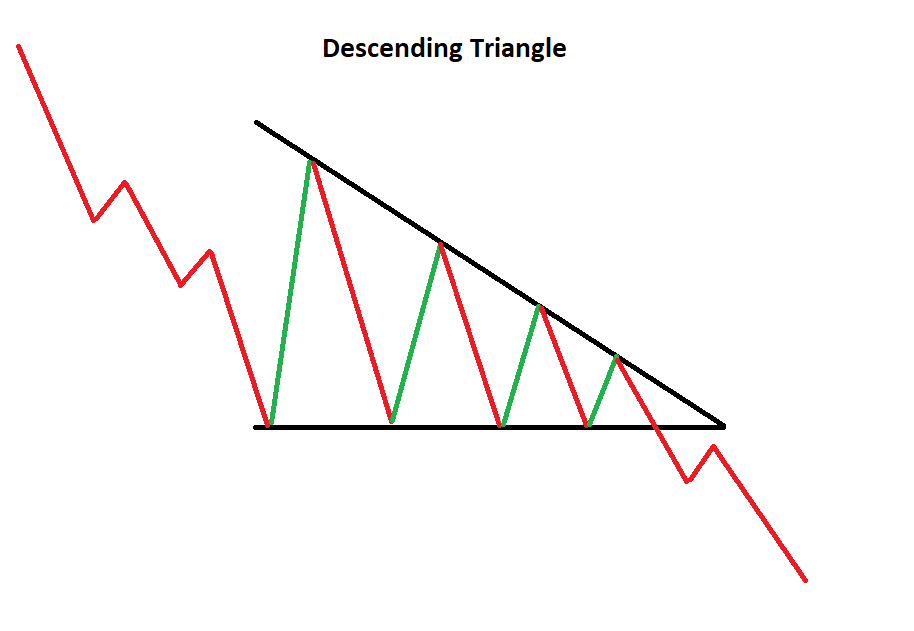
What is the Descending Triangle Pattern? What is the Ascending Triangle Pattern?
Ascending and descending triangles are the two most common right-angle chart patterns. Learn how to draw them correctly, confirm breakouts instead of guessing, project targets with the measured move, and control risk when the pattern fails.
James Dean |

What is Bitcoin Pizza Day? Who is Bitcoin Pizza Guy?
Bitcoin Pizza Day marks the first documented purchase of a physical item with bitcoin. Learn what happened on May 22, 2010, how much 10,000 BTC was worth then and later, and who the Bitcoin Pizza Guy really is.
Craig Green |
What is Polymarket? Can It Predict the Future of Crypto?
Polymarket is a decentralized prediction market on Polygon where users trade Yes/No shares on real-world events. Here is how it works, how accurate its prices are, its crypto limits, and its legal status.
Barry Stidham |