Wayne Ingram

Wayne Ingram

Wayne Ingram has been actively involved in the financial and cryptocurrency industries for a long time, focusing on institutional investment and market expansion. He has worked in traditional asset management institutions, responsible for fund allocation and client relationships, before transitioning to the digital asset field to promote institutional capital into the cryptocurrency market. He has a deep understanding of compliance frameworks, custody solutions, and trading infrastructure. He keeps an eye on industry development trends and policy changes, providing strategic advice to institutions. In a rapidly evolving market, he is able to balance innovation with risk control.

Latest Articles
  • What are Prediction Markets in Crypto and why are they useful

    What are Prediction Markets in Crypto and why are they useful

    A prediction market is a speculative market where participants trade not on options or cryptocurrencies, but instead on information.
    Wayne Ingram
  • What is NFT Market Crash and how is its recovery?

    What is NFT Market Crash and how is its recovery?

    With questions floating around on why crypto is down today, the bear market sentiment has finally influenced the top NFT projects resulting in a total NFT market crash.
    Wayne Ingram
  • What is Ethereum Plasma in crypto and how does it work

    What is Ethereum Plasma in crypto and how does it work

    This article will briefly introduce the Ethereum Plasma in crypto, but keep in mind that Plasma alone is not a project, it is an off-chain scaling technique, or a framework for building scalable applications, which can be implemented in distinct ways by different research groups or companies.
    Wayne Ingram
  • What is shiba inu game and How to get a shiba inu coin

    What is shiba inu game and How to get a shiba inu coin

    This article will show you what is shiba inu game and tell you how to get a shiba inu coin.
    Wayne Ingram
  • Ethereum difficulty bomb:  what is the Eth difficulty bomb and why is it so high

    Ethereum difficulty bomb: what is the Eth difficulty bomb and why is it so high

    This article will show you the date and the meaning of the Ethereum difficulty bomb.
    Wayne Ingram
  • What are cookies and what are cookies made of

    What are cookies and what are cookies made of

    A cookie is a small file your computer stores on behalf of a website.
    Wayne Ingram
  • OmiseGo Crypto: What is OmiseGo?

    OmiseGo Crypto: What is OmiseGo?

    Ethereum scaling is a hot topic these days (and for years). It isn’t an easy problem to solve, and multiple different avenues are being explored by the Ethereum developer community. One of these is OmiseGO, which recently got rebranded to OMG Network. It promises faster transaction times and lower fees on the biggest smart contract platform. Let’s explore what is OmiseGo, how it works, and the OmiseGo cryptocurrency.
    Wayne Ingram
  • What is Law of Demand and what is Demand Schedule

    What is Law of Demand and what is Demand Schedule

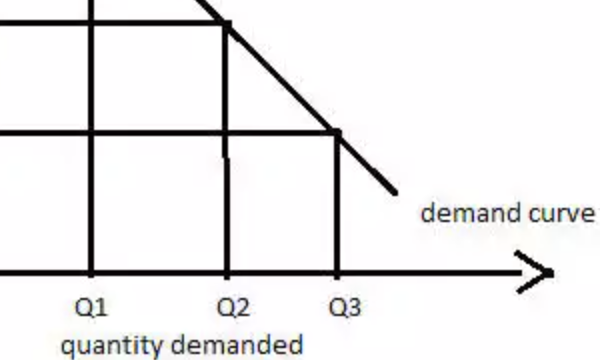
    To know what is law of demand, we need to first get clear about demand.
    Wayne Ingram
  • What is Eclipse Attack in Blockchain?

    What is Eclipse Attack in Blockchain?

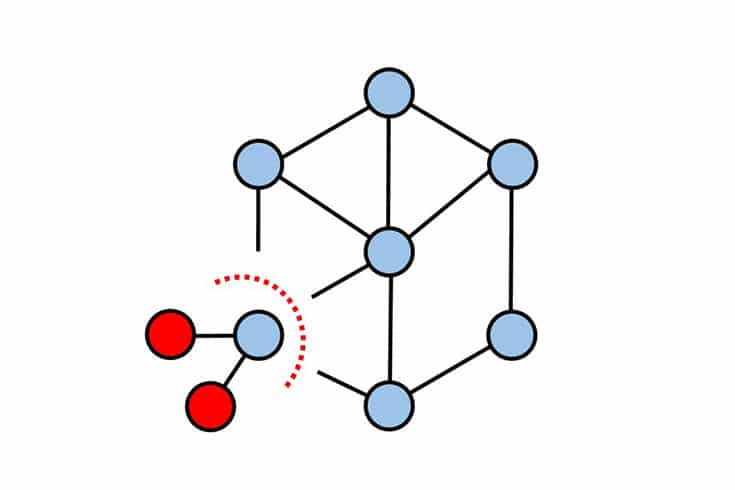
    By isolating a target node from its legitimate neighboring nodes, eclipse attacks can produce illegitimate transaction confirmations, among other effects on the network. While these types of attacks isolate individual nodes, the effectiveness of eclipse attacks at disrupting network nodes and traffic largely depends on the structure of the underlying network itself. In this article, we explore what is eclipse attack in blockchain, the various ways in which cryptocurrency eclipse attacks could occur and possible ways to mitigate the associated risks.
    Wayne Ingram
  • Algo ecosystem: How to make a coin on algorand

    Algo ecosystem: How to make a coin on algorand

    As technology continues to develop, how to make a coin on Algorand has become a significant topic.Algorand is a fairly new blockchain focused on improving scalability without sacrificing decentralization.
    Wayne Ingram