Many people tend to confuse Bitcoin and Bitcoin Cash because they share the same name. With that in mind, what is the actual difference? If you never knew, Bitcoin Cash is actually a fork of the original Bitcoin – Bitcoin Cash nodes used to be a member of the Bitcoin blockchain. Basically, Bitcoin Cash (BCH) is a Bitcoin (BTC) clone.
However, there are many similarities and differences that the two share. It’s important to be informed on these shared and divided values when investing in either of these coins. So, what makes Bitcoin Cash different from Bitcoin? What exactly is a “fork?” That’s what we’ll find out by comparing BTC vs. BCH and looking at the difference between Bitcoin and Bitcoin Cash in this piece.
What is Bitcoin?
Bitcoin, or BTC for short, is the first cryptocurrency ever to be released. It is built on blockchain technology, which takes away the need for a trustworthy intermediary, or “third party,” in financial transactions, and avoids counterfeiting. Its uses include purchasing and selling goods, services, and shares in the same way as other currencies.
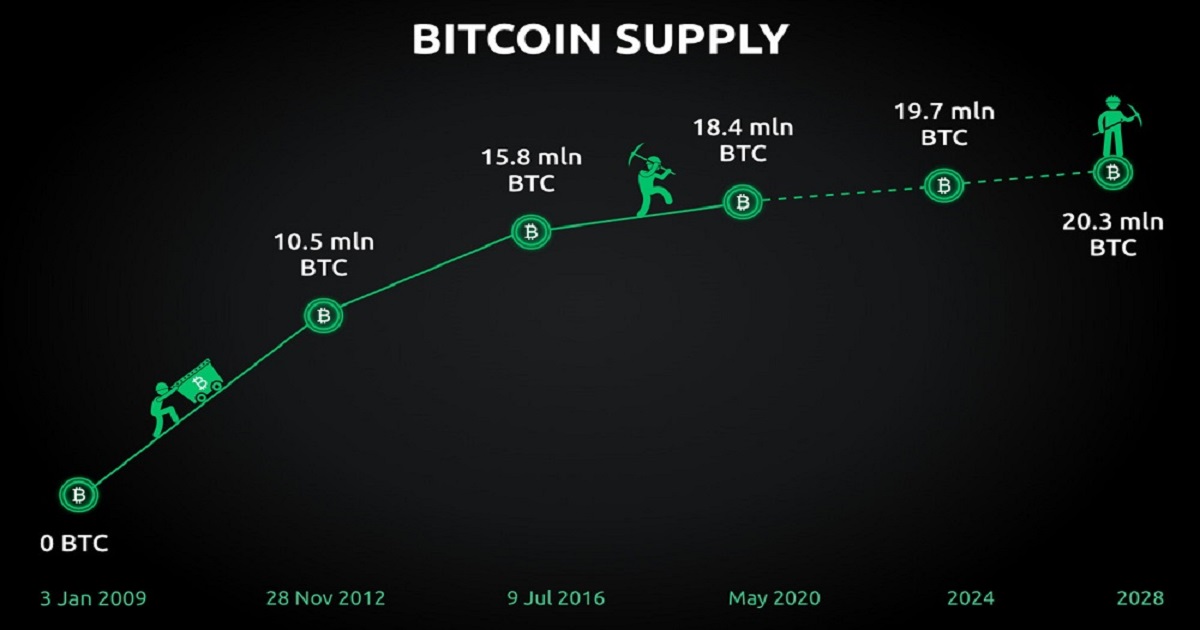
As of August 2022, there are more than 19.1 million BTC circulating in the market. With Bitcoin, there’s a cap on how many can be mined, with a total of 21 million. Bitcoin’s scarcity has been and continues to be one of the largest driving forces behind its price, according to many crypto analysts.
Bitcoin’s Underlying Technology
Bitcoin miners are people who essentially are rewarded in Bitcoin to protect its protocol. They broadcast transactions to the network, process them and verify them, resulting in the public ledger or blockchain being modified in the nodes (computers) that hold it. The blockchain is entirely autonomous; these nodes can be owned by anyone and everyone.
The term blockchain derives from the way that transactions are submitted and processed in the form of blocks. Bitcoin blocks are exactly one megabyte in size, and block formation usually takes about 10–12 minutes on average. One of the biggest reasons for both Bitcoin’s limited transaction processing speed, which is about 7–10 transactions per second, and its scalability issues is the network’s block size.
The scalability and transaction speed issues we just mentioned are Bitcoin’s biggest drawbacks when compared to Bitcoin Cash. Bitcoin, being the first-ever cryptocurrency, uses older blockchain technologies. As a result, the transaction processing times for BTC are longer and the fees are significantly higher.
This poses a challenge for BTC as more and more powerful altcoins keep entering the market. However, crypto analysts believe that Bitcoin has already made its permanent place into a kind of “digital gold” as a store of value.
What is a Hard Fork?
You’ve likely heard the term “hard fork” before and for those who’ve never looked its definition up, a hard fork is essentially a massive update to a blockchain’s network protocol. A hard fork divides the blockchain into two separate routes: one that follows the previous protocol, and another that follows a modified version.
The first route, or original protocol, is unaffected by the fork (or, in other words, redesign). When the upgraded nodes break out from the original network, they form a separate blockchain. The coins on the forked blockchain are entirely unique, which results in the formation of a whole new cryptocurrency.
Hard forks are usually initiated by developers or individuals who represent the crypto community and wish to add features to the existing blockchain protocol. This, in addition, allows all of the network nodes and users to update to the most recent version of the protocol.
Cryptocurrency investors are automatically awarded tokens in the current fork as a result of the hard fork. To put it into perspective, if you initially owned 10 BTC before the Bitcoin Cash hard fork in 2017, you would have received the same amount of BCH following the fork. Bitcoin has actually had a number of forks to this date which have resulted in some projects such as Bitcoin Classic, Bitcoin Gold, and Bitcoin XT, to name a few. Bitcoin Cash, however, is undoubtedly one of BTC’s most popular hard forks.
The Bitcoin Hard Fork
Bitcoin Cash (BCH) was created in 2017 as a fork of Bitcoin in order to address some of Bitcoin’s problems as it began to rise in popularity. Bitcoin, which is originally based on the blockchain digital ledger scheme, is able to handle approximately 7–10 transactions per second. This renders it a less-than-ideal cryptocurrency for daily transactions.
Bitcoin Cash came into the picture in an attempt to solve this problem of scalability and transaction speed by raising the block size from 1MB to somewhere between 8MB and 32MB. The larger the blocks, the more transactions that can be accommodated. This then enables miners to process and validate more transactions.
When you compare the scalability of Bitcoin Cash and Bitcoin, BCH blocks can handle up to 25,000 transactions per block, whereas BTC can only handle up to 1,500. This gives BCH the upper hand, getting it closer to the original Bitcoin vision – which was to provide an alternative for conventional payment systems over simply being an addition to an investment portfolio.
What is Bitcoin Cash?
Despite the block sizes and theoretical differences, Bitcoin Cash and Bitcoin are relatively similar in terms of how they operate. They both rely on a peer-to-peer (P2P) network of nodes or computers that are rendered operational with the help of miners who validate and process transactions in exchange for incentives.
On top of that, they also make use of a Proof-of-Work (PoW) consensus in order to mine new tokens, with a finite supply of 21 million. Previously, the Bitcoin Cash algorithm was used for the purpose of increasing the mining complexity following any 2016 blocks. However, when miners shifted to Bitcoin, the developers made the mining process much simpler.
Bitcoin Cash also employs the Segregated Witness approach, otherwise known as SegWit, created by developers. Rather than having to save all of the information related to the block’s transaction in the block, SegWit stores it in a separate file outside the block. This allows the blockchain to provide a higher number of transactions per block, which in turn speeds up the processing.
Regardless, cryptocurrency proponents have been critical of the workaround, and it remains to be seen if the Bitcoin Cash blockchain will actually accommodate a large number of transactions.
Difference Between Bitcoin and Bitcoin Cash
There are a number of similarities and differences on top of just block size. Let’s take a look at a few of them.
Blockchain
Bitcoin Cash holds larger block sizes than Bitcoin does in its blockchain technology. As mentioned, a block in the BCH blockchain is around 32MB, whereas a block in the Bitcoin blockchain is around 1MB. In addition, Bitcoin Cash needs on-chain scaling through the block size, while Bitcoin employs off-chain scaling, using two different layers of technologies.
BCH is also relatively robust compared to other extremely volatile cryptocurrencies. It even uses highly secure blockchain technologies to deter data leaks and any potential fund losses.
Scalability and Transaction Costs
During Bitcoin Cash’s launch its scalability was touted as one of the product’s key selling points. In addition to Bitcoin’s smaller block size and slower transaction, its transaction fees were higher as well. Bitcoin Cash, on the other hand, has smaller average transaction fees. Bitcoin is having difficulty meeting demand due to its high transaction fees and fixed market supply.
Usage
Another key point of dispute among the two coins is that Bitcoin has been viewed more as a store of value than an actual currency. Even now, this is an understandable source of irritation. Bitcoin is already being referred to as “digital gold” with its finite stock, receiving a lot of media coverage.
On the other hand, as a result of its relatively low fees and fast processing times, Bitcoin Cash is expected to replace Bitcoin as a legitimate currency and provide practical use cases – at least in principle.
Market Cap and Dominance
Both coins carry substantial worth. While BTC has had more value up to now, Bitcoin Cash is rapidly attracting users and value in its own right. Bitcoin Cash is a much younger cryptocurrency, having been around for only several years, compared to Bitcoin, the pioneer crypto.
As a result, it’s also capturing and realizing its own niche in the crypto market. Many people are convinced that Bitcoin Cash’s strengths will enable it to seize a significant portion of Bitcoin’s market share, eventually rendering it the industry’s leading cryptocurrency. According to CoinMarketCap as of the time of writing, Bitcoin has a market cap of $400 billion, while Bitcoin Cash is $2 billion.
BTC and BCH Prices
When it comes to investment, Bitcoin is a pioneer in terms of price. Traditional stock markets crashed just as the global economy entered a major financial crisis in early 2007–08. The price of Bitcoin, on the other hand, increased by more than 12 million percent, which is extremely rare in the field of finance. At the time of writing, it is in a dip from previous all-time highs but is still over 1000% above lows seen during the market crash which happened as the COVID-19 pandemic kicked off in March 2020.
Bitcoin Cash, meanwhile, hasn’t had much of a good run. Its worth has dropped by over 65% since its start back in 2017. More recently, however, it has picked up its pace, running well compared to other top altcoins. At the time of writing, Bitcoin Cash is worth around $126.
Closing Thoughts
It’s a common misconception that there’s a competition between Bitcoin and Bitcoin Cash, and that one must be superior to the other. Bitcoin Cash is overall much simpler, more practical and less expensive to use for blockchain transactions. Bitcoin, on the other hand, as the first cryptocurrency is the most widely used coin and is arguably the most valuable store of money in the crypto market. Many understandably refer to it as the “King of Cryptocurrencies.”
Both of these coins, however, have the potential to increase in value and global adoption over time, making them worthwhile investments for any investor to consider. Now that you understand the difference between Bitcoin and Bitcoin Cash, you can make your decision on whETHer to invest in one or the other, or even both.