As cryptocurrencies, Monero and Bitcoin present some similarities but in reality there are many aspects unique to both, and that is why people are likely to do the “Monero vs Bitcoin” game.
Fungibility
Fungibility is a source of major disagreement in the Bitcoin sphere. It refers to the interchangeability of a good with another good of a similar kind. Gold, for example, is considered fungible because you can swap an ounce of yours with someone else's, and it will still be functionally identical. The same goes for cash – you can exchange a ten-dollar bill for another. Conversely, a unique piece of art like the Mona Lisa isn't fungible as there isn't another unit like it.
In many digital currencies, it gets a bit more challenging to determine fungibility. Units in Bitcoin are fungible at the protocol level, as the software doesn't make any distinction between each BTC unit. Where it gets more ambiguous is at the social and political levels. Some contend that Bitcoin is non-fungible because each output is unique, whereas others argue that it doesn't matter.
Because Bitcoin's blockchain is transparent, transaction details like amounts and destinations can be tracked. Suppose that you received a five-dollar bill as change at a grocery store. That bill could have been used in a criminal transaction ten transactions ago, and it wouldn't have any impact on the usability of the bill now. With Bitcoin, there have been incidents where coins have been refused or confiscated based on their "tainted" history. Even if users are unaware of past transactions, chain surveillance can blacklist coins and impact their usability as currency. And this is why some consider Bitcoin a non-fungible asset.
In some circles, it's thought that these practices could break some of the properties that make public ledger cryptocurrencies appealing. "Clean" coins that have been freshly mined (and thus, have no history) could be seen as more valuable than older "dirtier" ones.
Those that oppose coin profiling believe that it uses unreliable and subjective techniques for analysis. Indeed, tools for coin mixing and CoinJoining are being made increasingly accessible to end-users, both of which obfuscate the source of funds.
Monero avoids these shortcomings from the get-go. Since observers can't tell where funds came from or where they're going, it's perhaps more akin to cash than to non-privacy coins. Even in businesses with rigorous analysis policies, XMR from questionable transactions can be exchanged without issue.
Monero's added privacy does come at a cost, though. Transactions are much larger in size, meaning that there are some significant hurdles to overcome before the system can scale to accommodate the masses.
Interestingly, its strong fungibility has even earned the cryptocurrency a certain degree of notoriety, surpassing Bitcoin as the money of choice for cybercriminals engaging in cryptojacking, ransomware, and dark web transactions.
Blocks and mining
Like Bitcoin, Monero uses Proof-of-Work to add blocks of transactions to the blockchain. As with all CryptoNote-based protocols, though, it's designed to be ASIC-resistant. The aim behind this is to prevent the dominance of mining pools running specialized, high-performance mining hardware.
Monero's Proof-of-Work algorithm (recently changed from CryptoNight to RandomX) aims to make the system fairer by favoring CPU mining and weakening GPUs' effectiveness. The logic behind this is that mining will be better distributed as consumer-grade PCs remain competitive. Despite this, hashing power remains relatively concentrated in a handful of mining pools.
Regarding block size, Monero does not have a fixed cap, unlike Bitcoin's 4 million in block weight units. Instead, it has a dynamic block size, meaning that blocks can expand to accommodate increased demand. Accordingly, if demand is reduced, the permitted size will shrink. The size is calculated by looking at the median size of the previous hundred blocks (which are mined every two minutes, on average). Miners can produce blocks that exceed the limit, but they'll be penalized with a reduced reward.
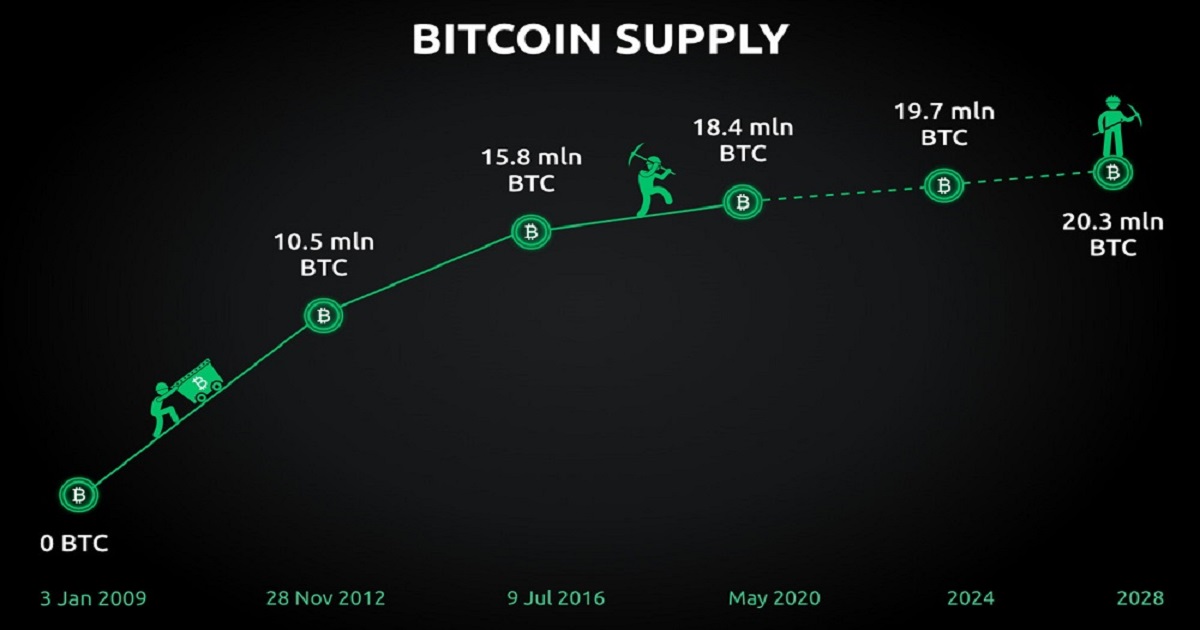
It's worth noting that the supply is not finite, as is the case in Bitcoin. Monero has a decreasing block reward schedule, too, but it doesn't tend towards zero over time. Instead, the block subsidy will indefinitely remain at a fixed amount to incentivize participants to keep mining blocks.
Hard forks
You can observe another interesting difference between Bitcoin and Monero at the governance level. Bitcoin is somewhat averse to forks to the extent that even simple upgrades are discussed for a long time before they're implemented. But there is a reason for this. Bitcoin developers need to be conservative at times to ensure the system remains stable, secure, and decentralized.
Of course, forks are just protocol upgrade mechanisms. They're often necessary to resolve critical bugs or to add new features. In Bitcoin, though, users prefer to avoid them as they can cause division, and may pose a threat to decentralization. Generally, hard forks in Bitcoin arise when a group wants to create a new cryptocurrency from the existing network. Other than that, they're usually reserved for patching urgent vulnerabilities.
In Monero, however, frequent hard forks are very much a part of the roadmap. This ensures that the software can quickly adapt to changes and roll out security upgrades. Some view "mandatory" protocol updates as a weakness, though Monero hard forks don't really carry negative connotations as they sometimes do in other cryptocurrencies. That's not to say that they're foolproof – frequent hard forks increase the risk of a vulnerability going unnoticed, and can push non-upgraded users off the network.
Monero development
As with Bitcoin, Monero's development is open to all. Anyone can contribute to the source code and documentation. The community decides which features to add, remove, or amend. At the time of writing, the project has over 500 contributors. The Core development team is made up of developers such as Riccardo Spagni (aka FluffyPony), Francisco Cabañas (ArticMine), and pseudonymous devs NoodleDoodle, othe, and binaryFate.
Alongside sponsorships, the Community Crowdfunding System (CCS) is used to fund development. Users can pitch ideas that, if selected by the community, undergo a crowdfunding period. Once certain milestones have been hit in bringing the project to fruition, the funds are paid out to those responsible.
Closing thoughts
For years, Monero (XMR) has been the go-to cryptocurrency for those seeking strong privacy assurances. It has a dedicated community of developers committed to increasing the confidentiality of its users' transactions. New upgrades (such as Kovri integration) seek to further the mission of providing unlinkability and untraceability in cryptocurrency. To conclude, "Monero vs Bitcoin" is an interesting topic and remains to be explored.