ZK STARK and its counterpart, SNARK, are two cryptographic proof systems that have been gaining traction in the cryptocurrency space. In this article, we will explore what ZK STARK means in crypto and highlight the differences between STARK and SNARK.
What does ZK STARK mean in crypto?
Zero-Knowledge Succinct Transparent Argument of Knowledge, or ZK-STARK, is a cryptographic proof system used in blockchain technology to ensure the integrity of transactions while maintaining the privacy of the participants. It is an improvement on the earlier ZK-SNARK technology, offering a higher level of transparency and efficiency. ZK-STARK has the ability to perform complex computations using a small amount of data, reducing the computational overhead required by earlier systems.
One of the most significant advantages of ZK-STARK is its ability to allow blockchain systems to maintain their decentralized nature, while also ensuring the privacy and security of participants. This is achieved through the use of advanced cryptographic techniques that allow nodes in the network to verify the integrity of transactions without revealing the underlying data.
What's the difference between STARK and SNARK?
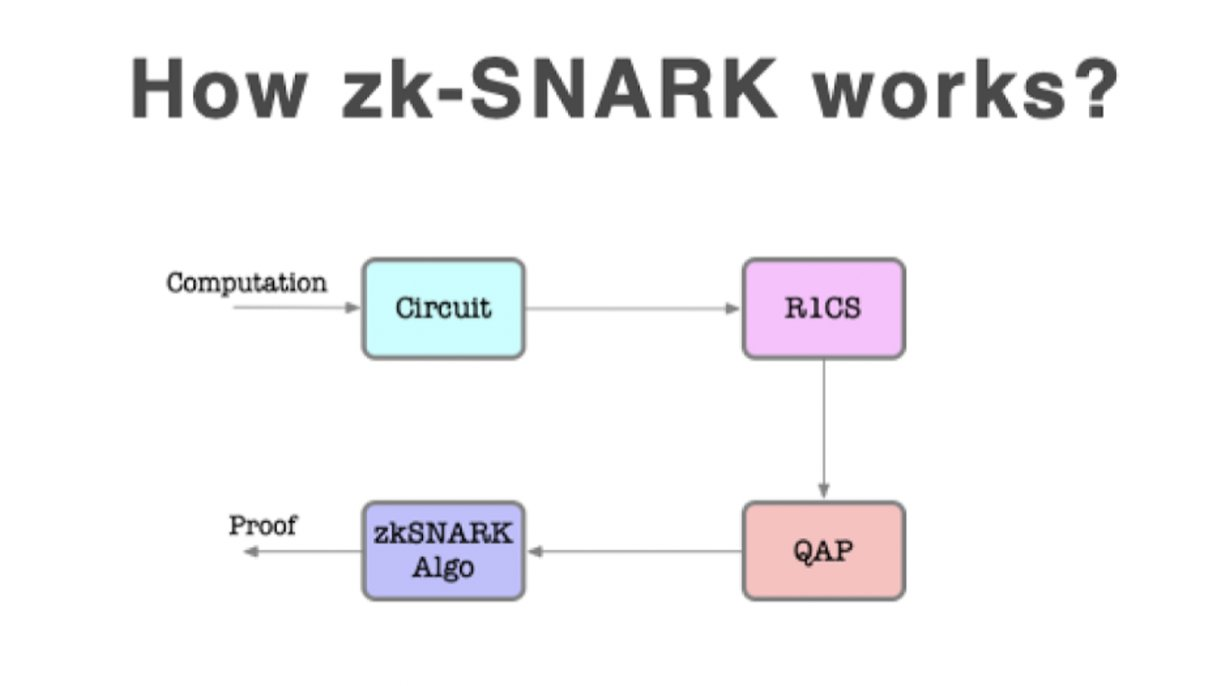
While both STARK and SNARK are proof systems designed to ensure the integrity of information on a blockchain, there are some key differences between the two. One of the main differences is that SNARKs require a trusted setup, while STARKs do not. A trusted setup involves a group of people generating a set of parameters used to verify the correctness of the proof. This setup must be done correctly, and any compromise of the setup could lead to a breakdown of the security of the system. In contrast, STARKs do not require this setup, making them more secure and less prone to potential attacks.
Another difference between STARKs and SNARKs is their efficiency. STARKs are known to be less efficient than SNARKs, both in terms of proof generation time and verification time. This is because STARKs rely on a more complex mathematical structure that allows them to be more resilient to attacks, but also requires more computing power to generate and verify. In contrast, SNARKs are based on simpler mathematical structures, making them more efficient. However, this efficiency comes at the cost of reduced security, since simpler structures are more prone to attacks.
Conclusion
In conclusion, ZK-STARK is a powerful tool in the world of blockchain technology that offers improved scalability, transparency, and security. It builds on the strengths of its predecessor, ZK-SNARK, by eliminating the need for a trusted setup and providing a higher level of transparency. STARKs and SNARKs are both valuable proof systems, but they have distinct differences in terms of security and efficiency. While SNARKs may be more efficient, they are also more susceptible to potential attacks due to their simpler mathematical structure. STARKs offer a more complex and secure solution, making them an excellent choice for applications where security is paramount. As blockchain technology continues to evolve, ZK-STARK is likely to play an increasingly important role in ensuring the privacy and security of decentralized systems.