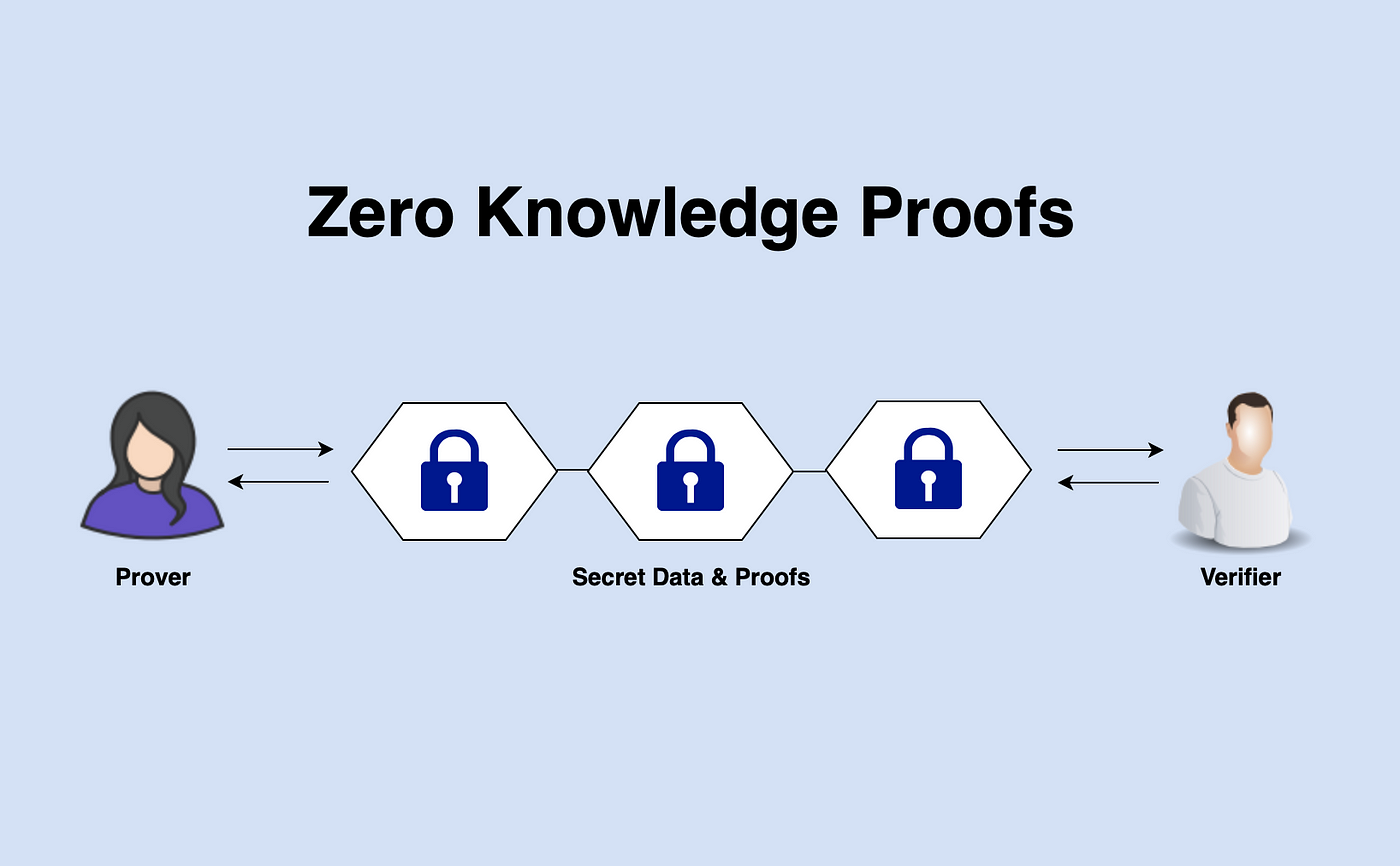
It is no secret that the cryptocurrency industry has experienced rapid expansion in recent years. Since the ICO era, DeFi protocols, NFT collections, ZK-rollup projects, and everything in between have all unveiled. The first two must be more familiar than the last one to newcomers. Don't sweat about it! I am here to explain “what is a ZK rollup?”
What Is A ZK Rollup?
On top of a "traditional" Layer-1 smart contract blockchain network like Ethereum, a rollup is a Layer-2 scaling solution. By resolving the conflict between high gas prices and limited throughput, rollups enable users to pay lower gas prices and blockchains to confirm transactions more quickly. Different rollup solutions address scalability and transaction cost issues, with the zero-knowledge strategy being one of the most successful.
A ZK-rollup is a Layer-2 blockchain system that holds assets in an on-chain smart contract while processing transactions, running computations, and storing data off-chain. Blocks and transactions are validated on-chain by standard Layer-1 blockchain platforms like Ethereum. ZK-rollups transfer a summary of the validated activities to the blockchain by taking these same activities off-chain. By doing this, the rollup stores a small portion of the total data while updating the state of the Layer-1 blockchain.
Zero-knowledge rollups combine numerous transactions into one to execute them off-chain, much like rolling up a piece of paper. Next, the ZK-rollup submits a validity proof rather than sending the specific details of each transaction in the batch to the blockchain 。 This evidence serves as a receipt for the transactions, testing to their validity and allowing for both rollup and main chain accounting.
What Are The Most Popular ZK Rollup Projects?
ZK-rollup projects have emerged in response to the scalability issues Ethereum has encountered since the DeFi rush of 2020. Because of their distinctive solutions and supplementary offerings, a few of these projects have gained popularity in the crypto community. Here are it:
zkSync
A well-known Ethereum Layer-2 blockchain solution is zkSync. The protocol scales Ethereum while maintaining security and privacy via zero-knowledge rollup technology. The improved version of zkSync, which combines zero-knowledge ds rollups and of Ethereum claims shards, up to 100,000 transactions per second.
On zkSync, a number of dApps are already operational, including Curve, ZigZag, and Taker Protocol. Solidity and Zinc, zkSync's native programming language, will be used to offer smart contract functionality in zkSync 2.0.
Hermez
A decentralized ZK-rollup called Hermez, sometimes known as Polygon Hermez, scales token transfers and payments on Ethereum. The idea attempts to lower transaction costs while assisting neighborhood efforts. Polygon Hermez uses a Proof-of-Donation technique to accommodate.
Network Aztec
Aztec is an Ethereum-based smart ZK-rollup solution with privacy by default. Built on PLONK, a ZK-SNARK technology used by well-known coins like Dusk, Zcash, and Mina, the network takes pride in being the first of its kind .
Aztec has a bridge with Ethereum called Ethereum Connect and a private transfer protocol called zk.money that is widely used that cuts the cost of Ethereum transactions by 100 times.
Closing Thoughts
ZK-rollups will continue to exist. Even after Ethereum's upgrade, they will continue to promote scalability, lower transaction costs, and add extra benefits like privacy by default in some circumstances. This was done on purpose because the Ethereum network relies heavily on the to advance. Hope you get the idea of “what is a ZK rollup?” now.