logo
  • menu
  • Markets
  • ETFs
  • Live
  • Spot
  • Futures
  • Bots
  • Learn
  • Sign In
  • Sign Up
  • Downloads
  • English
  • |
  • USD
  • |
Sign Up
Crypto PricesLearnLatest NewsDownloadsMarketsSpotAnnouncements
Home/
Learn/
Crypto Basics

What Is Blockchain Mining: 3 Types Of Mining

By Craig Green
Jul 2, 2024
4.3 
★
★
★
★
★
★
★
★
★
★
 415 User Rating
Share

Blockchain Mining is the process that Bitcoin and other cryptocurrencies use to generate new coins and verify new transactions. For more detail, you can read this article.

What is Blockchain mining?

Blockchain mining is a peer-to-peer computing process that is used to safeguard and validate bitcoin transactions. Bitcoin's global public ledger of previous transactions is expanded upon by Blockchain miners that participate in mining. Blocks are safeguarded by Blockchain miners and joined to blockchain chains in the ledgers.

In-depth, Bitcoins do not have a central clearinghouse, in contrast to conventional financial services systems. In decentralized clearing systems, where users contribute their computing power, bitcoin transactions are typically validated. This process of verifying transactions is called mining. referred to as mining as it is analogous to mining commodities like gold—mining gold requires a lot of effort and resources, but then there is a limited supply of gold; hence, the amount of gold that is mined every year remains roughly the same.

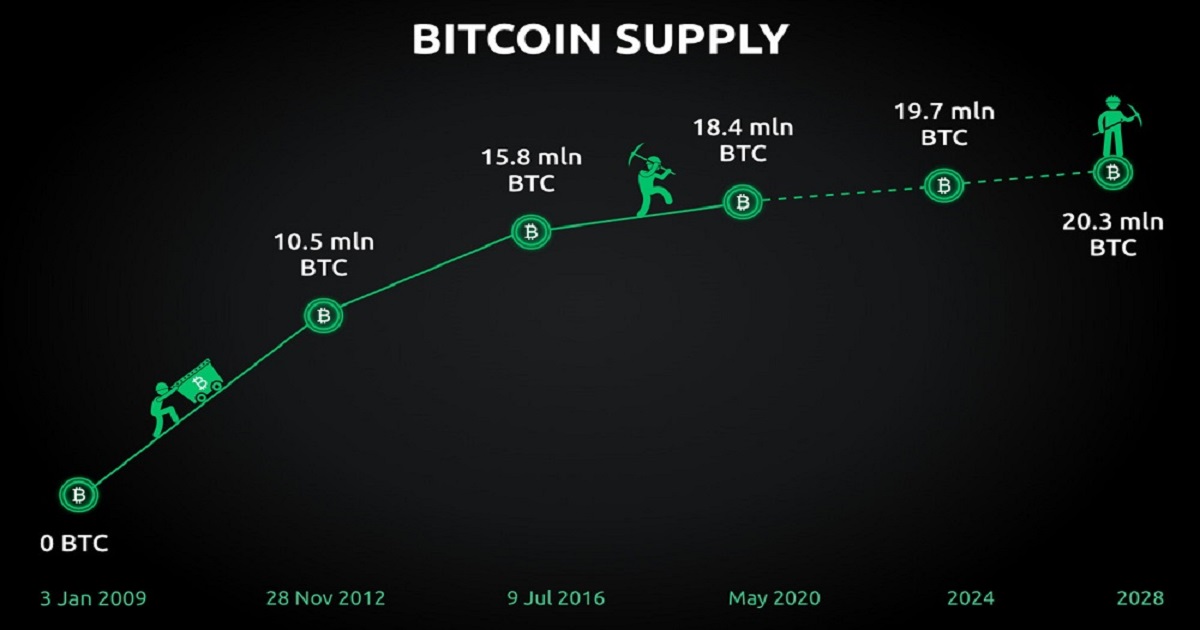
Similarly to this, mining bitcoins uses a significant amount of computational power. The quantity of bitcoins produced by mining decreases over time. There is, in Satoshi Nakamoto's words, a finite amount of bitcoins available. There will only ever be 21 million bitcoins produced.

The act of adding new transaction records to the blockchain for bitcoin is fundamentally what is meant by the phrase "blockchain mining." The way transactions are handled and money is moved safely on Bitcoins is through the process of adding new blocks to the Blockchain. group of individuals known as "Blockchain miners" work together to conduct this Blockchain mining procedure.

A Blockchain miner can be anyone who wants to apply. These Blockchain miners set up and execute a unique Blockchain mining program that permits safe computer-to-computer communication. A machine is referred to as a "node" once it runs the software, connects to the network, and starts mining bitcoins. All of these nodes work together to process transactions, add new blocks to the blockchain, and communicate with one another. This network is commonly referred to as the bitcoin network. This bitcoin network is operational 24/ 7. Since its establishment in 2009, it has processed transactions worth millions of dollars in bitcoin without ever being compromised or experiencing downtime.

Types of Mining

A standard desktop or PC cannot handle the complexity of the mining process, which can become very advanced. Hence, it requires a unique set of hardware and software that works well for the user. It helps to have a custom set specific to mining certain blocks.

The mining process undertaking can be divided into three categories:

1. Individual Mining

User registration as a miner is required when mining is done by a single person. Each single user in the blockchain network is given a mathematical problem to solve as soon as a transaction is completed. The first person to figure it out wins a prize.

Once the answer is found, the decrypted value will be verified by every other miner in the blockchain network before being added to the blockchain. Confirming the transaction as a result.

2. Pool Mining

A group of users collaborates to authorize the transaction when pool mining. The complexity of the material encrypted in the blocks can occasionally make it challenging for a user to decrypt the encoded data on their own. Therefore, a group of miners collaborates to find a solution. The award is then divided among all users after the outcome has been validated.

3. Cloud Mining

The requirement for computer hardware and software is gone with cloud mining. It is a simple way to extract blocks. Managing all the equipment, order scheduling, or selling earnings are no longer continual concerns thanks to cloud mining.

Although it is hassle-free, it also has a number of drawbacks. Due to the restrictions on bitcoin hashing, the operational functionality is constrained. As reward profits are low, operational costs rise. Both software upgrades and the verification process are limited.

Now that we have shared with you the answer to "what is blockchain mining?"

Disclaimer: The information on this page may have been obtained from third parties and does not necessarily reflect the views or opinions of BitKan. This content is provided for general informational purposes only, without any representation or warranty of any kind, nor shall it be construed as financial or investment advice. BitKan shall not be liable for any errors or omissions, or for any outcomes resulting from the use of this information. Investments in digital assets can be risky. Please carefully evaluate the risks of a product and your risk tolerance based on your own financial circumstances. Products mentioned in this article may not be available in your region.

Related Articles

  • What Are Keyloggers? How Do They Drain Your Crypto?

    What Are Keyloggers? How Do They Drain Your Crypto?

    A keylogger is a specialized form of spyware designed to systematically record every keystroke pressed on a compromised device.
    Wayne Ingram
    Jul 6, 2026
  • Crypto Trading Bots: What Are They and How Do They Work?

    Crypto Trading Bots: What Are They and How Do They Work?

    A crypto trading bot is a software application designed to automate the process of buying and selling digital assets, acting as an interface between the user and a cryptocurrency exchange.
    Cornell Rachel
    Jun 26, 2026
  • What Are Appchains? How Do Application-Specific Blockchains Work?

    What Are Appchains? How Do Application-Specific Blockchains Work?

    Appchains are blockchains built to support a single application, providing dedicated resources instead of competing for block space with other decentralized applications.
    Jerry McNeill
    Jun 25, 2026

Latest Articles

Crypto Basics

Tutorials

Currencies

Investing

  • What Is Cross-Chain Interoperability? How Does It Function?

    What Is Cross-Chain Interoperability? How Does It Function?

    Cross-chain interoperability is the technological capability of independent blockchain networks to securely exchange assets, data, and functional instructions without central intermediaries.
    Jerry McNeill
    Jul 8, 2026
  • What Are Keyloggers? How Do They Drain Your Crypto?

    What Are Keyloggers? How Do They Drain Your Crypto?

    A keylogger is a specialized form of spyware designed to systematically record every keystroke pressed on a compromised device.
    Wayne Ingram
    Jul 6, 2026
  • What is Maximal Extractable Value in crypto? How Do We Avoid MEV?

    What is Maximal Extractable Value in crypto? How Do We Avoid MEV?

    Maximal Extractable Value (MEV), formerly known as Miner Extractable Value, is the maximum value that can be extracted from block production by including, excluding, or reordering transactions within a block, in addition to standard block rewards and gas fees.
    Jerry McNeill
    Jul 1, 2026
  • Crypto Trading Bots: What Are They and How Do They Work?

    Crypto Trading Bots: What Are They and How Do They Work?

    A crypto trading bot is a software application designed to automate the process of buying and selling digital assets, acting as an interface between the user and a cryptocurrency exchange.
    Cornell Rachel
    Jun 26, 2026
  • What Are Appchains? How Do Application-Specific Blockchains Work?

    What Are Appchains? How Do Application-Specific Blockchains Work?

    Appchains are blockchains built to support a single application, providing dedicated resources instead of competing for block space with other decentralized applications.
    Jerry McNeill
    Jun 25, 2026
View more data 

Content

BTCBTC(BTC)
$0
--(Last 24h)
SpotFutures

Top

View more
  1. 1How To Sign Up For A BitKan Account (Web)?
  2. 2When Is Bitcoin Halving 2024? What Does Bitcoin Halving Do?
  3. 3What is Etherscan Used For and How to Find Token Decimal on Etherscan
  4. 4What is USDC used for? Why is USDC used?

Top Gainers

View more
ZEROBASE
ZEROBASEZBT

$0.1401

+21.40%
eCash
eCashXEC

$0.00000676

+20.07%
Cap
CapCAP

$0.0205

+19.39%
Rats
RatsRATS

$0.00003525

+16.49%
Collector Crypt
Collector CryptCARDS

$0.1689

+15.20%

Top Trending

View more
eCash
eCashXEC

$0.00000676

+20.07%
Sandisk
SandiskSNDK

$1,672.01

-9.68%
Semicon Bull 3X ETF
Semicon Bull 3X ETFSOXL

$166.800

-9.28%
Ordinals
OrdinalsORDI

$3.6210

+2.49%
Filecoin
FilecoinFIL

$0.7550

-2.58%

Recently added

View more
SK Hynix
SK HynixSKHYB

$156.860

+0.95%
Cash Cat
Cash CatCASHCAT

$0.1663

+0.53%
Cerebras
CerebrasCBRSB

$203.120

-3.98%
Invesco QQQ Trust
Invesco QQQ TrustQQQB

$713.300

-1.14%
Palantir
PalantirPLTRB

$128.740

+2.26%

Latest News

View more
  1. 1Stablecoin Market Drops $10B, Analysts Downplay Concerns
  2. 2New SEC Crypto Rule to Cut Red Tape for Startup Fundraising
  3. 3White House Admits Federal Bitcoin Fund is Still Delayed
  4. 4USDC Dominates Tether USDT in Stablecoin Volume Race
  5. 5Ether Leads Crypto Jump; Bitcoin Holds Firm Above $63K
About Us
  • About BitKan
  • Contact Us
  • Announcements
  • VIP Program
  • BitKan Ambassador
  • Institutional Services
Products
  • Spot
  • Futures
  • Crypto Prices
  • Learn
  • News
  • Markets
  • How to Buy Crypto
  • BTC to USD Calculator
  • Reward
Help
  • Help Center
  • Email Us
  • Live Chat
  • Download APP
  • Listing Application
  • Buy Bitcoin
  • Buy Ethereum
  • Buy Dogecoin
  • Buy Altcoins
Terms
  • Terms of Use
  • Privacy Policy
  • Trading Rules
  • Fee
K-Site
English
About Us
+
  • About BitKan
  • Contact Us
  • Announcements
  • VIP Program
  • BitKan Ambassador
  • Institutional Services
Products
+
  • Spot
  • Futures
  • Crypto Prices
  • Learn
  • News
  • Markets
  • How to Buy Crypto
  • BTC to USD Calculator
  • Reward
Help
+
  • Help Center
  • Email Us
  • Live Chat
  • Download APP
  • Listing Application
  • Buy Bitcoin
  • Buy Ethereum
  • Buy Dogecoin
  • Buy Altcoins
Terms
+
  • Terms of Use
  • Privacy Policy
  • Trading Rules
  • Fee
K-Site
+
  • Twitter
  • Facebook
  • Telegram
  • YouTube
  • Instagram
  • Medium
  • Linkedin
@2012-2026 BITKAN.com