This article is about what is continuous compound interest. Continuous compound interest is a mathematical concept that shows how compound interest can grow exponentially over time when it is calculated and reinvested continuously. It has a simple formula that can be used to find the future value or present value of any investment or loan that is subject to continuous compounding.
What is Continuous Compound Interest?
Continuous compound interest is a concept in finance that refers to the situation where interest is calculated and added to the principal amount of an investment or a loan continuously, rather than at fixed intervals. This means that the interest earned in any given moment is immediately reinvested and starts earning interest as well. As a result, the balance grows at an exponential rate over time, reaching the highest possible value among all compounding methods.
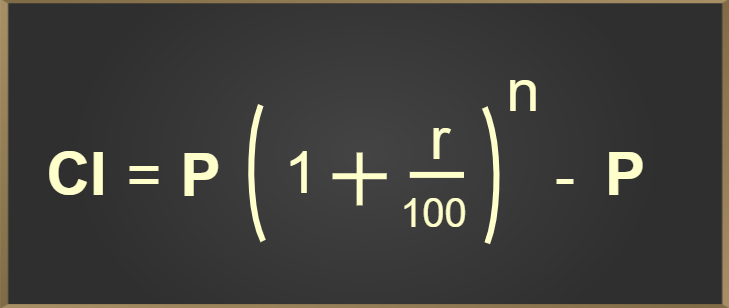
The formula for continuous compound interest is derived from the general formula for compound interest, which is:
FV = PV x (1 + i/n)^(n x t)
where:
- FV = future value of the investment or loan
- PV = present value or initial amount
- i = annual interest rate
- n = number of compounding periods per year
- t = time in years
To obtain the formula for continuous compound interest, we need to take the limit of this formula as n approaches infinity, which means that the compounding frequency becomes infinitely small. Using some mathematical properties of limits and exponents, we can simplify this expression to:
FV = PV x e^(i x t)
where e is a mathematical constant that is approximately equal to 2.7183. This constant is also known as Euler's number or Napier's constant, and it has many applications in mathematics, physics, and engineering.
The formula for continuous compound interest can be used to calculate the future value of any investment or loan that is subject to continuous compounding. For example, suppose you invest $10.000 in an account that pays 5% annual interest compounded continuously. How much will you have after 10 years?
Using the formula, we can plug in the values and get:
FV = 10.000 x e^(0.05 x 10)
FV = 16.486.94
Therefore, after 10 years, your investment will grow to $16.486.94.
Continuous compound interest can also be used to calculate the present value of a future payment that is subject to continuous compounding. For example, suppose you need to pay $20.000 in 5 years for a loan that charges 6% annual interest compounded continuously. How much do you need to borrow today?
Using the formula, we can rearrange it to solve for PV and get:
PV = FV / e^(i x t)
PV = 20.000 / e^(0.06 x 5)
PV = 14.883.64
Therefore, you need to borrow $14.883.64 today to pay off $20.000 in 5 years.
What are Discrete Compounding Methods?
Continuous compound interest is an important concept in finance because it represents the theoretical maximum that compound interest can reach. However, in practice, most financial instruments use discrete compounding methods, such as monthly, quarterly, or semiannually. This is because continuous compounding is not feasible in reality, as it would require infinite precision and infinite transactions.
The difference between continuous compound interest and discrete compound interest depends on the interest rate and the compounding frequency. The higher the interest rate and the lower the compounding frequency, the larger the difference will be. For example, if you invest $10.000 at 10% annual interest compounded annually, you will have $25.937.42 after 10 years. However, if you invest the same amount at the same interest rate compounded continuously, you will have $27.182.84 after 10 years. The difference is $1.245.42.
On the other hand, if you invest $10.000 at 2% annual interest compounded annually, you will have $12.190.97 after 10 years. If you invest the same amount at the same interest rate compounded continuously, you will have $12.213.59 after 10 years. The difference is only $22.62.
Therefore, continuous compound interest is more relevant for high-interest rates and long-term investments or loans than for low-interest rates and short-term ones.
Bottom Line
In this article, we have discussed what is continuous compound interest. However, it is not realistic in practice and most financial instruments use discrete compounding methods instead.