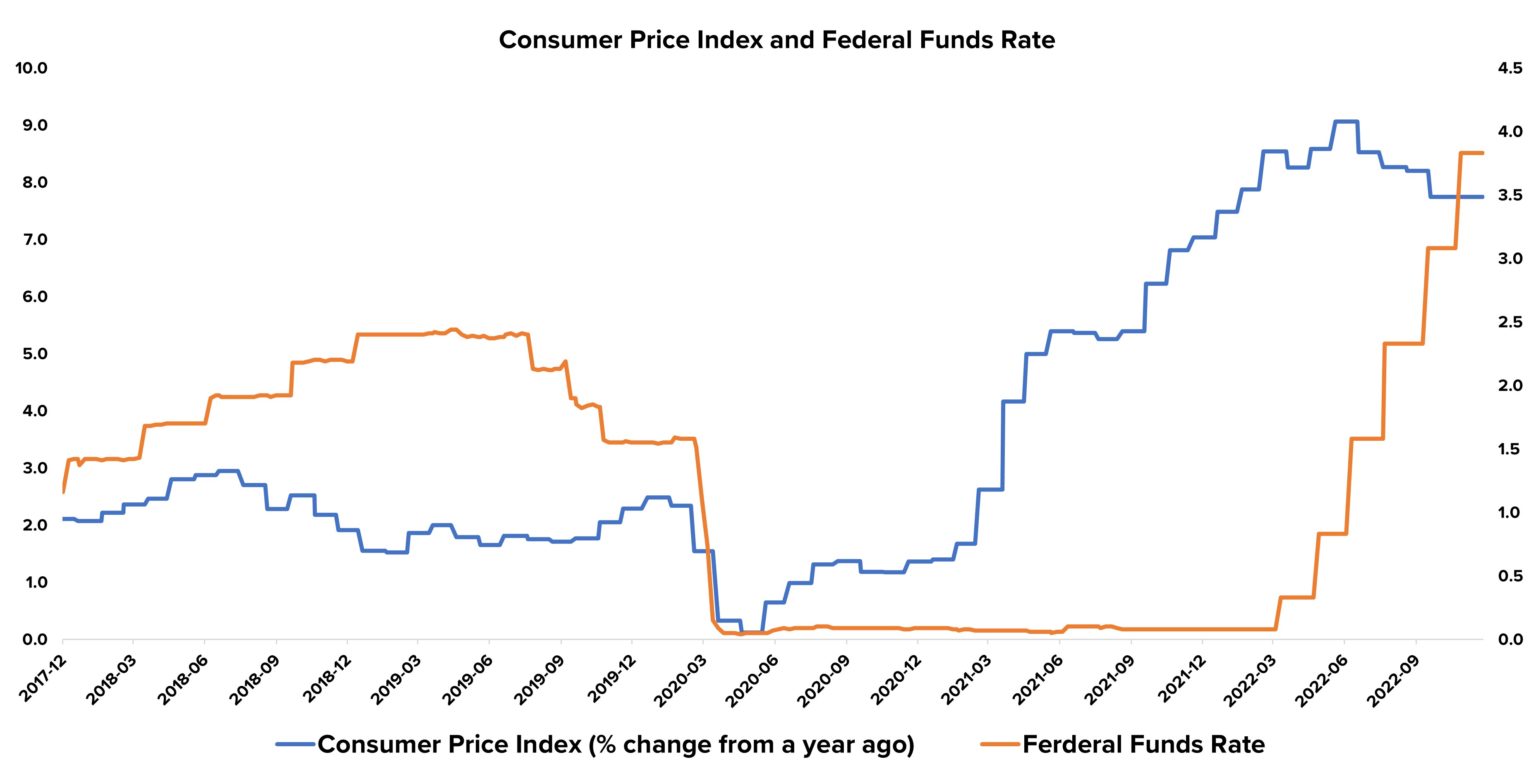
In this article, you will learn what is the meaning of CPI. The CPI Index is an inflation indicator closely watched by policymakers and financial markets. A related CPI measure is used to calculate cost-of-living adjustments for federal benefit payments. Because the CPI Index is so crucial to economic policy and decision-making, its methodology has long been controversial, drawing claims it either understates or overstates inflation.
What is the Meaning of CPI?
CPI stands for the consumer price index. CPI is a measure of the aggregate price level in an economy. The CPI consists of a bundle of commonly purchased goods and services. The CPI measures the changes in the purchasing power of a country's currency, and the price level of a basket of goods and services.
The market basket used to compute the Consumer Price Index is representative of the consumption expenditure within the economy and is the weighted average of the prices of goods and services.
The Bureau of Labor Statistics (BLS) calculates the CPI as a weighted average of prices for a basket of goods and services representative of aggregate US consumer spending.
Uses of the Consumer Price Index
- To serve as an economic indicator: The Consumer Price Index is a measure of the inflation faced by the end user. It can determine the purchasing power of the dollar. It is also a proxy for the effectiveness of a government's economic policy
- To adjust other economic indicators for price changes: For example, components of national income could be adjusted using CPI.
- Provides cost of living adjustments for wage earners and social security benefits and prevents an inflation-induced increase in tax rates.
Limitations of the Consumer Price Index
- The Consumer Price Index may not be applicable to all population groups. For example, CPI-U (Urban) better represents the US urban population but doesn't reflect the status of the population in rural areas.
- CPI doesn't produce official estimates for subgroups of a population.
- CPI is a conditional cost-of-living measure and does not measure every aspect that affects living standards.
- Two areas can't be compared. A higher index in one area compared to the other doesn't always mean that prices are higher in that area.
- Social and environmental factors are beyond the definitional scope of the index.
What are the Types of CPIs?
The BLS publishes two indexes each month. The Consumer Price Index for All Urban Consumers (CPI-U) represents 93% of the US population not living in remote rural areas. It doesn't cover spending by people living in farm households, institutions, or on military bases. CPI-U is the basis of the widely reported CPI numbers that matter to financial markets.
The BLS also publishes the Consumer Price Index for Urban Wage Earners and Clerical Workers (CPI-W). The CPI-W covers 29% of the US population living in households with income derived predominantly from clerical employment or jobs with an hourly wage. CPI -W is used to adjust Social Security payments as well as other federal benefits and pensions for changes in the cost of living. It also shifts federal income tax brackets to ensure taxpayers aren't subjected to a higher marginal rate as a result of inflation.
Bottom Line
The Consumer Price Index is an important economic metric. It measures the average change in prices paid by consumers over a period of time for a basket of goods and services. This article is about what is the meaning of CPI.